
THE UNBLEMISHED LAMB

lamb-on-rock

The Old Testament sacrificial system—the unending sacrifice of animals to atone for the sins of the people of God—always and in every way pointed to the unblemished Lamb of God, who would come into the world to offer Himself as a once-for-all sacrifice for sin.


John saw Jesus coming toward him and said, “Look, the Lamb of God, who takes away the sin of the world!”

(John 1:29)


John the Baptist was the one God called a “voice crying in the wilderness,” who would announce the coming of this unblemished Lamb of God. John went on to say . . .


I saw the Spirit come down from heaven as a dove and remain on him. I would not have known him, except that the one who sent me to baptize with water told me, ‘The man on whom you see the Spirit come down and remain is he who will baptize with the Holy Spirit.’ I have seen and I testify that this is the Son of God.”

(John 1:32-34)


Jesus was the promised, perfect Lamb of God who would be sacrificed on our behalf to take away all our sins forever. He who knew no sin became sin for us. He was perfect in every way, fulfilling every aspect of the Law of God. “Do not think I have come to abolish the Law or the Prophets,” Jesus said; “I have not come to abolish them but to fulfill them.” (Matthew 5:17). Only a perfect Lamb would be eternally acceptable to the Almighty . . . and Jesus was that Lamb.

The religious leaders of that day tried to convict Jesus of sin, but they could not do it. When they said Jesus was a Sabbath breaker and a blasphemer, He challenged them to prove it.


Can any of you prove me guilty of sin?

(John 8:46)


Make no mistake, if any of them could have proved Jesus guilty of sin, they would have done it. But they could not. So they conspired to get rid of Him anyway. Even Pontius Pilate could not find Jesus guilty of anything. He admitted, “I find no basis for a charge against him” (John 19:4). Why? Because Jesus never committed any crime or sin! He was the perfect, unblemished Lamb.

Here is one more testimony to the sinless nature of Jesus. Perhaps you have heard the phrase, “The last words of a dying man.” In some courts of law, these words will be admitted as evidence. One thing is for certain, they are taken seriously by those who hear them! You will remember that Jesus was crucified between two criminals. One hurled insults at Jesus. The other said something remarkable:


We are punished justly, getting what our deeds deserve. But this man has done nothing wrong.

(Luke 23:40-41)


The religious leaders could not prove Jesus guilty of any sin; Pilate could not find any guilt in Jesus; and the last words of a dying man testify to the truth that we find throughout all of sacred Scripture: Jesus is the unblemished Lamb of God who came to be sacrificed for the sins of all who will ever believe in Him.

Is it true for you? Has Jesus Christ taken away your sins? It is true for you if you will but look to Him in faith, trusting that the unblemished Lamb of God loves you and gave Himself for you so that you would be with Him for all eternity.

This is the Gospel. This is grace for your race. NEVER FORGET THAT . . . AMEN!    

Leave a comment

Filed under General

WHAT KIND OF BUILDER ARE YOU?


In August of 1992, Hurricane Andrew slammed into South Florida with deadly Category 5 force, passing directly through the town of Homestead, a suburb of Miami. Andrew’s 180 mile-per-hour winds generated a 14-foot storm surge; 65 people lost their lives; over 125,000 homes were damaged or destroyed. Some blocks were totally obliterated, leaving behind only the foundations of the homes that had once been there, and 180,000 people were suddenly homeless. The damage totaled $30 billion.

One area in particular looked like a war zone—an entire neighborhood had been virtually flattened—yet standing in the middle of all the devastation was a single home. A local news reporter interviewed the homeowner, asking if he had any explanation why his home was spared. The man responded, “I built this house myself, and I built it according to the Florida State Building Code. When the code called for 2’ x 6’ roof trusses, I used 2’ x 6’ roof trusses. I was told that a house built according to code could withstand a hurricane, and mine did!”

Jesus provided us with the best possible building code during His Sermon on the Mount:


Not everyone who says to me, ‘Lord, Lord’, will enter the kingdom of heaven, but only he who does the will of my father who is in heaven… Therefore everyone who hears these words of mine and puts them into practice is like a wise man who built his house on the rock. The rain came down, the streams rose, and the winds blew and beat against that house; yet it did not fall, because it had its foundation on the rock. But everyone who hears these words of mine and does not put them into practice is like a foolish man who build his hours on sand. The rain came down, the streams rose, and the winds blew and beat against that house, and it fell with a great crash.  

(Matthew 7:21, 24-27)


So . . . what kind of builder are you? Are you building your life on sand . . . or on rock? Is the foundation of your life resting on the Rock of Ages . . . or the shifting sand of our secular society? Let’s take a look at some similarities and one striking difference between the two builders our Lord described.

The Similarities

Both heard the same teaching and instruction and both were building homes. Both apparently had the same ability to build, and both were confronted by the same kind of storm.

The Differences

The difference is HUGE. One heard the Word of God and applied it. This man was wise. The other man heard the Word of God and did not put it into practice. He was foolish.


Examine yourselves to see whether you are in the faith; test yourselves. Do you not realize that Christ Jesus is in you—unless, of course, you fail the test?

(2 Corinthians 13:5)


On the surface, both men looked to be the same. Everything seemed to be going well for them both . . . until the storms of life hit. Then the difference was like the difference between those homes in Homestead that were crushed by Hurricane Andrew and the one house that remained standing. There is only one secure foundation upon which to build our lives, and His name is Jesus Christ.

Jesus’ parable is calling our attention to the attitudes and behaviors of the two builders. Both men were in the Word of God . . . but only one had the Word in him. Which one are you?


Do not merely listen to the word, and so deceive yourselves. Do what it says.

(James 1:22)


Remember, as Jesus told the story, He never used the word “IF” to describe the rain that came, the streams that rose, and the winds that blew and beat against that house. Storms are certain to come; only a life built upon Christ is certain to stand!

This is the Gospel. This is grace for your race. NEVER FORGET THAT . . . AMEN! 

Leave a comment

Filed under General

COSMIC CHARITY ISLAND

charityisland

In Saginaw Bay, Michigan, in the stormy waters of Lake Huron, there is a place called Charity Island. The lighthouse on this island was used by sailors as a navigational aid to safely sail through these waters for more than 70 years. Those sailors strongly believed that the island was placed there because of the “charity of Almighty God.” I wonder if they realized just how right they were in thinking this thought!

Every good gift is given through the charity—that is, the benevolent love and good will—of God.


Every good and perfect gift is from above, coming down from the Father of the heavenly lights, who does not change like shifting shadows.

(James 1:17)


Our God has given us a variety of good gifts to help us navigate the turbulent waters of life; without them, we would almost surely founder. Let’s take a brief look at two of these gifts: the Playbook and the People of God.

–  The Playbook –

Your word is a lamp to my feet and a light for my path.

(Psalm 119:105)

Like the lighthouse on Charity Island, the Word of God is a “lighthouse” that guides us through difficult and troubling circumstances, warning us of the rocky shoals that will shipwreck our lives. God has ordained the Bible to renew our minds, reorient our hearts, and realign our wills.

–  The People of God –

Let us not give up meeting together, as some are in the habit of doing, but let us encourage one another—and all the more as you see the Day approaching.

(Hebrews 10:25)

The Bible knows nothing of the solitary saint; we were made for community. When Jesus saved us, He placed us in the body of Christ for relationship. And it is through those relationships that we are encouraged and strengthened to face the storm winds that blow our way.

We find our own “Charity Island” in both the Playbook and the People of God. Both are given by God to assist us in our walk with Christ. Jesus promised us that in this world we would face trouble and trials of many kinds, but He did not leave us to face any of them alone!

And in addition to the Playbook and the People of God, we have the Prince of Peace, who is our true Charity Island.


God has said, “Never will I leave you; never will I forsake you.” (Hebrews 13:5)


Ultimately, it is Jesus who stills the storms and calms the seas in our lives. The psalmist assured us of this truth: “He stilled the storm to a whisper; the waves of the sea were hushed. They were glad when it grew calm, and he guided them to their desired haven” (Psalm 107:29-30).

Remember, God not only guides us to the safe haven, He is our safe haven . . . Jesus is our Cosmic Charity Island!

This is the Gospel. This is grace for your race. NEVER FORGET THAT . . . AMEN!    

Leave a comment

Filed under General

“TESTING ONE-TWO . . . TESTING ONE-TWO!”

download

That is a familiar sound in our sanctuary every Saturday night and Sunday morning before our corporate worship services. It is, of course, the sound of the microphone sound check that occurs prior to the praise team beginning to sing. Hearing these words got me thinking about today’s message, and I pray it will be a great source of hope and encouragement for you.

I have written on many occasions that life is both a test and a trust. Today I want to sharpen our focus on the “test” part. This word, taken from both the Old and New Testaments, actually means to prove by trial.

You may remember when Abraham was tested by God. When Abraham was asked to sacrifice his only son Isaac, he immediately prepared to do exactly that. And then God said these words:


Now I know that you fear God, because you have not withheld from me your son, your only son.

(Genesis 22:12)


Let me ask you this question: Had God just at that moment realized that Abram would faithfully and fearfully follow Him? Of course not! God had ordained it from before the foundation of the world. It was God who had granted Abraham that great faith! But Abraham did not know what he would do until he was confronted with this almost unimaginable test of faith.

This is similar to the scene in the Garden of Eden after the fall of man. Adam was hiding in the Garden and God called out, “Adam where are you?” (Genesis 3:9). Had God “lost” Adam and did not know where he was? Of course not! It was Adam who did not know where Adam was. After Adam rebelled against God, he was lost. Instead of walking in the cool of the day with his God, he was on the run away from Him, hiding in the bushes.

I can’t imagine anything that paints a starker picture than this: Adam failed his test; Abraham passed his.

So we see that God will test His children. He will allow the devil test us as well, just as Jesus Himself was tested in the desert by Satan, but you and I must remember that test will only go to the extent that God allows for His glory and our good.

Job lived out this truth. Satan told God the only reason that Job loved and obeyed Him was because of all the good gifts God had given to him, and that if he, Satan, could test Job he would prove it. Well, under the sovereign watch and care of God, Satan tested Job, taking away his health, his wealth, and his children. Yet, throught all of it, Job remained faithful to God, saying, “I know that my Redeemer lives, and that in the end he will stand upon the earth” (Job 19:25). Job passed his test.

We should not fear the tests we are put through, the test God has promised us (Philippians 1:29). The psalmist tells us that our testing refines us like silver (Psalm 66:10). James tells us to “Consider it pure joy” when we face these trials, because our testing “develops perseverance” which will grow us up into Christ (James 1:3). Peter explains that we will experience trials “so that your faith — of greater worth than gold, which perishes even though refined by fire — may be proved genuine and may result in praise, glory and honor when Jesus Christ is revealed” (1 Peter 1:6-7).

King David actually sought the testing of God.


Search me, O God, and know my heart; test me and know my anxious thoughts. See if there is any offensive way in me, and lead me in the way everlasting.

(Psalm 139:23-24)


David actually wanted God’s refining fire to clean away the spiritual dross in his life and leave only a golden faith in God behind. We can run, as Jonah did, but we simply cannot hide from God. Growing up into Christ requires that we leave our “comfort zones” and move into areas that are very uncomfortable. This is where God tests us and proves to us, so that we know we are truly His. And remember this: God will not allow us to be tested beyond what we can bear, because the power of Christ is at work within us to strengthen us and encourage us.

Testing One-Two . . . Testing One-Two . . . What say you?

By the way, I’m sure you’re aware that today is “Black Friday.” Perhaps that is a test for all of us—as we are running around town looking for the best deals—to keep the main thing the main thing . . . and His name is Jesus Christ!

This is the Gospel. This is grace for your race. NEVER FORGET THAT . . . AMEN! 
Leave a comment

Filed under General

A WEEK OF THANKS-LIVING Part II


ThanksgivingII

So . . . did you take the time to prayerfully consider the many blessings God has given you this year? Did you take the additional step of writing them down? Without a written record of what God is doing in your life, you will quickly forget so much of it, because we all have a tendency to remember only the difficulties and challenges in life.

On this Thanksgiving Day, I want to encourage you with one of the greatest stories of gratitude in the Bible. Let’s take a look.


On his way to Jerusalem, Jesus traveled along the border between Samaria and Galilee. As he was going into a village, ten men who had leprosy met him. They stood at a distance and called out in a loud voice, “Jesus, Master, have pity on us!” When he saw them, he said, “Go, show yourselves to the priests.” And as they went, they were cleansed. One of them, when he saw he was healed, came back, praising God in a loud voice. He threw himself at Jesus’ feet and thanked him—and he was a Samaritan. Jesus asked, “Were not all ten cleansed? Where are the other nine? Was no one found to return and give praise to God except this foreigner?” Then he said to him, “Rise and go; your faith has made you well.”

(Luke 17:11-19)


There is so much to glean in this passage that will strengthen our hearts of thanksgiving to the Lord! The leprosy that afflicted these ten men was a horrible disease that made them outcasts from all of society. They all longed for the comfort of family, the company of friends, and the consolation of their faith, lived out in community with other believers. But this had all been taken away from them because of their malady. In those days, leprosy was a virtual death sentence for those who had it, as the disease slowly ate away at their bodies.

Here is the overarching theme from this passage: From hopeless to hope. And how do we know the ten lepers had hope? We see it clearly in their action toward Jesus. They called out in a loud voice, “Jesus, Master, have pity on us!”

Scripture does not state that they were expecting to be healed of their disease, but at the very least, they were hoping for some kindness from Jesus. Whatever they were hoping for, they knew enough about Jesus and His ministry that they were sure He was a merciful Master. In spite of their hopeless condition, they still had hope.

Can the same be said about you and me today as the waves of challenge wash over us in life?

Next we see that Jesus told all the lepers to go and show themselves to the priests, an action which was required for them to be restored to society . . . if they were actually healed. It was a test of faith, and all ten lepers went in obedience to the command of Christ and they all received their healing. But only one of them returned to give praise to God. And that one was considered an outsider—a foreigner, a non-Jew. Worse still, he was a Samaritan, and Samaritans were despised by the Jews of that day.

Notice that this leper’s praise for God was uttered in the same “loud voice” as his cry for mercy. Wouldn’t that be well said of all of us . . . that our cries of praise and thanksgiving to God after we received the blessing would be as loud as our cries for mercy and grace before the blessing!

Finally, notice the position this cleansed leper assumes in offering his praise and thanksgiving to Jesus:

AT HIS FEET!

Today is Thanksgiving. And with so much to be thankful for, perhaps a little time at the feet of Jesus would be time well spent. The proper place for “thanks-living” is always at the feet of Jesus. This healed leper knew it. Mary—who sat at the feet of Jesus while sister Martha bustled and fussed in the kitchen—knew it. May we know this truth too, and may we live it out with a heart of thanksgiving as we sit at the feet of Jesus.

One final point to consider this thanksgiving season: This cleansed leper was more thankful for his Healer than for his healing. His heart beat more for the Giver of this great gift than the gift itself. Are you like that? Am I?

May you and yours have a blessed Thanksgiving . . . and may it be spent rejoicing at the feet of Jesus!

This is the Gospel. This is grace for your race. NEVER FORGET THAT . . . AMEN! 

Leave a comment

Filed under General

A WEEK OF THANKS-LIVING

ThanksgivingI

Tomorrow we will celebrate a holiday that has been slowly, steadily shrinking in the hearts and minds of millions of Americans. That day, of course, is called Thanksgiving. Sadly, our culture has, to a large extent, lost sight of what it means to be thankful, simply because we have lost sight of the One to whom we are to be thankful.

Lost in the middle of Halloween and Christmas, the two most commercialized consumer-oriented holidays in America, we find Thanksgiving. Americans have turned Thanksgiving into a day of planning and preparation for the first official day of Christmas shopping, “Black Friday,” which now begins on Thursday, crowding out even more of the little we have left of the day designed to give gratitude to our God for His many blessings.

How did we get here?

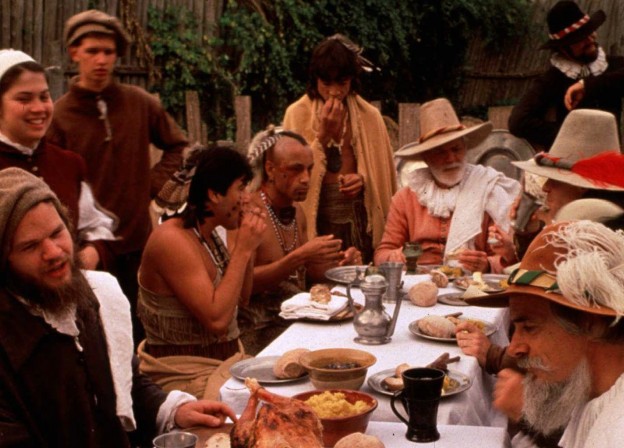
It was the autumn 1621, nearly a year since the Pilgrims landed on the shores of America. The original population of Pilgrims had been reduced by more than half due to sickness and starvation. In an act of thanksgiving to God for His gracious provision of the colony’s first successful harvest, the Pilgrims organized the first Thanksgiving Day feast, along with the Wampanoag Indians, the Pilgrims’ newfound friends.

One of the Pilgrims, Edward Winslow, sent a letter to a friend back in England that contained these words:

God be praised, we had a good increase . . . Our harvest being gotten in, our governor sent four men on fowling that so we might after a special manner rejoice together . . . These things I thought good to let you understand . . . that you might on our behalf give God thanks who hath dealt so favorably with us.

You and I today have so much to be thankful for because our God has dealt so favorably toward us . . . but it is easy to lose sight of Thanksgiving, that day silently sandwiched between “spooky sights” and “silent nights” along the way to our New Year’s celebrations.

But this is not for you! I encourage you to prayerfully consider, as you advance through this Thanksgiving week, all that you have to be thankful for.


Enter his gates with thanksgiving and his courts with praise; give thanks to him and praise his name.

(Psalm 100:4)


Think about it this way: as Paul asked the Christians at Corinth, “What do you have that you did not receive?” (1 Corinthians 4:7). The answer to Paul’s rhetorical question, of course, is nothing, “For from [God] and to him and through him are all things” (Romans 11:36). And the more you have been given, the more you are in debt to the One who has given it to you.

Why not take a moment to write out your “Blessing List,” identifying some of the many blessings God has given you throughout this past year? We have been doing this as a family since our first child, Brock, was born in 1996—each member of the family writing out their own list and sharing it with each other. The lists from previous years provide a rich reminder of the many good gifts and answered prayers our God has granted to us over the years; without those lists, we might well have forgotten many of them.

On Wednesday, we will take a look at one of the great “gratitude” stories in all of sacred Scripture. Until then, remember: God blesses us so that we would bless others. May that be the confession of our lives!

This is the Gospel. This is grace for your race. NEVER FORGET THAT . . . AMEN!

Leave a comment

Filed under General

THE WORK IN WAITING ON THE LORD

Inpatience

In a culture of fast foods, microwave meals in a minute, and 30-second sound bites, we have trouble waiting for anything. Indeed, our willingness to wait has become a thing of the past. We are very much like the obnoxious little girl in Willy Wonka and the Chocolate Factory; we cry, “Don’t ask how, I want it NOWWWW!”

So . . . how do we wait on the Lord as we have been instructed to do in Scripture?


The Lord is good to those who wait on him, to the one who seeks him.

(Lamentations 3:25)


The Bible tells us to wait on the Lord by seeking Him, and the best way to seek Him is when we are waiting on Him through our prayers. When Jesus said to His disciples, “Watch and pray” He was giving them the formula for the work in waiting on the Lord. As we wait (watch) for our Lord, we are to be on our knees in prayer to Him. We are to stay in constant communication with the One who will guide us and give us exactly what we need, exactly when we need it, and in precisely the way we need it. The Lord truly is good to those who wait in prayer on Him.

How has your prayer life been lately? When it comes to the work in waiting on the Lord, we must always remember that His answer to our prayer is always immediate; it is either . . .

YES

NO

WAIT

No prayer goes unanswered. Unfortunately, we are easily discouraged when our prayer is not answered the way we wanted!

That is what we must keep in view as we walk with Christ through the details of life. Our waiting on the Lord is a work that is performed from our knees. The life of the apostle Paul is a wonderful example of what it means to work while waiting on the Lord. Paul had some kind of affliction (he called it his “thorn”), and he prayed to God three times that it would be removed from him. Clearly, after the first prayer, Paul could conclude the answer was certainly not “Yes.” It was either “No” or “Wait.” The same was true after his second prayer. But after his third prayer to God to remove his “thorn,” he received his answer: a resounding NO!


[God] said to me, “My grace is sufficient for you, for my power is made perfect in weakness.” (2 Corinthians 12:9)


Paul never stopped praying, and he received God’s answer with great joy, because he knew God is good and would always give him what was best. Paul knew and lived out the truth of the psalmist:


The Lord is near to all them that call on him, to all that call on him in truth.

(Psalm 145:18)


To be sure, the apostle Paul really did want God to take away his thorn. And it was right that he pleaded with God. But when he received God’s answer, he rejoiced! He wrote:


I will boast all the more gladly about my weaknesses, so that Christ’s power may rest on me. That is why, for Christ’s sake, I delight in weaknesses, insults, in hardships, in persecutions, in difficulties. For when I am weak, then I am strong.

(2 Corinthians 12:9-10)


Remember, the work in waiting on the Lord is a wonderful work when it is performed from our knees, regardless of the answer we receive, simply because of the goodness of the One whom we receive it from!

This is the Gospel. This is grace for your race. NEVER FORGET THAT . . . AMEN!    

Leave a comment

Filed under General

THE GOLDEN RULE REALLY RULES!

GoldenRule

Studies have shown that the happiest people in the world are those who invest their time in helping others. How happy are you?


In everything, do to others what you would have them do to you, for this sums up the Law and the Prophets.

(Matthew 7:12)


These words from our Jesus Christ’s glorious Sermon on the Mount are frequently referred to as “The Golden Rule.” This teaching of Jesus is rooted in the Old Testament, which makes perfect sense seeing that the Bible is . . .


ONE WORD

from

ONE GOD

to

ONE PEOPLE


More than 1,500 years earlier, the Sovereign Lord had instructed the people of Israel:


Do not seek revenge or bear a grudge against one of your people, but love your neighbor as yourself. I am the Lord. . . . The alien living with you must be treated as one of your native born. Love him as yourself, for you were aliens in Egypt. I am the Lord your God.

(Leviticus 19:18, 34)


So, what exactly is this Golden Rule all about? As an authoritative standard, the Golden Rule is above all other rules in both prominence and purity. It is designed to govern our conduct and to grow our capacity to bring ultimate glory to God and incredible good to others . . . all others.

I have heard it said that Jesus was not really teaching anything new here; that all religions teach basically the same principle, since at the core (it is said) all religions are fundamentally the same.

Is that notion true? Let’s take a look:

Hindu Religion – This is the sum of duty: do nothing to others which if it were done to you, would cause you pain.

Buddhist Religion – Hurt not others with that which pains yourself.

Muslim Religion – No one of you is a believer until he desires for his brother that which he desires for himself.

Jewish Traditions (Talmud) – What is hateful to you, do not to your fellow man. That is the entire Law; all the rest is commentary.

Confucianism – What you do not want done to yourself, do not do to others.

To be sure, these are all good rules to follow, but you can see a major difference: all these other religious rules are primarily negative—Do not do—while Christ’s Golden Rule is positive and proactive—Do! Jesus is calling us to live a life of joyful, intentional, acts of voluntary service.

Living out the Golden Rule tells the world Whose we are. By nature, as children of Adam, we all live self-centered lives. But when we are raised from death to life by the power and grace of the Spirit of God, we are to lay our lives down for others with hearts that beat for nothing smaller than Jesus . . . who, while we were still sinners, laid down His life for us.

So . . . does the Golden Rule rule in your life?

I must add one final point before we close today’s message. I said earlier that “It is said” that all religions are fundamentally the same. No statement could be more fundamentally false! All the other major religions and all the cults require man to strive to ascend to God by living a life of good works that will make him acceptable to God. Only Christianity teaches that God descended to man in gracious love, because we are completely incapable of ascending to a perfectly holy God. Only Christianity teaches that God alone has done all the work required for our salvation, all the work that makes us acceptable to Him—“It is finished!”—and therefore we do our good works because God so loves us, not to try to make God love us.

This is the Gospel. This is grace for your race. NEVER FORGET THAT . . . AMEN! 

Leave a comment

Filed under General

HAPPINESS HIJACKERS

hijacker

An old, somewhat joyless man was nearing the end of his life. His pastor asked him, “What robbed you of the joy of the Lord throughout your lifetime?” This was his insightful reply:


“THINGS THAT NEVER HAPPENED!”


I think we can all relate to that statement. How frequently we become troubled and allow our happiness to be hijacked by things that never happened. All too often we find ourselves believing the wry adage of Murphy’s Law: “Anything that can go wrong . . . will!” We begin to believe that is eternal, immutable truth, rather than the truth of God’s Word: “We know that in all things God works for the good of those who love him, who have been called according to his purpose” (Romans 8:28).

The Bible prescribes a 3-part cure for our natural tendency to look for dark linings in every silver cloud. Let’s take a look:

Fret Not


Do not fret because of evil men or be envious of those who do wrong; for like the grass they will soon wither, like green plants they will soon die away. Trust in the Lord and do good; dwell in the land and enjoy safe pasture. Delight yourself in the Lord and he will give you the desires of your heart.

(Psalm 37:1-4)


The cure for fretting is focusing on the Lord. The more we focus on the Lord, the more we will delight in Him; and the more we delight in Him, the less we will fret. Scripture commands us to trust our Lord even when we cannot trace Him.

Faint Not


Let us not become weary in well doing, for at the proper time we will reap a harvest if we do not faint.

(Galatians 6:9)


Those who hope in the Lord will renew their strength. They will soar on wings like eagles; they will run and not grow weary, they will walk and not be faint.

(Isaiah 40:31)


The cure for fainting is to be working in the strength of our Lord, not in our own strength. God has given us everything we need to do everything He has called us to do. That activity begins by acknowledging our dependence upon Him and trusting that He will renew our strength.

Fear Not


Fear not, for I am with you; do not be dismayed, for I am your God. I will strengthen you and help you; I will uphold you with my righteous right hand.

(Isaiah 41:10)


Someone once said that fear can be described as False Evidence Appearing Real. When we look through our natural eyes, there is a great deal of false evidence that appears real. But when we look through the eyes of faith, we see a God who loves us and is in control of all things. Recall the lovely, encouraging words of our Lord:


Are not two sparrows sold for a penny? Yet not one of them will fall to the ground apart from the will of your Father. And even the very hairs of your head are all numbered. So don’t be afraid; you are worth more than many sparrows.

(Matthew 10:29-31)


So . . . have you been troubled by any of the “things that never happened” in your life lately? Remember: these things will hijack your happiness and steal your joy. Let me exhort you to Fret Not . . . Faint Not . . . Fear Not!

This is the Gospel. This is grace for your race. NEVER FORGET THAT . . . AMEN! 

Leave a comment

Filed under General

NEVER JUDGE A BOOK BY ITS COVER!

bookbyitscover

We have all heard the phrase “Never judge a book by its cover.” This old English idiom warns us not to make value judgments about something or someone based merely on its outward appearance.

Today I’d like to share some great news for those of us who may not look quite as slim, athletic, or attractive as we did in our early adult years:


The Lord said to Samuel, “Do not consider his appearance of his height, for I have rejected him. The Lord does not look at the things man looks at. Man looks at the outward appearance, but the Lord looks at the heart.”

(1 Samuel 16:7)


God sent the prophet Samuel to Jesse of Bethlehem to anoint one of Jesse’s sons as the new king of Israel who would replace King Saul. The problem, however, was that Samuel was judging the “book” by its cover. Jesse’s son Eliab was tall, dark, and handsome, so Samuel assumed he would be God’s choice for king. But God made it clear to Samuel then, and to you and me today, that He never judges any of us by the way we look on the outside. That is the way of sinful man. God looks beyond the outer appearance to the beating of the heart.

What has your heart been beating for lately?

God bypassed the likely candidate for king (“likely” based on human standards) and instead chose the lowly shepherd boy David. God knew that David was a man after God’s own heart. That doesn’t mean that David’s heart always beat for God alone. We all remember his horrible sin with Bathsheba and how his adultery led ultimately to murder. It wasn’t until God sent the prophet Nathan to rebuke David that he came to his senses. God does not expect perfection from us on this side of the grave. But what He does expect—indeed, what He commands—is a heart that primarily beats for Him, even though it will beat for things smaller than Him at times.

God looks at our hearts, not our height. For God, what is on the inside matters most. Remember, only God knows what is going on inside of us. God knows what we desire most in this life, what treasures we are seeking.

Remember what Jesus said in the Sermon on the Mount: “Seek first His kingdom and His righteousness.” Our first priority in this life must be Jesus and the expansion of His kingdom. When our heart is beating for Jesus, it is beating in a way that glorifies God and benefits all whom we come in contact with.

Remember, God never judges a book by its cover . . . and we shouldn’t either!

This is the Gospel. This is grace for your race. NEVER FORGET THAT . . . AMEN!

Leave a comment

Filed under General