College of Contentment

 “Not that I am speaking of being in need, for I have learned in whatever situation I am to be content” (Philippians 4:11).

Can you honestly imagine being able to echo these great words of the apostle Paul?  Could such a statement ever be true of you?  As difficult as that might seem in our fallen, hurting, broken world, these words can be as true for you as they were for Paul.  The secret to this caliber of spiritual success is in being seized by the truth of the Gospel.

Notice that Paul said he had “learned” to be content.  Contentment in crisis did not come naturally to him, just as it does not come naturally to you or me.  We are by nature discontent.  We whine, grumble, and complain every bit as much as the Israelites did after having been freed from four hundred years of slavery in Egypt.  For the children of Israel, the menu was more important than the Master; they were ruled by their stomach, rather than their Savior.

Paul, on the other hand, was able to detach himself from his surrounding circumstances.  Yet this ability to be content did not happen in a day.  It happened daily as Paul was able to draw on his understanding of the Gospel and what Jesus Christ had done for him.  Whether in plenty or in want, in sickness or in health, contentment was a reality for Paul because he focused on the one thing that could never be taken from him: his Lord and Savior.  Paul focused more on his calling than he did on his circumstances.  Had he been ordering his life based on ministerial success, material gain, or the approval of others, he would never have been able to find contentment!  But Paul had Jesus, and Jesus was enough.

So how have you been doing in the area of contentment lately?  Would those closest to you say you are a student in the College of Contentment, learning by degrees how to be content in Christ . . . in whatever situation?  James Allen said, “Circumstance does not make the man, it reveals him.”  You see, it’s not what happens out there that makes the greatest difference in how your life works out; it’s what you do with what happens to you that makes all the difference in the world!  Paul was a prisoner in a Philippian jail, afflicted for years by a thorn he was given, suffered all manner of persecution, and yet he was perfectly content to suffer for his Savior. Indeed, he wrote this to the Roman Christians: “We rejoice in our sufferings, knowing that suffering produces endurance, and endurance produces character, and character produces hope, and hope does not put us to shame, because God’s love has been poured into our hearts through the Holy Spirit who has been given to us.” (Romans 5:3-5).

To the degree that we understand the Gospel and all that Christ has done for us, we too will be able to endure all things and live a life marked by contentment and love.  By grace, we will one day graduate as Paul did from the College of Contentment.  This is the Gospel.  This is grace for your race.  NEVER FORGET THAT…AMEN!

Leave a comment

Filed under General

God is not angry with you!

Rarely does a week go by that I do not speak to one or more beloved saints who are convinced that God is angry at them.  When I assure my brother or sister that this is not the case, they often reply: “But Coach, you don’t know what I’ve done!”  True, I may not know what they’ve done, but I know the One who paid for it—in full!

“Who shall lay anything to the charge of God’s elect?” Paul asked rhetorically (Romans 8:33).  Paul’s challenge is a source of great comfort to the Christian because no one can answer it!  Every sin—past, present, and future—was laid on our Savior as He hung on that dirty tree.  Not one of your sins has been recorded in the book of life . . . only your name is found there.  No matter what you have done, no matter how long you have been wandering in a far country, know this: when Jesus paid the penalty for your sin on Golgotha’s Hill, He took your punishment too.  ALL OF IT! 

Beloved in the Lord, God is not angry with you.  All of His wrath and hatred for sin was poured out on His beloved Son.  Punitive justice was completely satisfied on the Cross; it will never make any demands of you!  God cannot, will not, collect payment from you when His Son has already paid the ransom price.

Don’t misunderstand, there are consequences for sin.  Sin hurts your witness and walk with Christ; surrendering to temptation “gives the devil a foothold” (Ephesians 4:26-27) and can lead to spiritual death (James 1:15).  Sin hurts others in more ways than we can recount.  And God will discipline us for our sin, but His intent is never punitive.  He is not exacting His pound of flesh from us, but He disciplines us like a loving Father who has our ultimate good in view. If you read Hebrews 12:4-11, you’ll see that God’s discipline is concrete proof of His love for us!

However, even more than all the negative effects that sin brings on the sinner, what should concern us most of all is what our sin does to God.  Sin grieves God; Paul admonished us, “Do not grieve the Holy Spirit of God, by whom you were sealed for the day of redemption” (Ephesians 4:30). 

Yes, God is grieved when we give in to anger, give over to lust, or give up to self rule—but God is not angry with us.  There is absolutely no need to live a life marked by guilt over the past, shame in the present, and fear for the future.  To understand this is to know the power of overcoming sin.  There is nothing like guilt and fear to keep a Christian from pursuing a life of godliness.  As long as Satan can keep you feeling “down and out,” it will keep you from going further “up and in” toward the life God is calling you to live.  To quote my friend Steve Brown, “God is quite fond of you.”  Do you believe it?  Does the confession of your life say you announce that God is quite fond of you? 

God is so fond of you He sent His Son to take your place on the Cross.  Purchased by the precious blood of the Lamb so that you are now without blemish or spot, God has done everything to make you His child and an heir of heaven.

“It is finished!” was our Redeemer’s thunderous victory cry from the Cross (John 19:30).  “Your sin debt is paid!” He was saying; “It is paid in full!”  This is the Gospel.  This is grace for your race.  NEVER FORGET THAT . . . AMEN!

Leave a comment

Filed under General

Life, Liberty and the Pursuit of Holiness, Pt. 3

This week we’ve looked at Jesus’ interaction with The Rich Young Ruler (Mark 10:17-22) and discovered the sobering truth that Christ did not die to make us happy; He died to make us His, and in making us His He is making us holy.  We’ve also contrasted the perfect holiness of God with the perfectly hideous sinfulness of man.  Today we’ll conclude by discussing God’s call for us to pursue holiness.

You may recall that after Jesus stated unequivocally to the rich young ruler that only God is good, the young man insisted that he was good too!  After listening to the Author of Life recount the teachings of the Law of God, the young man arrogantly replied, “Teacher, all these I have kept from my youth.”  He might as well have said, “I am as good as God because I have kept the law perfectly!”  Elevating himself to the level of God, he had violated the very first commandment: “You shall have no other God before me.”  The Rich Young Ruler was his own god, the ruler of his own tiny kingdom of one.  Truly, the sinful heart of man knows no boundaries!

Man’s utter sinfulness is one of the clear teachings of Scripture:

The LORD saw that the wickedness of man was great in the earth, and that every intention of the thoughts of his heart was only evil continually (Genesis 6:5).

The LORD looks down from heaven on the children of man, to see if there are any who understand, who seek after God. They have all turned aside; together they have become corrupt; there is none who does good, not even one (Psalm 14:2-3).

The heart is deceitful above all things, and desperately sick; who can understand it?  (Jeremiah 17:9.)

We are sinners both by nature and by habit.  We engage in unholy habits without a second thought.  We shade the truth; we pad our expense accounts; we withhold a little bit in rendering unto Caesar.  We turn wants into needs and live lives marked by materialism.  We make happiness, not holiness, our greatest goal in life.  But this in not for you! 

We have been called by God to live lives of holiness.  “Be holy,” the Lord says, “ because I am holy” (Leviticus 11:45).  Holiness is not an option for the Christian.  Paul instructed believers, “Do not let sin reign in your mortal body so that you obey its evil desires” (Romans 6:12).  Inasmuch as all of the Christian life is a matter of grace, we have the responsibility to pursue holiness.  Do you recall this exhortation from the letter to the Hebrews?

Therefore, since we are surrounded by so great a cloud of witnesses, let us also lay aside every weight, and sin which clings so closely, and let us run with endurance the race that is set before us, looking to Jesus, the founder and perfecter of our faith, who for the joy that was set before him endured the cross, despising the shame, and is seated at the right hand of the throne of God. Consider him who endured from sinners such hostility against himself, so that you may not grow weary or fainthearted.(Hebrews 12:1-3)

Wow!  If that doesn’t light your fire for pursing holiness your woods wet!  To be sure, on this side of heaven we will never arrive at sinless perfection.  Yet, this is to be our goal.  To live a life of obedience to the Lord Jesus Christ is to be our top priority.  Only to the extent that this is our earnest, unwavering desire will we make consistent progress in our pursuit of holiness.  If your goal is happiness you will miss holiness.  If your goal is holiness you will get happiness of the deepest kind thrown in.  This is the Gospel.  This is grace for your race.  NEVER FORGET THAT…AMEN!
Leave a comment

Filed under General

Life, Liberty and the Pursuit of Holiness, Pt. 2

We’re in the midst of a weeklong series based on Mark 10:17-22, the account of The Rich Young Ruler.  On Monday we were confronted by the sobering truth that Christ did not die to make us happy; He died to make us His, and in making us His He is making us holy.  Today we will look upon the holiness of God.  Here is the passage:

And as [Jesus] was setting out on his journey, a man ran up and knelt before him and asked him, “Good Teacher, what must I do to inherit eternal life?” And Jesus said to him, “Why do you call me good? No one is good except God alone. You know the commandments: ‘Do not murder, Do not commit adultery, Do not steal, Do not bear false witness, Do not defraud, Honor your father and mother.'” And he said to him, “Teacher, all these I have kept from my youth.” And Jesus, looking at him, loved him, and said to him, “You lack one thing: go, sell all that you have and give to the poor, and you will have treasure in heaven; and come, follow me.” Disheartened by the saying, he went away sorrowful, for he had great possessions.

 Sacred Scripture records that the young man “ran up and knelt” before Jesus.  These actions represent both hunger and hope—even before he asked his question.  Jesus responded to the young man’s appellation of “Good Teacher” with the first and most important truth about God: ONLY GOD IS GOOD!  There are no “good guys” in the story of mankind.  There is a chasm of infinite proportions between His perfection and our performance that we simply cannot traverse.  We are in desperate need of rescue from the thrice holy God!

Here are two passages of Scripture that give us great insight into just how holy our God is. The first is Isaiah’s account of his call to prophetic ministry:

And the foundations of the thresholds shook as the voice of him who called, and the house was filled with smoke.  And I said: “Woe is me! For I am lost; for I am a man of unclean lips, and I dwell in the midst of a people of unclean lips; for my eyes have seen the King, the Lord of hosts!” (Isaiah 6:4-5.)

 Isaiah was granted a vision of the court of heaven and was instantly overwhelmed with the holiness of God.  Isaiah realized that God is holy and he, Isaiah, was not!  In that moment of stark clarity, Isaiah pronounced an oracle of “woe,” or doom, upon himself.  His despairing cry, “I am lost” does not carry the appropriate force in English as the word in the original Hebrew.  The King James Version renders it “undone,” which means, literally, that Isaiah was coming apart at the seams.

Here is another biblical account describing an occasion when one of God’s people recognized the difference between holy God and sinful man:

And when [Jesus] had finished speaking, he said to Simon, “Put out into the deep and let down your nets for a catch.” And Simon answered, “Master, we toiled all night and took nothing! But at your word I will let down the nets.” And when they had done this, they enclosed a large number of fish, and their nets were breaking. They signaled to their partners in the other boat to come and help them. And they came and filled both the boats, so that they began to sink. But when Simon Peter saw it, he fell down at Jesus’ knees, saying, “Depart from me, for I am a sinful man, O Lord.” (Luke 5:4-8.)

 The disciples had been fishing all night and caught nothing.  Now Jesus instructs them to let down the nets for a catch.  Exhausted from toiling all night, Peter reluctantly lets down the nets.  Immediately, every fish for miles around swims into the nets, and the stunned disciples frantically call for help from their partners in the other boat!  Instead of leaping and dancing for joy at this miraculous windfall (to be quickly followed by a serious discussion with Jesus about a full partnership in the family fishing business), Peter fell down before the Son of Man and confessed his utter unworthiness to stand in the presence of a holy God. 

Standing in the presences of pure holiness, Isaiah and Peter both realized that their sin was “sinful beyond measure” (Romans 7:13).  The impact on their lives was immediate and immense.  This is the foundational understanding that we, too, must have if we are to pursue holiness and grow in grace.

 Our call to pursue holiness is based on the simple fact that God is holy.  The more we think and meditate on the perfect holiness of God, the more we will hate the sin.  My beloved pastor, Tullian Tchividjian, likes to repeat this statement from John Piper: “I know no other way to triumph over sin long term than to find a distaste for it because of a superior satisfaction with God.” This is the Gospel.  This is grace for your race.  NEVER FORGET THAT…AMEN! 

Leave a comment

Filed under General

Life, Liberty and the Pursuit of Holiness, Pt. 1

Americans celebrated Independence Day yesterday, commemorating the adoption of America’s Declaration of Independence from Great Britain on July 4, 1776.  People all over our great nation gather for a variety of activities, including parades, barbecues, and fireworks.  Prior to these celebrations of our nation’s rich history and traditions, God’s people gathered for corporate worship, praising God for the freedom we have in Christ.  My beloved friend and pastor, Tullian Tchividjian, is vacationing this week, so I had the privilege of preaching to the congregation at Coral Ridge Presbyterian Church. My sermon was drawn from Mark 10:17-22, the account of The Rich Young Ruler. I’d like to review the main points from that message this week.    

One of the inherent and unalienable rights set forth in the Declaration of Independence is the pursuit of happiness.  As good and as pleasing to the ears as this phrase may be, let me say that if all we pursue is our own happiness—a fulfilling marriage, well-educated children, a successful career, etc.—then we shrink the size of our life down to the size of our life!  Tullian often says, “This is living for something smaller than God.” 

The world would have us believe that the greatest goal in life is personal happiness.  But Jesus did not die to make us happy, He died to make us His; and in making us His He is making us holy; and it is only by growing in holiness that we will be truly happy.  The author of Psalm 119:1-3 exulted, “Blessed are those whose way is blameless, who walk in the law of the Lord!  Blessed are those who keep his testimonies, who seek him with their whole heart, who also do no wrong, but walk in his ways!”  The Scriptures make it clear that happiness is rooted in and a result of the pursuit of holiness.  “Blessed are those who hunger and thirst for righteousness,” Jesus said, “for they shall be satisfied” (Matthew 5:6).

Holiness is one of those already and not yet aspects of the Kingdom of God.  We are already holy.  The grace of God, through faith in Christ, has set us apart for His purposes and granted us positional holiness (justification).  God sees us clothed in the righteousness of Christ, just as if we had never sinned.  However, we are not yet perfectly holy in our daily lives—far from it!  So, the same grace that has given us positional holiness also provides for our progressive holiness (sanctification).  The grace that saved us is the grace that is sanctifying us, day by day. “It is God who works in you, both to will and to work for his good pleasure” (Philippians 2:13).

And yet, this gracious gift of God is not something we sit passively back and receive; we are commanded to pursue holiness! Jesus instructed His disciples to “Seek first the kingdom of God and his righteousness” (Matthew 6:33); Paul urged all who are mature in their faith to “Press on toward the goal for the prize of the upward call of God in Christ Jesus” (Philippians 3:14-15). If we are to make progress in these areas, we must develop a heart like David’s, who prayed, “Search me, O God, and know my heart!  Try me and know my thoughts and see if there is any grievous way in me, and lead me in the way everlasting” (Psalm 139:23-24).

So how are you doing in your own pursuit of holiness? Are you feeling a bit overwhelmed?  Is it as much of a struggle for you as it is for me? 

Even a cursory glance at our lives reveals our rank hypocrisy.  We profess more than we put into practice.  We may not be committing scandalous sins, but how quickly we point to the speck in our brother’s eye while all the while neglecting the plank in our own eye!  We are impatient, insensitive, and insincere.  We are selfish and self-absorbed.  We love God and our neighbor . . . as long as we believe it will lead to blessings.  We are more concerned about “doing our own thing” than about pleasing our Lord and King!  Scripture plainly states that even the good things we do are no more than “filthy rags” in the eyes of a perfectly holy and righteous Lord (Isaiah 64:6). 

And yet for every messed up and messy child of God like you and me, those same Scriptures provide an astonishing message of hope!  Because of Christ’s atoning death on our behalf, God chooses to see the image of Christ in us, rather than the absence of Christ-likeness in our lives.  “As high as the heavens are above the earth, so great is his steadfast love toward those who fear him; as far as the east is from the west, so far does he remove our transgressions from us.” (Psalm 103:11-12). That truth provides our motivation to keep getting up every time we stumble and fall down.  “For the righteous falls seven times and rises again,” the God-breathed Scripture assures us (Proverbs 24:16).

All those who are united to Christ can live a life pleasing to God because of His grace—not our goodness; His mercy—not our merit.  This is the Gospel.  This is grace for your race.  NEVER FORGET THAT . . . AMEN!

Leave a comment

Filed under General

Kicking Against the Goads – Pt. 3

This week we’ve been looking at Christ’s words to Saul of Tarsus in Acts 26:14―“It is hard for you to kick against the goads.” We discussed the meaning of the oxgoad and met the Master of the oxgoad.  Today we’ll look at the third and final part of this package: the message of the oxgoad. 

When Jesus rebuked Saul (who would soon become the Apostle Paul) for kicking against the goads, He was telling the proud Pharisee that he was only hurting himself in resisting the truth & teaching of Christ.  The more he resisted . . . the more he suffered.  The harder he kicked . . . the deeper the goad drove into his flesh.  A modern equivalent to this timeless message is, “Don’t bite the hand that feeds you!”

How about it? Is there an area in your life where you’ve been biting the nail-scarred hand that feeds you? 

How foolish and prideful for us to rebel against Omnipotence!  But look with me at the great tenderness in Jesus’ words; He does not say, “It is hard for my people” or “It is hard for Me,” but rather Jesus says, “It is hard for you, Saul!”  It is startling when we realize that our Savior is always thinking about the sinner, even when we are busily sowing seeds of our own sorrow!  I’m sure we would all agree from personal experience that it is, indeed, hard for us when we kick against the goads.  It was almost as if Jesus was saying sorrowfully to Saul what we parents say to our children when applying some stern discipline: “This is going to hurt me more than it hurts you.”

Who but the Savior could think such compassionate thoughts of a man who was intent on persecuting His church?  When we see cruel men persecuting Christians, what do we think―compassionate thoughts or condemning thoughts?  How quickly we would write off a man like Saul . . . but not our Savior.  No one is beyond the redemptive reach of our Lord!  No one has wandered too far, failed too often, or sinned too deeply to place himself or herself beyond the reach of Jesus’ promise: “Come to me, all who labor and are heavy laden, and I will give you rest” (Matthew 11:28).  Jesus provides great comfort for us because He has great compassion for us.   

So . . . where has God been applying His oxgoad to your life?  Where have you increased your suffering because you continue to kick against the goads?  And when will you yield to the truth and teaching of Christ? When Saul finally reached that point, nothing could stop him.  The Apostle poured out his life to bring the Gospel to the nations, and no earthly obstacle would deter him―not the whip; not false witness; no trial, tribulation, or even an excruciating thorn.  Paul, by God’s grace, ran his course and was able to say: “I have fought the good fight, I have finished the race, I have kept the faith” (2 Timothy 4:7). Would that we all will be able to say that at the end!  This is the Gospel.  This is grace for your race.  NEVER FORGET THAT…AMEN!

Leave a comment

Filed under General

Kicking Against the Goads – Pt. 2

We’re in the midst of a weeklong series based on Acts 26:14—“It is hard for you to kick against the goads.” On Monday we discovered the meaning of the oxgoad.  Today we will meet the Master of the oxgoad, the Lord Jesus Himself, and discover three important truths.

1.  YOU WERE PLANNED FOR – Ephesians 1:3-4

“Blessed be the God and Father of our Lord Jesus Christ, who has blessed us in Christ with every spiritual blessing in the heavenly places, even as he chose us in him before the foundation of the world, that we should be holy and blameless before him.”

There are countless children who have been born to parents who did not plan for them.  This is never true of the children of our heavenly Father; every child has been planned for by God.  There are neither surprises nor accidents in God’s economy.  Even the sinful acts of man are used by God for His glory.  “You meant evil against me,” Joseph told his brothers, “but God meant it for good, to bring it about that many people should be kept alive” (Genesis 50:20). Knowing that both your salvation and the sin that made salvation necessary were planned for by Almighty God makes the goad glorious. 

2. YOU ARE PAID FOR – 1 Corinthians 6:19-20

“Or do you not know that your body is a temple of the Holy Spirit within you, whom you have from God?  You are not your own, for you were bought with a price.  So glorify God in your body.” 

Every child of God has been purchased by the blood of the King of kings and Lord of lords.  The kingdom of the Savior is a kingdom of sacrifice, and this unthinkable sacrifice is as history-altering as it is life-changing.  “You were ransomed from the futile ways inherited from your forefathers,” Peter explained, “not with perishable things such as silver or gold, but with the precious blood of Christ” (1 Peter 1:18-19).  When you truly understand the price that was paid for you and your sin, by the One who knew no sin, the goad does not sting so badly.  In fact, the further His goad prods you toward dying to your own selfish desires, the more you come alive to Christ and your calling.

3. YOU WILL BE PROVIDED FOR – Philippians 4:19

“And my God will supply every need of yours according to his riches in glory in Christ Jesus.”

Note well that God did not promise that your every “want” will be supplied.  Much of what we “want,” we certainly do not need.  In fact, it would be detrimental to our walk with Christ and our witness in this world if we were to get everything we think we want.  God knows the story of our lives from beginning to end; indeed, all the days ordained for us were written in God’s book before one of them came to be (Psalm 139:16).  God is writing our stories and making them fit into His bigger story; He knows what is best for us!

How perfect is the leading of the Prince of Peace, who planned for us, paid for us, and provides for our every need in both life and death!  He inflicts just the right amount of pain to keep us moving in the direction He has called us to go.  Knowing that gentle, loving, nail-scarred hands hold our oxgoad makes all the difference in the world in how we receive its proddings and respond to them.  This is the Gospel.  This is grace for your race.  NEVER FORGET THAT…AMEN!

Leave a comment

Filed under General

Kicking Against the Goads – Pt. 1

“It is hard for you to kick against the goads.”

What exactly does that phrase mean?  “Kicking against the goads” is not something we hear often in our day-to-day conversation!  And yet, in Acts 26:14 the master Teacher delivers a powerful life-lesson in His exquisite, parabolic style that is simple, straight-forward, self-explanatory, and designed to sanctify every blood-bought saint.  Throughout this week we will examine this verse, with the goal of gleaning three powerful truths:

  • Part I – The Meaning of the Oxgoad
  • Part II – The Master of the Oxgoad
  • Part III – The Message of the Oxgoad

It is my prayer that every proud sinner who reads these messages will it be brought to his or her knees in thanksgiving for the One who did for us what we could never do for ourselves.  Nowhere is that work more necessary than in the life of the chief sinner—me!

Part I – The Meaning of the Oxgoad

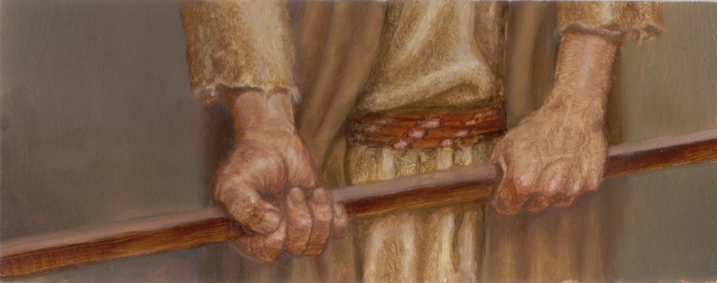
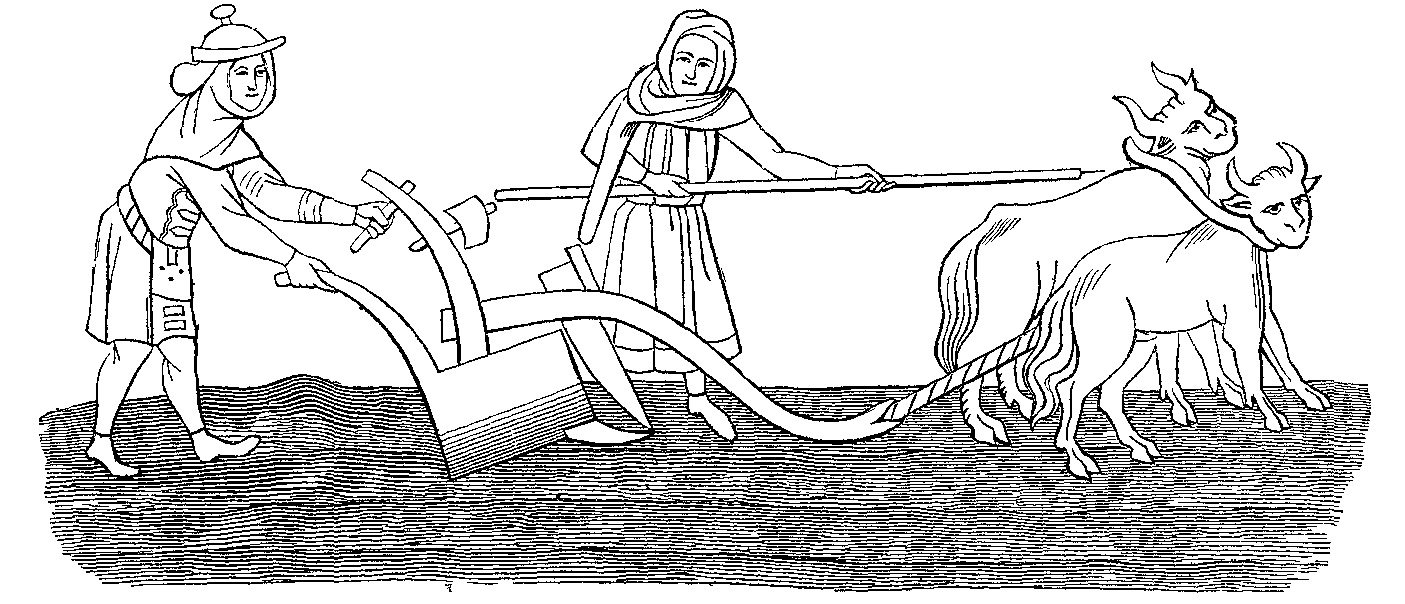
1st – The oxgoad is a long pole or stick with a pointed piece of iron fastened to one end.  In the strong hands of a loving master, the ox is gently prodded, guided, steered, and driven in the desired direction when plowing the fields.  When a stubborn ox attempts to kick back against the goad that is causing it discomfort, the ox will actually inflict more pain, driving the pointed end deeper into its flesh.       

2nd – The oxgoad is designed for an ox and for no other beast.  When Jesus likened the proud Pharisee Saul (and every child of God) with a brute beast, Saul’s heart likely pounded with incredible indignation.  By birth a Jew, by citizenship a Roman, by education a Greek, “as to the righteousness which is in the Law, found blameless” (Philippians 3:6 NASB), Saul was a Pharisee of Pharisees.  He sat at the top of the spiritual “food chain” in Jerusalem, and now Jesus of Nazareth is comparing him to a bovine!

However, when you consider this for a moment, you realize that the comparison to an ox was actually a greater insult to the beast!  Oxen did exactly what God created them to do—serve and glorify the One who created them.  Oxen bend their necks to the yoke and to the one true God, who has placed man over them as ruler and lord.  Man is the only creature who refuses to submit to the revealed will of his Creator.

King David, possessing much greater self-awareness than Saul of Tarsus, freely confessed, “When my soul was embittered, when I was pricked in heart, I was brutish and ignorant; I was like a beast toward you” (Psalm 73:21-22).

As we close out Part I, here are just a few examples of oxgoads God uses in the lives of His people:

Sermons; suffering; doctrine; difficulty; adversity; affliction; godly counsel; holy confrontation; conviction of the Holy Spirit; financial reversal; business failure; academic probation

You might like to take some time to identify other oxgoads you have kicked against in the past.  What was the result of your rebellion?  Did you find that your pain actually increased as you resisted?  What would you do differently today?  Remember, all Scripture, rightly understood, is an oxgoad—both to the sinner and the saint.  This is the Gospel.  This is grace for your race.  NEVER FORGET THAT…AMEN!
7 Comments

Filed under General

Where Does Your Strength Come From?

Paul wrote to Timothy: “You then, my child, be strengthened by the grace that is in Christ Jesus” (2 Timothy 2:1).  It is instructive to note what Paul did NOT say here; he did not urge Timothy to be strengthened by what I call the 5 P’s . . .

  • Power
  • Position
  • Prosperity
  • Prestige
  • Pleasure

Paul’s instruction was clear.  Timothy was to be strengthened by the grace of God.  This grace, which all Christians have been given, is as undeserved and unmerited as it is unlimited.  Flowing directly from the Fountainhead Himself, the grace of Christ is without measure and readily available to all who trust in Him.

The problem for many Christians today is that they do not understand the role of grace after salvation (being raised from death to life) and prior to glorification (eternally received into the presence of the King).  This period of time in between is called sanctification; it is the time you are actually running your race.  Sanctification is the process of growing up into Christ, and this too is all of grace.  We don’t begin the race in grace, finish the race in grace, but run the race in our own strength.  We have not been called by God to run by the sweat of our own spiritual strength.  Galatians 3:3 makes this perfectly clear: “Are you so foolish?  Having begun by the Spirit, are you now being perfected by the flesh?”

Everything about the Christian life is based on God’s grace.  The race begins in grace, is run in grace, and is finished in grace.  Along the way, every physical and spiritual blessing we receive flows from His inexhaustible reservoir of grace.  We strive in grace, we suffer in grace, and we succeed in grace.  It is all of grace!  Yet we are the ones called by God to run our own race.  We will give an account to Christ at the end of time regarding how well or how poorly we have run (2 Corinthians 5:10).  The only way we will succeed in this is by knowing it is all of grace.  You see, it is grace that motivates us to continue running when we would rather not. 

So regardless of where you are right now in the race that God has set before you, whether you feel like you are loping downhill or trudg0ing uphill, the final outcome of your race has already been settled by the cross work of Christ.  He who began your race has promised to complete it (Philippians 1:6) and His promise is not conditional.  It is not based on your performance along the way.  The “score” has been settled by your Lord, who hung on that cross for you.  When He said, “It is finished!” (John 19:30), He meant what He said!

 God neither grants nor withholds blessings based on your performance in the race.  It is always based on what Christ has already accomplished on your behalf.  This is the Gospel.  This is grace for your race.  NEVER FORGET THAT…AMEN!
Leave a comment

Filed under General

Comfort From the King

We have a tendency to think when we are faced with suffering and sorrow we are undergoing an experience unknown to the truly committed child of God.  Not true, beloved, not true!  Suffering is a shared experience.  Even the heroes of the faith faced suffering and sorrow of every kind and needed comfort from the King.

In Acts 18:9 we read, And the Lord said to Paul one night in a vision, “Do not be afraid, but go on speaking and do not be silent.”  Here we see that the greatest of all the apostles needed comfort in time of need.  Fear was not foreign to the faithful.  Comfort is needed by every child of God.  Moses needed the comfort of God time and time again.  Whether facing Pharaoh, the raging waters of the Red Sea, or on his 40 year death march, Moses continually needed the comfort of God.  Samson needed the comfort of God while the thousand he slew with the jawbone of an ass lay dead on the ground.  David the giant-slayer needed the comfort of God while on the run from King Saul.  After one of the greatest victories recorded in Scripture, Elijah needed the comfort of God as he cried out for his own death.  Peter who denied his Lord three times needed the comfort of God to get back up and feed His sheep. 

Comfort is necessary because the story of our King is a story of suffering.  And your story is part of His story.  From being thrown out of the Garden (Adam and Eve) to thrown in prison (Peter and Paul) suffering is woven into the fabric of the lives of God’s people.  Suffering is a result of sin and where there is suffering, there is comfort from the King with a promise of something even better.  RENEWAL!  In every moment of suffering and sorrow we have the promise of the King that the best is yet to come.  All things will be made new and there will one day be no move tears, sorrow, or suffering.  Receive His comfort today and know that He will not rest until you are brought safely home.  This is the Gospel.  This is grace for your race.  NEVER FORGET THAT…AMEN!

Leave a comment

Filed under General