The Challenge With Change

The change I would like us to meditate on today is not the change you might have in your pockets or that’s lying around on the dresser or in your car. I’m talking about the change takes place every moment of every day. And after changing diapers for four babies in our home, I have come to the profound conclusion that the only person who really likes change is a wet baby!

Every aspect of our lives is in a constant state of change . . . whether we like it or not. No matter who you are or where you live or what level of education you have completed, your life is a maze of twisting, turning changes . . . that may be for the better or the worse. Our bodies are in a constant state of change. Someone has said that we are all dying at the rate of 60 minutes an hour. We lose hair. We gain weight. We need more energy and less gas. Life is a constant challenge of change, and none of us can do anything about it.

But there is one thing in our lives that remains constant and unchanging.

Jesus Christ is the same yesterday and today and forever.  (Hebrews 13:8)

The immutability of God (that is, His eternally unchanging nature) is a comfort to the Christian. Jesus is the same yesterday and today and forever. “He who is the Glory of Israel does not lie or change his mind; for he is not a man, that he should change his mind” (1 Samuel 15:29). He is “the Father of the heavenly lights, who does not change like shifting shadows” (James 1:17).

Now, that certainly does not mean that God is predictable or manageable! He bursts into our lives at times when we least expect Him to show up. And there are those times when we cry out to Him, but He seems to be silent. But through it all, we can count on Him and trust in Him, because He does not change!

Now, inasmuch as we are in a constant state of change, nothing happens to us by accident or due to some random roll of the dice. This may come as a surprise to some, but there is no such thing as “good luck” or “bad luck.” Change has no sovereignty over our lives; only God is sovereign. It is “God who holds your breath in His hand and owns all your ways” (Daniel 5:23b NKJV), and not so much as a bird falls to the ground apart from His will (Matthew 10:27).

God is seated on the throne, ruling over all the universe and sovereign over everything that happens, including all the changes we go through. And the one change that we welcome most of all is the change that is being wrought in us by the Holy Spirit—who, if He is indwelling us by virtue of faith in Jesus Christ, is conforming us into the likeness of Christ. Sometimes that change is painful, at other times it is disruptive. Often it is utterly imperceptible to us. But always it is for our good and the glory of God.

The work of the Gospel in our lives is to work more of Jesus into us and more of us out. As change in our lives is making us decrease and depend more and more on God, Jesus is increasing in our lives and anchoring us more firmly on the Rock of life. As John the Baptist said, “He must become greater; I must become less” (John 3:30). Change is a good thing for the Christian, because it always passes through the nail-scarred hands of the Unchanging One.

A fitting close today comes from an unknown author: “Life is change. Growth is optional. Choose wisely.”

So . . . what do you choose today?

This is the Gospel. This is grace for your race. NEVER FORGET THAT . . . AMEN!

Leave a comment

Filed under General

April Fools’ Day: From Foolish to Wise!

april fools dayCelebrated in many countries on April 1st of each year, Aprils Fools’ Day is a day when people like to play practical jokes and tricks on each other.It is not a national holiday, but it is observed nationally in a big way in the United States.From the common “Your shoe’s untied!” to “I’ve fallen and I can’t get up!” to more elaborate shenanigans, such as setting a roommate’s alarm clock ahead an hour, there are countless pranks, hoaxes, and practical jokes that end up in the unsuspecting victim hearing the cry, “April Fools!”

The Boland family has also been known to play a few April Fools’ jokes on each other over the years . . . especially on me!

Now I’d like to look at the other side of the coin.Instead of practical jokes, let’s take a brief look at what the Bible has to say about wisdom through the pen of James:

If any of you lacks wisdom, let him ask of God who gives to all men generously and without reproach, and it will be given to him.(James 1:5)

The wisdom from above is first pure, then peaceable, gentle, reasonable, full of mercy and good fruits, unwavering, without hypocrisy.(James 3:17)

There is a HUGE difference between the wisdom of the world and the wisdom of the Word.To be wise in the eyes of the world is to live for yourself and the satisfaction of your own selfish ambition.It is, to be blunt, to play the part of the fool.To be wise in biblical terms is to know and understand the things of God: to know God, to love God, and to serve God. It is to do what is pleasing in His sight.

Notice that James says if you lack wisdom you need only ask God.Why?Because God is the source—the only source of wisdom—and He grants it to those who sincerely seek it from Him. You may recall that Solomon asked God for wisdom and the Lord graciously responded. “God gave Solomon wisdom and very great insight, and a breadth of understanding as measureless as the sand on the seashore” (1 Kings 4:29).

James also makes it clear that there is a difference between the wisdom from above and the wisdom from below.Wisdom from below has self at the center of it; wisdom from above has the Savior at the center of it.Because God is the source of true wisdom, we see just how clearly wisdom is linked to godliness.“The fear of the Lord—that is wisdom,” Scripture assures us, “and to shun evil is understanding” (Job 28:28).

If you want to know how rooted you are becoming in the wisdom from God, James gives us a simple guide for self-examination.Take a moment to rate yourself in the following key areas (0 = non-existent / 5 = maxed out).

Purity                           1          2          3          4          5

Peaceable                   1          2          3          4          5

Gentleness                  1          2          3          4          5

Merciful                       1          2          3          4          5

Fruit of the Spirit         1          2          3          4          5

Without hypocrisy       1          2          3          4          5

The person who is wise in the eyes of God is not perfect.Rather, this person is making progress because of the “new” heart that has been implanted within by God Himself.As new creations, we have new desires, new dreams, new goals, and new reasons to do everything.As my spiritual father D. James Kennedy used to say, “God has changed your wanter!”You don’t want what you once wanted and you do want what you never imagined you would ever want.You begin moving in new directions and your heart begins beating for new passions.

God is the fountainhead of all true wisdom, and the more we drink from His fountain, the more we are filled with His wisdom.And the more we are filled with His wisdom, the less we are being filled with the wisdom of this world, which is no wisdom at all.

This is the Gospel.This is grace for your race.NEVER FORGET THAT . . . AMEN!

Leave a comment

Filed under General

Midday…Mid-night

three-crossesWhen the sixth hour had come, there was darkness over the whole land until the ninth hour. And at the ninth hour Jesus cried with a loud voice, “Eloi, Eloi, lema sabachthani?” which means, “My God, my God, why have you forsaken me?” And some of the bystanders hearing it said, “Behold, he is calling Elijah.” And someone ran and filled a sponge with sour wine, put it on a reed and gave it to him to drink, saying, “Wait, let us see whether Elijah will come to take him down.” And Jesus uttered a loud cry and breathed his last. And the curtain of the temple was torn in two, from top to bottom. And when the centurion, who stood facing him, saw that in this way he breathed his last, he said, “Truly this man was the Son of God!” (Mark 15:33-39)

In Jesus’ day, the hours of the day were counted from the time of sunrise. The sixth hour would be noon or midday, and the ninth hour would be 3 p.m. The Scriptures tell us that at midday it became as midnight; darkness covered the whole land. Having endured the beatings, the crown of thorns, and the nine-inch nails driven through His feet and hands, our Lord hung spread-eagled on a rough, wooden cross. Jesus now entered into the most horrific aspect of His crucifixion. It can easily be missed, because it is, in a word, unfathomable.

The darkness mentioned here in the Scriptures reflects the Father removing His fellowship from His precious Son. From all eternity, the Father, Son, and Holy Spirit had existed in a perfect relationship of fellowship, love, and glory—until now!

It was one thing to suffer at the hands of men who were used of God to punish the sinless Savior for the deeds of sinners like you and me; but now the Holy Father unleashed His unimaginable wrath and judgment on His beloved Son, who was hanging on the cross, bleeding and dying, to pay the penalty for our sins—all our sins. Because God’s eyes are too pure to look upon evil (Habakkuk 1:13), He turned his back on Jesus, who had become sin on our behalf so that in Him we might become the righteousness of God (2 Corinthians 5:21).

The physical pain Jesus endured during His crucifixion—we get our English word excruciating from the French word for crucify—is truly difficult for most of us to imagine. That shuddering, gasping agony is reduced to the level of a mosquito bite, however, compared to the shattering supernatural anguish He experienced when He suffered something no Christian will ever have to experience: being forsaken of the Father.

The terrifying darkness at the sixth hour was not the result of some natural phenomena, such as an eclipse or dust storm; it was a supernatural sign from God to the watching world. At the time when the sun would normally be at its brightest, midday became as midnight, and God judged the One who had never known sin in the place of those who had known only sin since Adam and Eve’s catastrophic fall in the Garden of Eden.

Luke’s Gospel describes the darkness thus: “The sun was darkened” (Luke 23:45). In the original Greek text, we would read this statement as “the sun failing.” The One who called the world into existence and hung it on nothing, who spoke light into existence, sent this supernatural darkness so that we might understand the blackness of our sin and the damage it has caused.

Darkness in the Scriptures is often associated with judgment against sin and wickedness. The prophets spoke often of God’s judgment against sin that would be demonstrated in the form of darkness. Who can forget the darkness God sent to cover the land of Egypt as judgment against Pharaoh when he refused to let the Israelites go (Exodus 10:22-23)? Darkness is also used as a description of hell: “Cast the worthless servant into the outer darkness. In that place there will be weeping and gnashing of teeth” (Matthew 25:30).

For three solid hours, from the sixth to the ninth hour, God poured out His cup of wrath and judgment on His precious Son, who was paying a debt of sin He did not owe for those who owed it but could not pay. Jesus hung on that cruel cross, forsaken by His Father, and endured the unthinkable darkness of sin and hell. The light of eternal love between the Father and the Son had been utterly extinguished. On that day, when Jesus willingly took our place as our Substitute . . . our Savior. He experienced the “outer darkness” that we will never have to experience. J. C. Ryle profoundly wrote:

It was meet and right that the attention of all around Jerusalem should be arrested in a marked way, when the great sacrifice for sin was being offered and the Son of God was dying. There were signs and wonders wrought in the sight of all Israel, when the law was given on Sinai. There were signs and wonders in like manner when the atoning blood of Christ was shed on Calvary. There was a sign for an unbelieving world. The darkness at mid-day was a miracle which would compel men to think.

As we celebrate Easter this week, and it is “meet and right” that you and I take some time to reflect on the sacrifice Jesus made on the cross for our sins. As we reflect on the unimaginable price Jesus paid, let us not merely remember the physical pain our Lord endured, but the searing supernatural pain of separation from His Father that He experienced so that we would never have to. He did it in our place and on our behalf. He did it for me . . . and for you. And He did it fully and finally and completely, as evidenced by His victory cry from the cross: “It is finished!” (John 19:30.)

Truly, Jesus is the Light of the world. Is He your light? By God’s grace may it be so this Easter season!

This is the Gospel. This is grace for your race. NEVER FORGET THAT . . . AMEN!

1 Comment

Filed under General

The Witness of His Weeping

tearsHaving worked in youth ministry for many years, I often ask young people what their favorite Bible verse is. Many quickly seize on the shortest verse in the Bible, “Jesus wept” (John 11:35). Perhaps it is the easiest one to remember! Well, for our Wednesday message for Holy Week, I’d like to discuss this verse, plus another example of the witness of His weeping.

John’s two-word account of Jesus weeping might seem a bit strange to those who know the context of the story in which it falls. It was the occasion of the death of Christ’s friend Lazarus. Jesus had received word that Lazarus was sick, yet He delayed two days before going to him. Jesus explained to His disciples that He planned to raise Lazarus from the dead in order to glorify the power of God. As He stood outside Lazarus’ tomb, Jesus knew that in mere moments He would raise His beloved friend from the dead.

And yet He wept. Why? I believe it was to show us just how much our Lord hates sin. It is sin that has brought on death and Jesus had come to atone for that sin . . . both with His sinless life and His sacrificial death on the cross. And yet, in spite of His perfect, eternal knowledge of His plan to redeem the world, Jesus wept, giving stark witness to just how much God is grieved by our sin.

Let’s look at another time when the Lord of glory was moved to tears:

As [Jesus] approached Jerusalem and saw the city, he wept over it and said, “If you, even you, had only known on this day what would bring you peace—but now it is hidden from your eyes.”  (Luke 19:41-42)

As Jesus was approaching Jerusalem during His Passion week, He wept again. The compassion of the Creator of the universe is simply striking! The depth of His care and concern for fallen, sinful, broken people is overwhelming. Jesus weeps because He knows how sin has wrecked everything that was good. Nothing has been left untouched by the hideous blight of sin. Creation itself groans to be redeemed by our Lord and Savior (Romans 8:22).

The hearts of God’s people had grown cold, callused, and closed—resistant to the Good News of the Gospel Jesus was preaching. The Pharisees and religious leaders had become “blind guides” (Matthew 23:24) to the things of God. The apostle Paul explained it this way:

The god of this age has blinded the minds of unbelievers, so that they cannot see the light of the gospel of the glory of Christ, who is the image of God. (2 Corinthians 4:4).

Jesus wept—at least twice that we know of—as He surveyed the terrible mess we have made of His world. Why? Because Jesus has a heart that overflows with compassion for all people, including “blind guides” like you and me. That is what we all are before Jesus shows up and gives supernatural sight to the blind, raising us from death to life. Jesus is the One the prophet Isaiah spoke about who would come and “proclaim peace and salvation to Zion” (Isaiah 52:7). Do you know this peace? Have you received it by grace, through faith in the only One who can meet you in your place of deepest need?

The witness of the weeping of our Lord and Savior should be a source of great encouragement to you today. Jesus cares about you deeply. Jesus loves you intimately. Jesus forgives you continually. Remember, on His way into Jerusalem, He knew what awaited Him on the Hill Golgotha, yet He refused to stop one step short of going all the way to the cross for you and all those who transfer their trust to Him.

This is the Gospel. This is grace for your race. NEVER FORGET THAT . . . AMEN!

Leave a comment

Filed under General

Holy Week

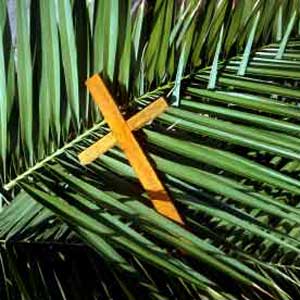
palm sundayYesterday was Palm Sunday: the day we remember our Lord’s triumphal entry into Jerusalem, riding on the foal of a donkey . . . knowing full well that His way ultimately led to the cross on Calvary’s Hill.

Behold, your king is coming to you; righteous and having salvation is he, humble and mounted on a donkey, on a colt, the foal of a donkey. (Zechariah 9:9)

Let’s dwell on this passage for a moment and drink in the overwhelming humility of the Lord Jesus Christ! He didn’t ride into Jerusalem on a nobleman’s stallion or in a conqueror’s chariot. No, Jesus rode on the foal of a donkey, so that the Scriptures would be fulfilled—the Scriptures He wrote (2 Timothy 3:16). And He wrote into the script the most unlikely of animals to carry the King of kings and Lord of lords upon his back.

You will remember that the people were filled with excitement and enthusiasm; they made it known to all who were in earshot: “Hosanna to the Son of David!” they cried. “Blessed is He who comes in the name of the Lord” (Matthew 21:9).

Hosanna means “save now,” and that is exactly what these people were anticipating: salvation now from the repressive rule of Rome. The people also made their joy known to all those who could see, greeting their King by waving palm branches and laying them as a covering for the path He was riding on.

The next day the great crowd that had come for the festival heard that Jesus was on his way to Jerusalem. They took palm branches and went out to meet him, shouting, “Hosanna!” “Blessed is he who comes in the name of the Lord!” “Blessed is the king of Israel!” (John 12:12-13).

Palm branches were symbolic of goodness and victory in that day. Revelation 7 describes how people from every nation will raise palm branches to honor Jesus. During Holy Week, the people were waving branches to honor the Messiah, eagerly anticipating a smashing triumph over the hated Roman oppressor . . . not a triumph over sin. They were expecting a political leader and military messiah who would restore Israel to her former glory. They gave absolutely no thought to the notion of a Suffering Servant who would take away the sins of the world.

Just five days later, when the people realized that Jesus would not be expelling the Roman conqueror, their shouts of praise turned into screams of condemnation: “Crucify Him! Crucify Him!” (Luke 23:21). Before the fresh-cut palm branches had lost their healthy green color, the people were seeking the death of the One who had come to give them life.

Jesus was undeterred. He was on a mission, and He would not let anything stand in His way—neither the applause of men nor their condemning cries. He was in the dead center of the will of His Father . . . and in a few days He would be hanging from a cruel cross, naked and bleeding, gasping out His last agonized breaths.

Regardless of where this finds you today as we continue advancing through Holy Week, take some time to reflect on the One who came in unimaginable humility to conquer both sin and death so that you might have eternal life. “For the joy set before him he endured the cross,” Scripture tells us, “scorning its shame, and sat down at the right hand of the throne of God” (Hebrews 12:2).

Bearing shame and scoffing rude,
In my place condemned He stood;
Sealed my pardon with His blood.
Hallelujah! What a Savior!

This is the Gospel. This is grace for your race. NEVER FORGET THAT . . . AMEN!

[1] “Hallelujah! What a Savior,” by Philips Bliss, 1875.

1 Comment

Filed under General

Getting Rid of “Grave-Clothes”

grave clothesWhen Jesus shows up and calls us by name, we are taken out of the cold, dead grave—the death of transgressions and sins (Ephesians 2:1)—and were given new life (Romans 6:4). And yet, if we are honest, we would admit that there are times when we still feel like we are wrapped tightly in our old grave-clothes.

Jesus called in a loud voice, “Lazarus, come out!” The dead man came out, his hands and feet wrapped with strips of linen, and a cloth around his face. Jesus said to them, “Take off the grave clothes and let him go.”  (John 11:43-44)

Jesus called out to Lazarus, who had been dead for four days. The smell and signs of death must have been awful. Having served in the Hollywood Fire Rescue for 9 ½ years, I can speak from personal experience about the assault that a body four days’ dead wages on the senses. To put it delicately, you know you are coming upon the corpse from a long way off! Yet, Jesus overcame a dead Lazarus with a word of life from His lips. It has been well said that if Jesus had not called Lazarus by name, every dead person within earshot would have come forth from their grave.

The smell and signs of death still affect us all. With strips of linen still wrapped around our hands and feet, we find it easy and natural to orient our lives around ourselves and our desires, rather than our Savior and others. Bound by grimy grave-clothes, we seek to further the agenda of our own kingdom rather than the kingdom of God. We pursue our own plans and purposes. We work toward accomplishing our own goals and dreams. We seek to sit on the throne of our lives rather than giving Jesus His rightful place.

Only the Gospel can take off our grave-clothes and set us free.

You, my brothers, were called to be free. But do not use your freedom to indulge the sinful nature; rather, serve one another in love. The entire law is summed up in a single command: “Love your neighbor as yourself.”  (Galatians 5:13-14)

Jesus has called us out from the grave and freed us from the stinking grave-clothes of death. But the apostle Paul makes it clear that we are not to use our freedom to indulge our sinful desires. We are to serve and love God and others rather than ourselves.

When was the last time you were bound by the grave-clothes of proving you were right rather than proving that you truly love? When was the last time you were bound by the grave-clothes of seeking the approval and applause of man rather than the heartening smile of God? When was the last time you were bound by the grave-clothes of satisfying your selfish desires rather than seeking first the kingdom and righteousness of God?

Only living in the light of the love that is better than life—the amazing, gracious love of Christ—will rid us fully and completely of the grave-clothes that once were the signs of death. Because we are alive in Christ (Romans 6:11), we are set free to live the life we have been called by God to live.

Do we live that new life imperfectly? Yes, we certainly do! Paul warned that “The sinful nature desires what is contrary to the Spirit, and the Spirit what is contrary to the sinful nature. They are in conflict with each other, so that you do not do what you want” (Galatians 5:17). Scripture assures us that we will stumble; but when we do, we need only remember that we are completely forgiven and unconditionally loved. Remembering this glorious Gospel truth is the only way to throw off those old grave-clothes forever!

This is the Gospel. This is grace for your race. NEVER FORGET THAT . . . AMEN!

1 Comment

Filed under General

The “Good” in Good Work

community-service1The other day after our service at the Cross, a couple came up to me and asked, “Pastor, what makes a good work good?” In a word, the answer is God. The eighteenth-century pastor and author Abraham Booth provided one of the best definitions I have ever seen when it comes to good works:

To constitute a work truly good, it must be done from a right principle (the love of God), performed by a right rule (will of God contained in the Scriptures), and intended for a right end (the glory of God).

The world is full of people doing “good things” that help many people. The hungry are fed. The naked are clothed. The homeless are given shelter. Yet even though a work benefits another, it is not truly good unless it is being done for the glory of God. It is a Godward motivation that makes a work good, a work rooted in the love of Christ.

And you, my son Solomon, acknowledge the God of your father, and serve him with whole-hearted devotion and with a willing mind, for the Lord searches every heart and understands every motive behind the thoughts.  (1 Chronicles 28:9)

When we are doing good works in an attempt to broker God’s favor and secure His blessing, there is no “good” in that work at all. The work has become all about us rather than God. It is living under the umbrella of legalism: working (serving) to gain favor or avoid consequences. Regardless of how “good” a work might be in the eyes of the watching world, when it is done from a legalistic motive, it is void of anything good, because it becomes all about the one doing the work rather than the One it is to be done for.

Only the truths of the Gospel can free us from self-serving motives and move us to serve our God out of a heart that overflows with thanksgiving for the promised blessings already received through grace. The more deeply we grasp the truths of the Gospel, the more deeply we are able to serve God out of a loving heart that beats to expand God’s kingdom . . . rather than our own.

When we are working to expand the kingdom of God, every work we do is a good work. Every work matters at this level of living, because our hearts have been oriented away from self and toward our Savior. Now when the hungry are fed it is a good work. When the naked are clothed it is a good work. When the homeless are given shelter it is a good work. Everything is a good work when God is in it and the heart behind the work is doing it out of a grateful response to the grace of God that has been poured out in the past and promised in the future.

This is the Gospel. This is grace for your race. NEVER FORGET THAT . . . AMEN!

Leave a comment

Filed under General

Personal Peace Plan

peaceOn a scale of 0 – 10 (with 0 being “non-existent” and 10 being “breathtaking”), how would you rate your daily experience of the peace of God? If you are like most of us, the number probably fluctuates throughout the entire range as you go through your week. Today’s word of encouragement is dedicated to helping us all crystallize our own “personal peace plan” in order to maximize our daily experience of the peace that passes all understanding that God promises to us in Scripture.

Do not be anxious about anything, but in everything, by prayer and petition, with thanksgiving, present your requests to God. And the peace of God, which transcends all understanding, will guard your hearts and your minds in Christ Jesus. (Philippians 4:6-7)

If you are a student of the Scriptures, you are probably quite familiar with these verses. I certainly have preached on them and prayed through them more times than I can count. Yet how often I still find myself needing to lay hold of this promised peace! How often I find myself being delivered by God’s mercy and still doubting God’s might, as if He cannot handle what I am currently going through. These are the times when I need another dose of Gospel sanity to slay the dragon of doubt.

To be sure, the God who created order and beauty out of chaos can surely meet my need for personal peace, regardless of what I may be facing. And the passage from Philippians provides us all with the only personal peace plan that really works. The key to crushing our anxiety about anything is found in the truths of the Gospel, and not in the bottom of a bottle . . . or a package of pills . . . or the countless other ways we try to dull our distresses in life. That is why we must preach the Gospel to ourselves every day—and not just daily, but moment by moment.

The Gospel frees us, by prayer and petition, with thanksgiving, to boldly come before the throne of grace and come face-to-face with the living God. He invites us to “approach the throne of grace with confidence, so that we may receive mercy and find grace to help us in our time of need” (Hebrews 4:16). In Christ we are granted access to the One who created all things and sustains all things; in Christ we are handed the key that unlocks the door leading to the pathway of peace.

Anxious about your finances? Pray with thanksgiving and present your requests to God. Unsettled about your career path? Pray with thanksgiving and present your requests to God. Disillusioned about your parenting? Pray with thanksgiving and present your requests to God. Stressed in your singleness? Pray with thanksgiving and present your requests to God.
Worried about prodigal child? Pray with thanksgiving and present your requests to God.

Overwhelmed by obstacles in your opportunities? Pray with thanksgiving and present your requests to God. Know this: the Bible never tells you what to do (imperatives) without first telling you who you are (indicatives). Going back to the beginning of Paul’s letter to the Philippians we read this:

To all the saints in Christ Jesus at Philippi, together with the overseers and deacons: Grace and peace to you from God our Father and the Lord Jesus Christ.   (Philippians 1:1-2)

The Bible tells us who we are first before it tells us what to do because the key in doing is found in remembering. God’s personal peace plan is rooted in our remembering who we are “positionally” before we can begin living out His commands “practically.”

You may ask, “What am I to remember about my position?” The answer is that if you have trusted in Christ’s atoning work on your behalf, you are a saint—literally, one who has been set apart for God. You are a child of the Most High God! Remembering that each day will go a long way toward conquering your anxiety . . . and anything else that threatens your peace.

This is the Gospel. This is grace for your race. NEVER FORGET THAT . . . AMEN!

Leave a comment

Filed under General

Vision in the Valley of Dry Bones

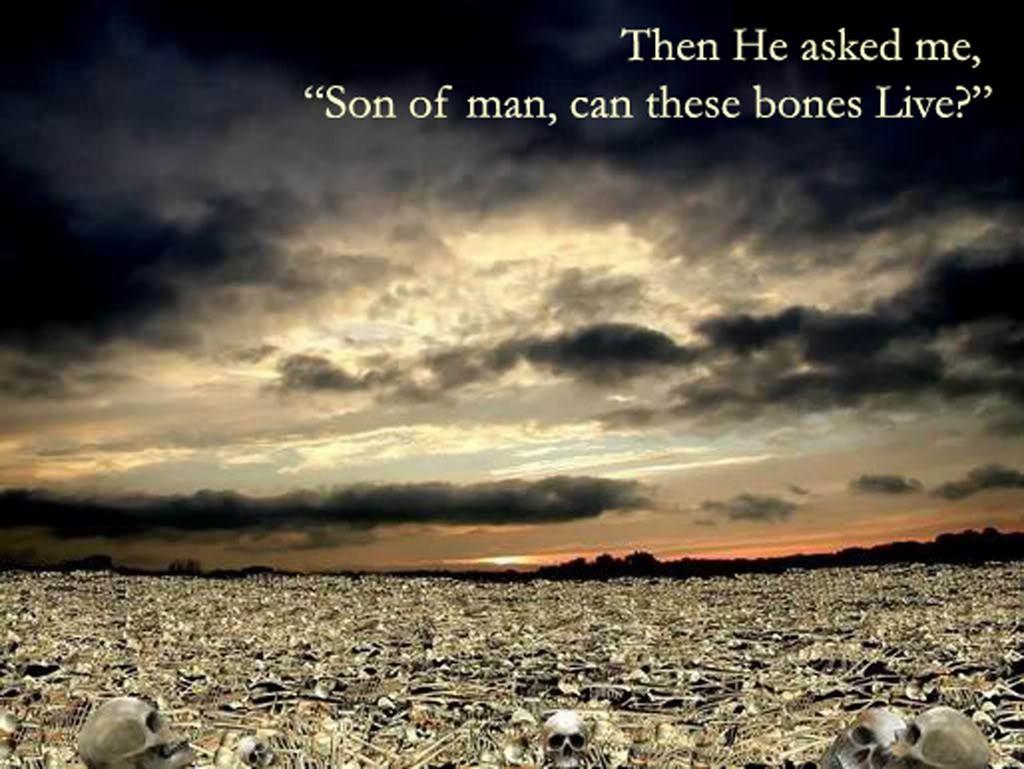
dry bonesToday we’ll look at a portion of Scripture that is a source of great comfort and encouragement for anyone who is struggling with anything.

The hand of the LORD was upon me, and he brought me out by the Spirit of the LORD and set me in the middle of a valley; it was full of bones. He led me back and forth among them, and I saw a great many bones on the floor of the valley, bones that were very dry. He asked me, “Son of man, can these bones live?”
I said, “O Sovereign LORD, you alone know.”
Then he said to me, “Prophesy to these bones and say to them, ‘Dry bones, hear the word of the LORD! This is what the Sovereign LORD says to these bones: I will make breath enter you, and you will come to life. I will attach tendons to you and make flesh come upon you and cover you with skin; I will put breath in you, and you will come to life. Then you will know that I am the LORD.’”
So I prophesied as I was commanded. And as I was prophesying, there was a noise, a rattling sound, and the bones came together, bone to bone. I looked, and tendons and flesh appeared on them and skin covered them, but there was no breath in them.
Then he said to me, “Prophesy to the breath; prophesy, son of man, and say to it, ‘This is what the Sovereign LORD says: Come from the four winds, O breath, and breathe into these slain, that they may live.’” So I prophesied as he commanded me, and breath entered them; they came to life and stood up on their feet—a vast army. (Ezekiel 37:1-10)

For far too many today, life is being lived in a valley of dry bones, very dry bones. A career that once held great promise has careened out of control because of addiction. A marriage that started in a magical world has ended up in a world of misery because of self-centeredness. A ministry of service that began building a monument to the glory of God has come crashing down in the ruins of everything a man once stood for. Countless careers, marriages, and ministries have become nothing more than a valley of dry bones, very dry bones.
But this is not for you!
The prophet Ezekiel gives us a wonderful word of comfort and encouragement . . . no matter what circumstance we find ourselves in today. You see that the first vision given to the prophet was not a pretty sight “I saw a great many bones on the floor of the valley.” Dry, dead bones were scattered everywhere.
On the heels of this desolate picture of death we have the rhetorical question asked by our omnipotent God, “Can these bones live?” The answer we all must give, of course, is a resounding “YES,” for it is God asking the question and it is God who will breathe life into them. And God will breathe life into whatever area of your life is on “life support” right now. He will breathe new life into your struggling career. He will breathe new life into your strained marriage. God will breathe new life into your misaligned ministry of service to Him.
Notice the second vision: “The bones came together, bone to bone.” As of yet, however, there was no breath in them. Imagine what was running through the mind of the prophet when he heard the rattling sound of those dead dry bones coming together, attached by tendons, and being covered by flesh and skin! But the vision did not stop there, because in spite of the miracle of putting the bodies back together again, there was still no life. So God took Ezekiel deeper in to his vision. God told him to prophesy and breath will enter them. Guess what? It did! From his first vision of being surrounded by nothing but dead, dry bones, the prophet now found himself standing in the midst of “a vast army” that God assembled right before his eyes.
Funny thing about God: He seems to enjoy bringing life out of death. He brought life to dead Adam with a breath in his nostrils. He brought life to these dead dry bones. He brought life to Lazarus in the tomb. He brought life to Peter after his denial of the Lord by giving to him a new vision of feeding God’s people. He brought life to Saul on the road to Damascus—Saul, who was dead in his trespasses and sins—and turned him into the apostle Paul.
And God can bring life to you and anything you are facing today that is either on “life-support” or already dead. You have His Word on it! “I am the way and the truth and the life,” He tells us (John 14:6). Now you need only to catch His vision in whatever valley of dry bones you are facing today . . . and watch Him work!
This is the Gospel. This is grace for your race. NEVER FORGET THAT . . . AMEN!
1 Comment

Filed under General

The Truth of True North

Need Direction  Jesus is the way  John 14:6The dictionary definition of True North is the singular point from which all things radiate, the direction along the earth’s surface that points toward the geographic North Pole.  If you hold a compass and walk in the direction of the needle pointing north, you are actually approximately 18 degrees west of what is commonly referred to as north.  True North is what we call the North Pole and the needle always points in this direction, which helps your orient yourself in your travels.

True North is a popular navigational term used by sailors and explorers.  The term is also used in the business world in identifying the one true objective that will provide a strong foundation for all strategic decision-making.  Some examples are:

  • Provide the absolute best customer service in our industry
  • Deliver double-digit returns to the stockholders
  • Grow production volumes at double-digit rates

For the Christian, Jesus is “True North,” the singular point from which everything in life is to radiate.  The Bible makes this clear from Genesis to Revelation, and it is beautifully set forth in the following verse:

In him we live and move and have our being.  (Acts 17:28)

Jesus is the Creator and Sustainer, the Author and Finisher of our faith, and He is the only reliable reference point for navigating through the twists, turns, trials, and tribulations of life.  The Lord Jesus Christ is to be the resting place for the needle of our hearts’ deepest desires.  He is to be the fixed reference point for all of life, where all of our decisions are to be rooted and realized.  In Him we live.  In Him we move.  In Him we have our being.

When our “True North” is not in Him, we veer off course, we become disoriented, and we head off in the wrong direction.  When our hearts deepest desire is anything smaller than God, our “True North” becomes that thing.

We all worship something.  Either is it God or it is something smaller than God . . . and anything smaller than God is an idol.  I’m not talking about a statue of wood, stone, or metal.  No, we are far too sophisticated for that.  Anything that holds the affections and desires of our hearts other than God is an idol.  Just a few of these idols are:

  • Professional success
  • Financial security
  • Power
  • Applause of man
  • Sexual pleasure

The great reformer John Calvin once said, “Our hearts are idol factories!” The list is virtually endless.  The desires of the heart that properly belong to God can be given over to anything.  We make idols out of everything.  We may even make idols out of things you and I would call “good things,” such as our children or our church service. And that is why we need Jesus as our “True North” to fix our focus and orient our lives.  When Jesus is our “True North,” we do not waver when we face that proverbial “fork in the road.”  Instead of wondering which route to take, we simply continue on the path toward Jesus.

One of the best Scriptures for identifying our “True North” objective is Matthew 6:33.

Seek first his kingdom and his righteousness, and all these things will be given to you as well.

So . . . do you feel like you have been drifting lately?  Spending any time careening from wall to wall?  Get back to your “True North” and you will get back on track.  When we are seeking Jesus and His kingdom and His righteousness first, we will not seek anything else.  Saying YES to Jesus means we are saying NO to everything else.  Living in the light of the truth of “True North” will have us living for the glory of God and the good of others.  Now that is a life that has meaning and purpose . . . a life that is truly worth living.

This is the Gospel. This is grace for your race. NEVER FORGET THAT . . . AMEN!


Leave a comment

Filed under General