
WE NEVER OUTGROW THE GOSPEL!

 images

As a pastor of a church plant, I am often asked how we gear our church services; are we aiming at the unbeliever or the believer? In other words, what people are asking me is whether I focus on saving the unbeliever or strengthening the believer. My answer is always the same:

“YES!”

Because our every worship service is geared toward sinners, the preaching of the Gospel is intended to reach both the unbelieving sinner and the believing sinner. Both groups are in constant need of God’s grace: the grace of rescue . . . the grace of revival . . . the grace of restoration! Because God is in pursuit of rebels on the run, the Gospel applies to believers and unbelievers equally.

The question is not what group we are targeting for our messages; rather we must ask ourselves this: Is the Gospel message—that Christ died to pay the penalty for all our sins and rose from the grave, thereby cancelling sin’s penalty and undoing its power—being preached clearly and forcefully?

The Gospel is for sinners, after all, and you and I are still sinners after we have been saved. Even after we welcome Jesus into our hearts, we are still sinners, both by nature and by habit. As I often tell our congregation, it is true that sin no longer reigns after we place our trust in Christ, but sin still remains and it is constantly trying to drag us away from our Savior. Christian believers of all ages and stages of growth are in constant need of being redirected away from sin and toward our Savior. We are prone to wander! We are sheep who are easily lured away to search for greener pastures than the one God has graciously provided for us.

There are countless voices trying to get our attention on a daily basis. And every one of those voices seeks to shape your life by ruling your heart. That is why you must be intentional about preaching the Gospel truths to yourself every single day. There is no voice with greater potential for influencing your life than your own. You are constantly talking to yourself, and you believe what you tell yourself . . . so why not be intentional about reminding yourself of the words of Gospel life?!

Just as the spiritual disciplines of Bible reading, prayer, church attendance, service, and giving are “means of grace,” preaching the Gospel to ourselves is another means that God has graciously given us to strengthen our faith, grow us up into Christ, and help us live the life God has called us to live. We benefit from this grace in both of the following two perspectives: proactive and reactive.

PROACTIVE: we fix our focus on the truths of the Gospel daily. It is our daily meditation, making the Gospel one of the most powerful “offensive” weapons against the world, the flesh, and the devil.

REACTIVE: we overcome our temptations and sin patterns (doubt, fear, disappointment, frustration, anger, etc.,) by recalling the truths of the Gospel, thereby developing a Gospel perspective and evaluating what is happening by looking through the Gospel lens.

So . . . how are you doing at preaching the Gospel to yourself? Do you do it daily? Do you remind yourself that God so deeply an eternally loved you that He sent His only begotten Son to die in your place? Remember: what rules your heart shapes your life. The more you preach the Gospel to yourself the more it will rule your heart and shape your life!

This is the Gospel. This is grace for your race. NEVER FORGET THAT . . . AMEN!    

Leave a comment

Filed under General

ARE YOU RACING FOR FIRST PLACE?

images

Some of you may remember a book titled Looking Out for Number #1 that rocketed to the top of The New York Times best-seller list in the 1970s. Almost 40 years later, that book is still ranked among The Times’ top fifteen all-time best-selling motivational books. We live in a society where everyone seems to be in the race for first place. We’re all huffing and puffing along the performance treadmill, trying to stay ahead of everyone else. We want the biggest house, the fastest car, and the latest iPhone.

But praise God for the most counterintuitive communication ever given: the Gospel!

Whoever wants to become great among you must be your servant, and whoever wants to be first must be slave of all. For even the Son of Man did not come to be served, but to serve, and to give his life as a ransom for many. (Mark 10:43-45)

The Gospel shatters society’s measure of greatness. The Gospel defines greatness by our service, not our status. Those in the race for first place will find greatness . . . but not in crossing the finish line first, but rather by serving everyone they can along the way. The Gospel simply turns the world upside down in measuring ultimate success through sacrifice and service.

Jesus set the standard for us. He said that “The Son of Man did not come to be served, but to serve, and to give his life as a ransom for many.” Jesus was the King of kings, yet he did not come to accumulate wealth and power, but rather “to proclaim freedom for the prisoners and recovery of sight for the blind, to release the oppressed, [and] to proclaim the year of the Lord’s favor” (Luke 4:18-19). For Jesus it was all about others . . . never about Himself.

Only a deep understanding of this Gospel truth will free us from our perpetual running on the performance treadmill. The Gospel frees us from relying on our “stuff” for significance. The Gospel relaxes our white-knuckle grip on the things of this world. Instead of seeking first place in the race of life, we have been called to seek first His kingdom and His righteousness (Matthew 6:33). Because of our union with Christ, we already have all the love and significance we need, so we are free to lay down our lives in serving others. The Gospel is a paradigm-shattering declaration that our Prince has already run and won the race that we were scrambling to win . . . therefore we can stop scrambling and get busy serving!

How is it with you? Has your heart been reoriented toward others? Or does it still beat primarily for you? The Gospel tells us we no longer need to run the race for 1st place . . . in fact, it warns us not to try! When Jesus’s disciples began arguing among themselves about who was the greatest, Jesus told them plainly: “He who is least among you all — he is the greatest” (Luke 9:48).

Do you understand that because Jesus gave His life as a ransom for you that you are already seated next to Christ’s throne in the heavenly realms (Ephesians 2:6)? When we fix our eyes on the Author and Finisher of our faith, we need no longer be concerned with what others are doing and how we measure up to them. There is only One whose approval matters; the One who will say to us, “Well done, good and faithful servant” if we have indeed sought His kingdom and His righteousness first.

You and I have been set free to live our lives as a thankful response to His grace. We know that in the end . . . we win! And it is not because of anything we will ever have done, but only because of everything Jesus has already done for us.

This is the Gospel. This is grace for your race. NEVER FORGET THAT . . . AMEN!    

Leave a comment

Filed under General

ATTACKING ANXIETY

untitled

Do not be anxious about anything, but in everything, by prayer and petition, with thanksgiving, present your requests to God . . . (Philippians 4:6)

Cast all your anxieties on him because he cares for you. (1 Peter 5:7)

With the sole exception of the sinless humanity of our Lord Jesus Christ, anxiety is a human experience common to the Bible. Anxiety is refusing to trust God in all circumstances. In His Sermon on the Mount (Matthew 6:25-34), Jesus tells us not to be anxious (“Do not worry”) five times and provides the remedy for anxiety: trusting in the Lord.

This biblical admonition not to worry is more than good advice; it is a moral command. It is God’s preceptive will that we, His people, not be anxious about anything. Why? Because anxiety is sin! To be sure, there are many things in life that can open the door to anxiety. From deadlines at the office to difficulties at home, anxiety is always testing the outer edges of our emotional health. So what’s the cure? How does the Bible tell you to attack anxiety?

The Lord is my strength and my shield; my heart trusts in him, and I am helped. My heart leaps for joy and I will give thanks to him in song.  (Psalm 28:7)

Here is just one of countless verses in sacred Scripture that offer the cure for conquering anxiety. Anxiety is to be met head-on, with the clear understanding that Jesus is both your strength and your shield. Jesus is your shield to protect you from the fiery “arrows of anxiety” that Satan shoots your way through every circumstance you face in life. And Jesus is your strength when these “arrows of anxiety” do find their mark. Anxiety is not to be attacked in your strength, but in the strength of the One who has nailed the sin of anxiety to the cross.

And what does this strength look like? The next few words in Psalm 28:7 provide the description:

My heart trusts in him, and I am helped.

We are to attack anxiety with a heart that trusts Jesus even when we cannot trace Him. When your sense of peace begins to turn into panic, turn your heart toward Jesus and trust in Him to get you safely to the other side of it. If God knows the number of hairs on your head (Matthew 10:29), you can be sure He knows exactly what you are going through. And the key to attacking anxiety is to always remember . . . You ARE going through it! Jesus will bring your through to the other side of every challenging circumstance you face.

Remember, anxiety is not God’s will for your life, no matter how frequently you have to deal with it. Satan wants you to distrust God and disdain His providence in your life. But this is not for you!!!

In the verses I cited at the beginning of this article, Paul says we are to attack anxiety with prayer. Is this the confession of your life today? When anxiety is attempting to overwhelm you, do you go to the throne of grace with it? The next time anxiety attacks, pray David’s prayer in Psalm 139:23, “Search me, O God, and know my heart; test me and know my anxious thoughts.”

And in 1 Peter 5:7, we find both the motive and the motivation for casting our anxiety on Jesus . . .

BECAUSE HE CARES FOR YOU!

Your Savior . . . your Strength . . . your Shield cares for you so much that He took your nails, your crown of thorns, your cross, your death, and your tomb. Let that truth set you free from anxiety by attacking anxiety with the strength of your Shield. You will overcome, because greater is the power that is at work within you than any power that comes up against you!

This is the Gospel. This is grace for your race. NEVER FORGET THAT . . . AMEN!    

Leave a comment

Filed under General

A POWERFUL PICTURE OF OUR PREDICAMENT!

index

“Redeem the firstborn donkey with a lamb, but if you do not redeem it, break its neck. Redeem all your firstborn sons. No one is to appear before me empty-handed.” (Exodus 34:20)

In God’s economy, every firstborn creature was to be offered to Him. But in this ancient ceremony we find a powerful picture of our own predicament. The donkey was an unclean creature and could not be offered up to our Lord. The donkey must be spared by the offering of a substitute (a lamb) in its place. If no lamb was offered in its place, the donkey had to die.

How could this possibly have anything to do with life in the 21st century? It is simply this: you and I are unclean before God because of our sins, just like the donkey. Spurgeon wrote:

The [donkey] is His due, but He will not accept it; He will not abate the claim, but yet He cannot be pleased with the victim. No way of escape remained but redemption—the creature must be saved by the substitution of a lamb in its place; or if not redeemed, it must die. My soul, here is a lesson for thee. That unclean animal is thyself; thou art justly the property of the Lord who made thee and preserves thee, but thou art so sinful that God will not, cannot, accept thee; and it has come to this, the Lamb of God must stand in thy stead, or thou must die eternally.

In our uncleanness we can offer no good thing to our Lord. The perfect, holy God cannot accept anything from us that will merit our pardon, gain His affection, or broker His favor. For “All of us have become like one who is unclean, and all our righteous acts are like filthy rags (Isaiah 64:6). Only through the offering of the Lamb of God, the unblemished and perfect sacrifice for blemished and imperfect sinners, can we be saved.

This “great exchange” is too great a truth for our finite minds to fully comprehend. The perfect, sinless Lamb of God, the second person of the Trinity, came into this world to take our place on a cross to die for our sins, offering Himself in our place, that we might be acceptable in God’s sight.

Only when we see ourselves in the light of what we truly are—unclean and unable to do anything about it, just like the unclean donkey—can we begin to see the beauty of our Substitute . . . our Savior. The One who was clean came and took the place of the unclean. The One who was holy came and took the place of the unholy. The One who was perfect came and took the place of the imperfect. The One who was righteous came and took the place of the unrighteous. The One who was sinless came and took the place of the sinner.

Jesus did for us what we could not do for ourselves. In the powerful picture of redeeming a donkey, we see our own perilous predicament . . . apart from Christ. And when we place our trust in His redemption, we see our pardon and find the peace that passes all understanding.

This is the Gospel. This is grace for your race. NEVER FORGET THAT . . . AMEN!    

Leave a comment

Filed under General

OVERCOMING ASSUMES OPPOSITION!

images

Growing up in the Boland home, Momma was always fond of saying to her children, “God never promised you a rose garden. But He did promise you the thorns.”

To him who overcomes . . . (Revelation 2:7)

Let’s be clear about one thing. The only people who don’t face opposition are already in glory with Jesus; opposition has been promised to the rest of us. Jesus put it this way:

In the world you will have tribulation, but take heart; I have overcome the world.  (John 16:33 ESV)

And because He has overcome the world, His followers can also. The apostle John assured us, “Everyone who has been born of God overcomes the world” (1 John 5:4 ESV). And Paul exulted that in all things, “We are more than conquerors through him who loved us” (Romans 8:37).

So . . . do you believe that you are an overcomer in Christ? Perhaps you’re not “feeling it” today; perhaps you feel that you have been overcome by the opposition you’re facing in your life today. You are not alone; I’m sure at some point in their lives almost every Christian has felt the same way! Let’s look at how we can “take heart,” as our Lord commanded us.

The first step in overcoming the things that have come up against you is to acknowledge the fact that nothing strange is happening to you. As the Wise Preacher said in Ecclesiastes 1:9, there is nothing new under the sun. What happens to you happens to all of us. We all face physical opposition. We all face mental opposition. We all face emotional opposition. We all face spiritual opposition. Opposition is the result of our first parents’ disastrous fall in the Garden of Eden.

The second step in overcoming the things that come up against you is to acknowledge the fact that Jesus has overcome everything that opposes us. Jesus has overcome our opposition . . . whether it be physical, mental, emotional, or spiritual. He overcame it all in His sinless life, His sacrificial death, and His supernatural resurrection. He has overcome the world!

The final step in overcoming the things that come up against you is to fight with all His might, not your own. To be more than a conqueror, you must conquer in the strength of the Almighty. Remember, greater is the power that is at work within you than any power that comes up against you (1 John 4:4). Because of your union with Jesus, what He overcame on your behalf you will also overcome.

When Jesus said, “It is finished,” He meant what He said! He conquered every enemy, including our last enemy: death (1 Corinthians 25-26). Jesus became the death of death, so death has lost its sting for all those who are united to Him by grace through faith (1 Corinthians 15:54-57).

Overcoming assumes opposition, and those who overcome acknowledge the inevitable reality of opposition and respond to it in His strength, not their own.

Not by might nor by power, but by my Spirit, says the Lord Almighty.  (Zechariah 4:6)

Remember, He who began His good work in you has promised to complete it in His strength, in His way, and in His timing . . . not yours. And so, Christian, as the apostle Paul encouraged you, “My dear brothers, stand firm. Let nothing move you. Always give yourselves fully to the work of the Lord, because you know that your labor in the Lord is not in vain” (1 Corinthians 15:58).

This is the Gospel. This is grace for your race. NEVER FORGET THAT . . . AMEN!   
Leave a comment

Filed under General

THE SHEPHERD AND HIS SHEEP

index

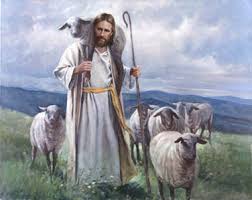
Jesus is our Good Shepherd and we are His sheep. Today I have a word of great comfort and encouragement to share with you through the words of the prophet Isaiah.

He tends his flock like a shepherd: He gathers the lambs in his arms and carries them close to his heart; he gently leads those that have young. (Isaiah 40:11)

This picture painted by the prophet is a source of unimaginable comfort: we, the sheep of the Good Shepherd, are carried in His arms close to His heart. Notice that Jesus tends His flock like a Shepherd who cares equally for every one of His sheep: the young and the old . . . the weak and the strong . . . the wise and the foolish . . . the wanderer and the weary. He makes no distinction between sheep; He gathers all of them in His arms close to His heart.

And don’t miss this truth! He tends His flock. He does not use another to do what only He can do for His sheep. He tends to His lambs personally, passionately, and powerfully.

Personally – Jesus came into this world personally. He did not send angelic ambassadors to tend His flock. This Shepherd is a personal shepherd.

Passionately – Jesus came into this world passionately. His meat and drink was to do the will of His Father. When Jesus saw those who were lost and suffering, He was moved with compassion (see, for example, Matthew 1:41 and 6:34) and met them at their point of need. Jesus passionately accomplished the will of His Father in heaven.

Powerfully – Jesus came into this world powerfully. Our Great Shepherd brought with Him a power greater than any power that came up against Him. Omnipotence overcame every obstacle that stood in His way.

“He carries them close to his heart.” What a picture of unending, unwavering, unconditional love! To be carried over His shoulder, as a soldier carries a wounded comrade from the field of battle, would have been gracious enough. But Isaiah paints a picture that is truly worth 1,000 x 1,000 words! My words cannot plumb the depths of the love our Great Shepherd has for His sheep—all of His sheep. And if you have placed your trust in Christ’s atoning work on your behalf, that includes you.

Sheep are apt to wander off, so when the Bible refers to God’s people as “sheep,” it paints an accurate picture. You and I are, as the great old hymn declares, “prone to wander, Lord I feel it, prone to leave the one I love.” Some, like the Prodigal, may find themselves off in a distant country, eating the slops the world provides instead of the rich food offered by the Good Shepherd (Isaiah 55:2). If this is your condition today, do not despair and do not be afraid! It is not your faithfulness to God that causes Him to love and care for you; it is His faithfulness to you.

Dear, wandering sheep, He carries you in His arms close to His heart! When Jesus said He would never leave you or forsake you (John 14:18; Hebrews 13:5), He meant what He said. I cannot imagine any greater comfort than knowing that great truth about our Great Shepherd.

This is the Gospel. This is grace for your race. NEVER FORGET THAT . . . AMEN!    

Leave a comment

Filed under General

THE WITNESS OF OUR WORDS

images (1)

The words we speak bear witness to what is going on inside us. Scripture draws a clear connection between wisdom and restraining our rhetoric:

When words are many, sin is not absent, but he who holds his tongue is wise. (Proverbs 10:19)

Far too often we have far too much to say about nothing. Yet the Bible makes it clear that the wise are careful about how much they speak. They understand that in God’s economy we are to be “quick to listen, slow to speak and slow to become angry” (James 1:19).

The Bible also tells us that our reverence for the Almighty can be linked to our language, as we read in these words from the Wise Preacher:

God is in heaven and you on earth; therefore let your words be few. (Ecclesiastes 5:2)

This is wonderful counsel, especially when God calls us to bring comfort to others when they are in trying circumstances. Job suffered devastating loss: his health, his wealth, and all ten of his children were taken in one day. When his three friends showed up to comfort him, not a word was spoken between them.

No one spoke a word to him, for they saw that his grief was very great. (Job 2:13)

This went on for an entire week. Job’s three friends comforted him with what I call “the ministry of the presence.” They were simply present for their friend. And everything was fine until they opened their mouths and began to speak on the eighth day. Silence truly was golden for grief-stricken Job. Years in ministry have taught me that silence is often the best source of sympathy for the sorrowful and the suffering.

Let’s close with a poem from an anonymous author that speaks powerfully about the witness of our words:

A wise old owl sat in an oak;

The more he saw the less he spoke;

The less he spoke the more he heard;

Why can’t we all be like that wise old bird?

So . . . what has the witness of your words been saying lately? May we all have the wisdom to speak only when we can improve upon the silence!

This is the Gospel. This is grace for your race. NEVER FORGET THAT . . . AMEN! 

 

Leave a comment

Filed under General

DANIELS DELIGHT

index

In reading through the book Daniel, it never ceases to amaze me just how easy it would have been for Daniel to stay out of the lion’s den without ever neglecting his duty to his God.

The jealousy of Daniel’s rivals in the Babylonian government drove them to set a trap by getting the king to issue an edict decree that anyone who prayed to any god or man (other than the king himself) would be thrown into the lions’ den. Daniel was well aware of the plot his rivals had hatched against him; he could have continued in his devotion to God by praying privately while the decree was in effect. But Daniel chose not to alter his devotion in prayer, which he clearly considered to be his duty.

When Daniel learned that the decree had been published, he went home to his upstairs room where the windows opened toward Jerusalem. Three times a day he got down on his knees and prayed, giving thanks to his God, just as he had done before. (Daniel 6:10)

Why do you think Daniel was so defiant in the face of the king’s decree? I believe the answer is found in the state of Daniel’s heart; he had moved so far beyond “duty” that his devotion in praying to God had become his delight. Daniel could have remained faithful to pray in his usual three-times-a-day devotion by simply praying in private; that would have satisfied his duty and his rivals would never have been able to charge him with violating the king’s decree. He could have completed the same activity—praying to God—in his prayer closet and not out in plain sight by his upstairs windows. But Daniel so delighted in his daily communion with God that he refused to alter his pattern of prayer, even in the face of bitter opposition.

Daniel’s delight in prayer drove him to disregard the pressure of persecution, knowing full well what it would cost him. His delight in praying to God made him defiant . . . even at the cost of being thrown into the lion’s den!

When duty and devotion turn to delight, we will refuse to bow to anything smaller than our God, regardless of the cost or circumstances we may face. Sure, Daniel could have continued his pattern of prayer without anyone 0knowing about it, but something greater was at stake here. Daniel’s rivals knew about his commitment to his God and his daily pattern of prayer. If Daniel began praying in private, he would have sent a message to his rivals that their plan of persecution was powerful enough to alter his prayer life or stop it altogether. Duty and devotion do not think this way; only delight does—even in the face of a den of lions!

So . . . what have you been delighting in lately? May we never see our opportunity to kneel before our heavenly Father as a duty or an obligation; may it be a source of true joy and strength for us! The author of Hebrews encourages us:

Since we have a great high priest who has gone through the heavens, Jesus the Son of God, let us hold firmly to the faith we profess. For we do not have a high priest who is unable to sympathize with our weaknesses, but we have one who has been tempted in every way, just as we are — yet was without sin. Let us then approach the throne of grace with confidence, so that we may receive mercy and find grace to help us in our time of need (Hebrews 4:14, 16).

This is the Gospel. This is grace for your race. NEVER FORGET THAT . . . AMEN!    

Leave a comment

Filed under General

THE MURDERER CALLED “MAYBE”

images

In my role as a pastor, I get to speak to lots of people about the empty tomb throughout the Easter season. But far too many people I meet don’t hold to Christ’s glorious resurrection as truth. “Maybe it’s true,” they’ll say. “Maybe Jesus was raised from the dead.”

“Maybe, Maybe, Maybe!” There is the murderer called “Maybe.” Maybe murders any sense of peace. Maybe murders any sense of comfort. Maybe murders any sense of assurance. Maybe murders any sense of joy. Maybe is a murderer of all things good and true and lovely.

But this word maybe is not for you! God has promised peace, comfort, assurance, and joy through the truth proclaimed by one of the greatest saints in all of sacred Scripture.

I know that my Redeemer lives, and that in the end he will stand upon the earth.  (Job 19:25)

In one horrifying day, Job lost all his children, his wealth, and his health, yet he held fast to the only truth that enabled him to endure his unimaginable loss: MY REDEEMER LIVES! For Job, there was no “Maybe” my Redeemer lives. The faithlessness of fear and the dread of doubt had no hold on this man of God. Confronted by what seemed like an utterly hopeless situation, Job clung to his unwavering hope, a hope that was rooted in his unwavering Redeemer.

Is this your truth on this day after Easter Sunday? Can you say along with Job that you know that your Redeemer lives? God forbid that our confidence would be any less certain than that of Job! Remember, Job was living on the “front side” of the resurrection; in other words, Job was looking forward to the fulfillment of the prophecies that pointed to the One who would conquer death. But you and I live on the “back side” of the resurrection. We do not trust in the promise of a resurrection; we look back with complete confidence on the historical fact that, after three days in the grave, the man called Jesus got up and walked . . . and shortly after that He ascended into heaven to prepare a place for you.

So let me ask you again: Does He live for you? A living Redeemer does no good to one who remains dead in trespass and sin.

In order to say along with Job that “My Redeemer lives,” you need only to transfer your trust from whatever you may be doing to be “good enough” to get into heaven and rest in the finished work of Christ. You know—by way of both your nature and your habits—that you are indeed a great sinner, which means you are in need of an even greater Redeemer, one who can give you the one thing you need most: the forgiveness of your sins. That Redeemer’s name is Jesus Christ.

Every week I remind the members of Cross Community Church, “If you confess with your mouth, ‘Jesus is Lord,’ and believe in your heart that God raised him from the dead, you will be saved” (Romans 10:9). You will be saved—by grace through faith in the one who died to pay the price for all your sins . . . and then rose again from the grave, just as He said He would. Note well that Job did not say, “I hope” or “I think,” but rather “I know.” The murderer called “Maybe” did not creep into Job’s vocabulary when he spoke of his Redeemer. Don’t let it creep into yours!

I implore you, as an ambassador of Christ: Be reconciled to God! Let not another moment go by without living in the confident assurance that what was true for Job may be just as true for you. Make it your truth today: “I KNOW that my Redeemer lives!” And with that truth firmly established in your mind, you are now ready, willing, and able to live for your Redeemer!

This is the Gospel. This is grace for your race. NEVER FORGET THAT . . . AMEN!    

Leave a comment

Filed under General

HOLY WEEK: THE PRINCE

th85PFQRL1

After looking at “The Prophecy” on Monday and understanding the significance of “The Palm” on Wednesday, we will close out our week today by looking at The Prince.

            See, your king is coming, seated on a donkey’s colt. (John 14:15)

Notice that Jesus was not seated on a chariot or a war horse. He was riding on a colt that had not yet been weaned or ridden. This King came not in power or strength, but in humility.

I [the Lord] will take away the chariots from Ephraim and the war-horses from Jerusalem, and the battle bow will be broken. He [the King] will proclaim peace to the nations. His rule will extend from sea to sea and from the River to the ends of the earth. (Zechariah 9:10)

This picture of Jesus coming into Jerusalem on a donkey would be comical if it were not so cosmic. He rode into town on the foal of a donkey that he did not own, surrounded by people who did not understand what He had come to do. And ultimately, he would be crucified by those people, who did decided they did not want Him as their King.

Did Jesus know what the people wanted? Of course He knew! He had known from before the creation of the world. But He refused to give it to them. Do you know why? For the very same reason He does not give you and I everything we want. Often what we want is not what is best for us. An earthly king was what the Israelites wanted to remove the rule of Rome, but that was not what they needed most. What they needed was the forgiveness of their sins. The bitter truth is that they were more enslaved to sin than they were to Roman rule.

Surely he took up our infirmities and carried our sorrows … But he was pierced for our transgressions, he was crushed for our iniquities … We all, like sheep, have gone astray, each of us has turned to his own way; and the Lord has laid on him the iniquity of us all… He was oppressed and afflicted, yet he did not open his mouth; he was led like a lamb to the slaughter, and as a sheep before her shearers is silent. (Isaiah 53:4-7)

The deepest truth of this Good Friday and the glorious Easter morning to follow is that it was God the Father who sent God the Son to the cross for our sins. Because we would not and could not save ourselves, God came to us in the person of Jesus Christ, our Savior, and took our nails, our crown of thorns, and our cross to pay the penalty of our sins in full.

But the story does not end on that bloody cross. After three days in the tomb, a dead man got up and walked!

After the Sabbath, at dawn on the first day of the week, Mary Magdalene and the other Mary went to look at the tomb. There was a violent earthquake, for an angel of the Lord came down from heaven and, going to the tomb, rolled back the stone and sat on it. His appearance was like lightning, and his clothes were white as snow. The guards were so afraid of him that they shook and became like dead men. The angel said to the women, “Do not be afraid, for I know that you are looking for Jesus, who was crucified. He is not here; he has risen, just as he said. (Matthew 28:1-6)

After His triumphal entry and joyful cries of “Hosanna!” (soon to be followed by harsh shouts of “Crucify Him!”), before the branches had enough time to turn brown on the ground they covered, the greatest truth the world has ever been told was revealed. The tomb is empty because Jesus has risen … just as He said He would!

Let that thought rule your heart today and every day for the rest of your life, because what rules your heart shapes your life. The tomb is empty so that our hope will be filled with the knowledge that the Prince paid the price for our sins and then uttered his thunderous victory cry: “IT IS FINISHED!” Have you placed your trust in this all-conquering King for your salvation?

May you and yours have a blessed Easter. He is risen! He is risen indeed!!

This is the Gospel. This is grace for your race. NEVER FORGET THAT . . . AMEN!    

Leave a comment

Filed under General