
OVERCOMING ASSUMES OPPOSITION!

images

Growing up in the Boland home, Momma was always fond of saying to her children, “God never promised you a rose garden. But He did promise you the thorns.”

To him who overcomes . . . (Revelation 2:7)

Let’s be clear about one thing. The only people who don’t face opposition are already in glory with Jesus; opposition has been promised to the rest of us. Jesus put it this way:

In the world you will have tribulation, but take heart; I have overcome the world.  (John 16:33 ESV)

And because He has overcome the world, His followers can also. The apostle John assured us, “Everyone who has been born of God overcomes the world” (1 John 5:4 ESV). And Paul exulted that in all things, “We are more than conquerors through him who loved us” (Romans 8:37).

So . . . do you believe that you are an overcomer in Christ? Perhaps you’re not “feeling it” today; perhaps you feel that you have been overcome by the opposition you’re facing in your life today. You are not alone; I’m sure at some point in their lives almost every Christian has felt the same way! Let’s look at how we can “take heart,” as our Lord commanded us.

The first step in overcoming the things that have come up against you is to acknowledge the fact that nothing strange is happening to you. As the Wise Preacher said in Ecclesiastes 1:9, there is nothing new under the sun. What happens to you happens to all of us. We all face physical opposition. We all face mental opposition. We all face emotional opposition. We all face spiritual opposition. Opposition is the result of our first parents’ disastrous fall in the Garden of Eden.

The second step in overcoming the things that come up against you is to acknowledge the fact that Jesus has overcome everything that opposes us. Jesus has overcome our opposition . . . whether it be physical, mental, emotional, or spiritual. He overcame it all in His sinless life, His sacrificial death, and His supernatural resurrection. He has overcome the world!

The final step in overcoming the things that come up against you is to fight with all His might, not your own. To be more than a conqueror, you must conquer in the strength of the Almighty. Remember, greater is the power that is at work within you than any power that comes up against you (1 John 4:4). Because of your union with Jesus, what He overcame on your behalf you will also overcome.

When Jesus said, “It is finished,” He meant what He said! He conquered every enemy, including our last enemy: death (1 Corinthians 25-26). Jesus became the death of death, so death has lost its sting for all those who are united to Him by grace through faith (1 Corinthians 15:54-57).

Overcoming assumes opposition, and those who overcome acknowledge the inevitable reality of opposition and respond to it in His strength, not their own.

Not by might nor by power, but by my Spirit, says the Lord Almighty.  (Zechariah 4:6)

Remember, He who began His good work in you has promised to complete it in His strength, in His way, and in His timing . . . not yours. And so, Christian, as the apostle Paul encouraged you, “My dear brothers, stand firm. Let nothing move you. Always give yourselves fully to the work of the Lord, because you know that your labor in the Lord is not in vain” (1 Corinthians 15:58).

This is the Gospel. This is grace for your race. NEVER FORGET THAT . . . AMEN!   
Leave a comment

Filed under General

THE SHEPHERD AND HIS SHEEP

index

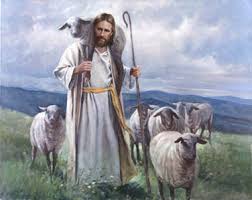
Jesus is our Good Shepherd and we are His sheep. Today I have a word of great comfort and encouragement to share with you through the words of the prophet Isaiah.

He tends his flock like a shepherd: He gathers the lambs in his arms and carries them close to his heart; he gently leads those that have young. (Isaiah 40:11)

This picture painted by the prophet is a source of unimaginable comfort: we, the sheep of the Good Shepherd, are carried in His arms close to His heart. Notice that Jesus tends His flock like a Shepherd who cares equally for every one of His sheep: the young and the old . . . the weak and the strong . . . the wise and the foolish . . . the wanderer and the weary. He makes no distinction between sheep; He gathers all of them in His arms close to His heart.

And don’t miss this truth! He tends His flock. He does not use another to do what only He can do for His sheep. He tends to His lambs personally, passionately, and powerfully.

Personally – Jesus came into this world personally. He did not send angelic ambassadors to tend His flock. This Shepherd is a personal shepherd.

Passionately – Jesus came into this world passionately. His meat and drink was to do the will of His Father. When Jesus saw those who were lost and suffering, He was moved with compassion (see, for example, Matthew 1:41 and 6:34) and met them at their point of need. Jesus passionately accomplished the will of His Father in heaven.

Powerfully – Jesus came into this world powerfully. Our Great Shepherd brought with Him a power greater than any power that came up against Him. Omnipotence overcame every obstacle that stood in His way.

“He carries them close to his heart.” What a picture of unending, unwavering, unconditional love! To be carried over His shoulder, as a soldier carries a wounded comrade from the field of battle, would have been gracious enough. But Isaiah paints a picture that is truly worth 1,000 x 1,000 words! My words cannot plumb the depths of the love our Great Shepherd has for His sheep—all of His sheep. And if you have placed your trust in Christ’s atoning work on your behalf, that includes you.

Sheep are apt to wander off, so when the Bible refers to God’s people as “sheep,” it paints an accurate picture. You and I are, as the great old hymn declares, “prone to wander, Lord I feel it, prone to leave the one I love.” Some, like the Prodigal, may find themselves off in a distant country, eating the slops the world provides instead of the rich food offered by the Good Shepherd (Isaiah 55:2). If this is your condition today, do not despair and do not be afraid! It is not your faithfulness to God that causes Him to love and care for you; it is His faithfulness to you.

Dear, wandering sheep, He carries you in His arms close to His heart! When Jesus said He would never leave you or forsake you (John 14:18; Hebrews 13:5), He meant what He said. I cannot imagine any greater comfort than knowing that great truth about our Great Shepherd.

This is the Gospel. This is grace for your race. NEVER FORGET THAT . . . AMEN!    

Leave a comment

Filed under General

THE WITNESS OF OUR WORDS

images (1)

The words we speak bear witness to what is going on inside us. Scripture draws a clear connection between wisdom and restraining our rhetoric:

When words are many, sin is not absent, but he who holds his tongue is wise. (Proverbs 10:19)

Far too often we have far too much to say about nothing. Yet the Bible makes it clear that the wise are careful about how much they speak. They understand that in God’s economy we are to be “quick to listen, slow to speak and slow to become angry” (James 1:19).

The Bible also tells us that our reverence for the Almighty can be linked to our language, as we read in these words from the Wise Preacher:

God is in heaven and you on earth; therefore let your words be few. (Ecclesiastes 5:2)

This is wonderful counsel, especially when God calls us to bring comfort to others when they are in trying circumstances. Job suffered devastating loss: his health, his wealth, and all ten of his children were taken in one day. When his three friends showed up to comfort him, not a word was spoken between them.

No one spoke a word to him, for they saw that his grief was very great. (Job 2:13)

This went on for an entire week. Job’s three friends comforted him with what I call “the ministry of the presence.” They were simply present for their friend. And everything was fine until they opened their mouths and began to speak on the eighth day. Silence truly was golden for grief-stricken Job. Years in ministry have taught me that silence is often the best source of sympathy for the sorrowful and the suffering.

Let’s close with a poem from an anonymous author that speaks powerfully about the witness of our words:

A wise old owl sat in an oak;

The more he saw the less he spoke;

The less he spoke the more he heard;

Why can’t we all be like that wise old bird?

So . . . what has the witness of your words been saying lately? May we all have the wisdom to speak only when we can improve upon the silence!

This is the Gospel. This is grace for your race. NEVER FORGET THAT . . . AMEN! 

 

Leave a comment

Filed under General

DANIELS DELIGHT

index

In reading through the book Daniel, it never ceases to amaze me just how easy it would have been for Daniel to stay out of the lion’s den without ever neglecting his duty to his God.

The jealousy of Daniel’s rivals in the Babylonian government drove them to set a trap by getting the king to issue an edict decree that anyone who prayed to any god or man (other than the king himself) would be thrown into the lions’ den. Daniel was well aware of the plot his rivals had hatched against him; he could have continued in his devotion to God by praying privately while the decree was in effect. But Daniel chose not to alter his devotion in prayer, which he clearly considered to be his duty.

When Daniel learned that the decree had been published, he went home to his upstairs room where the windows opened toward Jerusalem. Three times a day he got down on his knees and prayed, giving thanks to his God, just as he had done before. (Daniel 6:10)

Why do you think Daniel was so defiant in the face of the king’s decree? I believe the answer is found in the state of Daniel’s heart; he had moved so far beyond “duty” that his devotion in praying to God had become his delight. Daniel could have remained faithful to pray in his usual three-times-a-day devotion by simply praying in private; that would have satisfied his duty and his rivals would never have been able to charge him with violating the king’s decree. He could have completed the same activity—praying to God—in his prayer closet and not out in plain sight by his upstairs windows. But Daniel so delighted in his daily communion with God that he refused to alter his pattern of prayer, even in the face of bitter opposition.

Daniel’s delight in prayer drove him to disregard the pressure of persecution, knowing full well what it would cost him. His delight in praying to God made him defiant . . . even at the cost of being thrown into the lion’s den!

When duty and devotion turn to delight, we will refuse to bow to anything smaller than our God, regardless of the cost or circumstances we may face. Sure, Daniel could have continued his pattern of prayer without anyone 0knowing about it, but something greater was at stake here. Daniel’s rivals knew about his commitment to his God and his daily pattern of prayer. If Daniel began praying in private, he would have sent a message to his rivals that their plan of persecution was powerful enough to alter his prayer life or stop it altogether. Duty and devotion do not think this way; only delight does—even in the face of a den of lions!

So . . . what have you been delighting in lately? May we never see our opportunity to kneel before our heavenly Father as a duty or an obligation; may it be a source of true joy and strength for us! The author of Hebrews encourages us:

Since we have a great high priest who has gone through the heavens, Jesus the Son of God, let us hold firmly to the faith we profess. For we do not have a high priest who is unable to sympathize with our weaknesses, but we have one who has been tempted in every way, just as we are — yet was without sin. Let us then approach the throne of grace with confidence, so that we may receive mercy and find grace to help us in our time of need (Hebrews 4:14, 16).

This is the Gospel. This is grace for your race. NEVER FORGET THAT . . . AMEN!    
Leave a comment

Filed under General

THE MURDERER CALLED “MAYBE”

images

In my role as a pastor, I get to speak to lots of people about the empty tomb throughout the Easter season. But far too many people I meet don’t hold to Christ’s glorious resurrection as truth. “Maybe it’s true,” they’ll say. “Maybe Jesus was raised from the dead.”

“Maybe, Maybe, Maybe!” There is the murderer called “Maybe.” Maybe murders any sense of peace. Maybe murders any sense of comfort. Maybe murders any sense of assurance. Maybe murders any sense of joy. Maybe is a murderer of all things good and true and lovely.

But this word maybe is not for you! God has promised peace, comfort, assurance, and joy through the truth proclaimed by one of the greatest saints in all of sacred Scripture.

I know that my Redeemer lives, and that in the end he will stand upon the earth.  (Job 19:25)

In one horrifying day, Job lost all his children, his wealth, and his health, yet he held fast to the only truth that enabled him to endure his unimaginable loss: MY REDEEMER LIVES! For Job, there was no “Maybe” my Redeemer lives. The faithlessness of fear and the dread of doubt had no hold on this man of God. Confronted by what seemed like an utterly hopeless situation, Job clung to his unwavering hope, a hope that was rooted in his unwavering Redeemer.

Is this your truth on this day after Easter Sunday? Can you say along with Job that you know that your Redeemer lives? God forbid that our confidence would be any less certain than that of Job! Remember, Job was living on the “front side” of the resurrection; in other words, Job was looking forward to the fulfillment of the prophecies that pointed to the One who would conquer death. But you and I live on the “back side” of the resurrection. We do not trust in the promise of a resurrection; we look back with complete confidence on the historical fact that, after three days in the grave, the man called Jesus got up and walked . . . and shortly after that He ascended into heaven to prepare a place for you.

So let me ask you again: Does He live for you? A living Redeemer does no good to one who remains dead in trespass and sin.

In order to say along with Job that “My Redeemer lives,” you need only to transfer your trust from whatever you may be doing to be “good enough” to get into heaven and rest in the finished work of Christ. You know—by way of both your nature and your habits—that you are indeed a great sinner, which means you are in need of an even greater Redeemer, one who can give you the one thing you need most: the forgiveness of your sins. That Redeemer’s name is Jesus Christ.

Every week I remind the members of Cross Community Church, “If you confess with your mouth, ‘Jesus is Lord,’ and believe in your heart that God raised him from the dead, you will be saved” (Romans 10:9). You will be saved—by grace through faith in the one who died to pay the price for all your sins . . . and then rose again from the grave, just as He said He would. Note well that Job did not say, “I hope” or “I think,” but rather “I know.” The murderer called “Maybe” did not creep into Job’s vocabulary when he spoke of his Redeemer. Don’t let it creep into yours!

I implore you, as an ambassador of Christ: Be reconciled to God! Let not another moment go by without living in the confident assurance that what was true for Job may be just as true for you. Make it your truth today: “I KNOW that my Redeemer lives!” And with that truth firmly established in your mind, you are now ready, willing, and able to live for your Redeemer!

This is the Gospel. This is grace for your race. NEVER FORGET THAT . . . AMEN!    
Leave a comment

Filed under General

HOLY WEEK: THE PRINCE

th85PFQRL1

After looking at “The Prophecy” on Monday and understanding the significance of “The Palm” on Wednesday, we will close out our week today by looking at The Prince.

            See, your king is coming, seated on a donkey’s colt. (John 14:15)

Notice that Jesus was not seated on a chariot or a war horse. He was riding on a colt that had not yet been weaned or ridden. This King came not in power or strength, but in humility.

I [the Lord] will take away the chariots from Ephraim and the war-horses from Jerusalem, and the battle bow will be broken. He [the King] will proclaim peace to the nations. His rule will extend from sea to sea and from the River to the ends of the earth. (Zechariah 9:10)

This picture of Jesus coming into Jerusalem on a donkey would be comical if it were not so cosmic. He rode into town on the foal of a donkey that he did not own, surrounded by people who did not understand what He had come to do. And ultimately, he would be crucified by those people, who did decided they did not want Him as their King.

Did Jesus know what the people wanted? Of course He knew! He had known from before the creation of the world. But He refused to give it to them. Do you know why? For the very same reason He does not give you and I everything we want. Often what we want is not what is best for us. An earthly king was what the Israelites wanted to remove the rule of Rome, but that was not what they needed most. What they needed was the forgiveness of their sins. The bitter truth is that they were more enslaved to sin than they were to Roman rule.

Surely he took up our infirmities and carried our sorrows … But he was pierced for our transgressions, he was crushed for our iniquities … We all, like sheep, have gone astray, each of us has turned to his own way; and the Lord has laid on him the iniquity of us all… He was oppressed and afflicted, yet he did not open his mouth; he was led like a lamb to the slaughter, and as a sheep before her shearers is silent. (Isaiah 53:4-7)

The deepest truth of this Good Friday and the glorious Easter morning to follow is that it was God the Father who sent God the Son to the cross for our sins. Because we would not and could not save ourselves, God came to us in the person of Jesus Christ, our Savior, and took our nails, our crown of thorns, and our cross to pay the penalty of our sins in full.

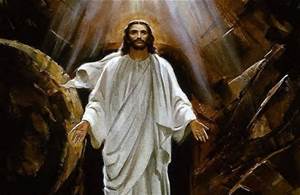
But the story does not end on that bloody cross. After three days in the tomb, a dead man got up and walked!

After the Sabbath, at dawn on the first day of the week, Mary Magdalene and the other Mary went to look at the tomb. There was a violent earthquake, for an angel of the Lord came down from heaven and, going to the tomb, rolled back the stone and sat on it. His appearance was like lightning, and his clothes were white as snow. The guards were so afraid of him that they shook and became like dead men. The angel said to the women, “Do not be afraid, for I know that you are looking for Jesus, who was crucified. He is not here; he has risen, just as he said. (Matthew 28:1-6)

After His triumphal entry and joyful cries of “Hosanna!” (soon to be followed by harsh shouts of “Crucify Him!”), before the branches had enough time to turn brown on the ground they covered, the greatest truth the world has ever been told was revealed. The tomb is empty because Jesus has risen … just as He said He would!

Let that thought rule your heart today and every day for the rest of your life, because what rules your heart shapes your life. The tomb is empty so that our hope will be filled with the knowledge that the Prince paid the price for our sins and then uttered his thunderous victory cry: “IT IS FINISHED!” Have you placed your trust in this all-conquering King for your salvation?

May you and yours have a blessed Easter. He is risen! He is risen indeed!!

This is the Gospel. This is grace for your race. NEVER FORGET THAT . . . AMEN!    

Leave a comment

Filed under General

HOLY WEEK: THE PALM

images

Throughout this Holy Week we’ll be looking at the final days of our Lord’s earthly ministry. On Monday we recalled the prophecy of the coming King; today we’ll take a look at the significance of the palm branches the people were waving as Jesus entered into Jerusalem.

They took palm branches and went out to meet him, shouting, “Hosanna!” “Blessed is he who comes in the name of the Lord!” “Blessed is the King of Israel!” (John 12:13)

Why palm branches? I remember looking forward to Palm Sunday every year during my childhood. This great excitement had nothing to do with the significance of the palm branch, however. I just loved using it as a sword against my little brother when we exited the church! I’m a great deal older now . . . and a little bit wiser . . .

Palm branches are a part of worship in many churches on Palm Sunday. The palm branches symbolized goodness and victory. Palm branches were often depicted in drawings, on coins, and in significant buildings, such as King Solomon’s temple, which had palm branches carved into the walls of the inner and outer rooms (1 Kings 6:29).

The significance of the palm branch cannot be understated. We find them mentioned again in the last book of the Bible:

There before me was a great multitude that no one could count, from every nation, tribe, people and language, standing before the throne and in front of the Lamb. They were wearing white robes and were holding palm branches in their hands. (Revelation 7:9)

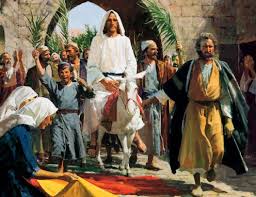
When Jesus entered Jerusalem, the people were waving the palm branches and laying them on the road as Jesus rode across them. But the “goodness” and “victory” the people were looking for was not one of a spiritual nature. They wanted Rome removed, not their sins. They were shouting for a political leader who would raise up an army and overthrow the oppressive Roman rule. Their shouts of “Hosanna,” meaning “Save now,” were meant in the physical sense, not the spiritual. In essence they were saying:

  • Welcome, warrior king!
  • Hail the conquering prince!

Our Lord knew exactly what was in their hearts:

Jesus, knowing that they intended to come and make him king by force, withdrew again to a mountain by himself. (John 6:15)

The people ought to have known better. Jesus often said things that were utterly inconsistent with their “warrior king” ideal . . . things like “Blessed are the meek . . . Blessed are the peacemakers . . . If someone strikes you on the right cheek, turn to him the other also. And if someone wants to sue you and take your tunic, let him have your cloak as well. If someone forces you to go one mile, go with him two miles” (Matthew 5:5, 9, 39-41).

These words from Jesus were intended to unambiguously communicate that He was a different kind of King than the one the people were expecting . . . but they did not have ears to hear.

We’ve looked at “The Prophecy” and “The Palm.” We’ll finish our Holy week messages on Good Friday with “The Prince.”

This is the Gospel. This is grace for your race. NEVER FORGET THAT . . . AMEN!    
Leave a comment

Filed under General

HOLY WEEK: THE PROPHECY

index

We have arrived at Holy Week, and I would like to sharpen our focus on the final week of our Lord’s earthly ministry, leading up to the cruel cross on the hill Golgotha. I want to highlight the incredible events leading up to the first Easter Sunday under these three headings: The Prophecy, The Palm, and The Prince. Today . . . the Prophecy.

The great crowd that had come for the Feast heard that Jesus was on his way to Jerusalem. They took palm branches and went out to meet him, shouting, “Hosanna!” “Blessed is he who comes in the name of the Lord!” “Blessed is the King of Israel!”

Jesus found a young donkey and sat upon it, as it is written, “Do not be afraid, O Daughter of Zion; see, your king is coming, seated on a donkey’s colt.”  (John 12:12-15)

What a scene that must have been; a great crowd of people lining the road leading into Jerusalem, waving palm branches and shouting, “Hosanna” (which means “Save now!”). “Blessed is he who comes in the name of the Lord!” they cried. They believed they were seeing the fulfillment of an Old Testament prophecy that the Jewish people had been anticipating for centuries.

Rejoice greatly, O Daughter of Zion! Shout, Daughter of Jerusalem! See, your king comes to you, righteous and having salvation, gentle and riding on a donkey, on a colt, the foal of a donkey. (Zechariah 9:9)

These teeming throngs of people greeting Jesus with shouts of joy knew Zechariah’s prophecy well. “O Daughter of Zion” was a common title for the people of God, as well as for Jerusalem, the holy city of God. As for “your king,” the crowds were undoubtedly recalling the many times this royal descendant of David had been promised in sacred Scripture.

The Lord swore an oath to David, a sure oath that he will not revoke: “One of your own descendants I will place on your throne. (Psalm 132:11)

Of the increase of his government and peace there will be no end. He will reign on David’s throne and over his kingdom, establishing and upholding it with justice and righteousness from that time on and forever. The zeal of the Lord Almighty will accomplish this. (Isaiah 9:7)

But what were they expecting as a result of the fulfillment of this prophecy? Certainly not what they got! They wanted a conquering king who would remove the heavy boot of Rome from their necks. They wanted a return to the glory days of Israel. And over the course of just a few days, we will see that their joyful cries of “Hosanna!” turned into harsh shouts of “Crucify Him!” The people did not understand that the King must first come as a Suffering Servant before He would return as a Conquering King.

There’s a lot more to this greatest story ever told; I hope you’ll come back for “The Palm” on Wednesday!

This is the Gospel. This is grace for your race. NEVER FORGET THAT . . . AMEN!    

Leave a comment

Filed under General

SLAYING SIN – Part II

images

On Wednesday we looked at the first three steps in the process of slaying sin: (1) Knowing that we have been crucified with Christ; (2) Cultivating a hatred for sin; and (3) Confessing our sins. Today we will delve into the final three steps.

Step #4 – Cultivate the spirit of fighting against sin

In your struggle against sin, you have not yet resisted to the point of shedding your blood. (Hebrews 12:4)

The writer of Hebrews acknowledged the persecution his readers were facing, but he made it clear that it did not rise to the level of what Jesus faced when nailed to the cross. We must fight against sin, therefore, knowing that Jesus fought the ultimate battle for us on the cross. In his classic work, The Mortification of Sin, Puritan pastor John Owen wrote, “Be killing sin, or sin will be killing you.” Owen’s language is as strong as it is true! We must cultivate the spirit of fighting against sin every moment of every day.

Step #5 – Cultivate the spirit of fleeing from sin

She caught [Joseph] by his cloak and said, “Come to bed with me!” But he left his cloak in her hand and ran out of the house. (Genesis 39:12)

Sometimes the best defense against sin is simply to run away from it! It worked beautifully for Joseph. Joseph had been sold into slavery in Egypt by his brothers and was serving in the house of Potiphar, one of Pharaoh’s officials. Potiphar’s wife was trying to get Joseph to commit adultery, but Joseph refused, saying “How then can I do this great wickedness and sin against God?” (Genesis 39:9). Day after day, she tried to seduce Joseph. When sin was quite literally clutching at Joseph, he chose to flee from this dread temptation. Joseph left his cloak but kept his character.

Step #6 – Carry Scripture in your heart

I have hidden your word in my heart that I might not sin against you.  (Psalm 119:11)

When Jesus was led by the Holy Spirit into His wilderness experience, He overcame the temptations of the devil by quoting Scripture. “It is written,” He said. And again . . . “It is written” . . . And again . . . “It is written!” Satan finally gave up and left Jesus (Matthew 4:1-11). What a powerful picture of the protection that the Bible provides against the Evil One! We must carry Scripture in our hearts because we will not always have a Bible with us, much less the time to look up a passage. We must marinate in Scripture and meditate on it; the more we do, the more we will have “the sword of the Spirit, which is the word of God” (Ephesians 6:17) ready at hand to fight against sin.

So . . . how are you doing in your daily struggle against sin? Remember, keep the cross of Christ in view, and you will experience more and more victory over sin. Greater is the power that is in you than any power that can come against you!

This is the Gospel. This is grace for your race. NEVER FORGET THAT . . . AMEN!    

Leave a comment

Filed under General

SLAYING SIN – Part I

images

Today and Friday I want to provide you with six practical steps for slaying sin. Remember, in the life of the believer, sin no longer reigns, but it still remains. Because of this truth, we must be serious about our role in slaying sin. Today we will look at the first three steps.

Step #1 – Know that your old self was crucified with Christ

We know that our old self was crucified with him so that the body of sin might be done away with, that we should no longer be slaves to sin. (Romans 6:6)

By nature we are all children of Adam. So the “old self” refers to our pre-conversion life in the flesh. But when Jesus shows up, everything changes! The apostle Paul is telling us to see the reign of sin in our old nature as “crucified” and nailed to the cross of Christ. Sin no longer reigns in the life of the redeemed. Keeping this Gospel truth in view is the first step in the process of slaying sin. We are no longer slaves to sin; rather, we are now slaves to our Savior.

Step #2 – Cultivate a hatred for sin

Let those who love the Lord hate evil [sin]. (Psalm 97:10)

Nehemiah rebuilt the walls of Jerusalem with a trowel in one hand and a sword in the other (Nehemiah 4:17-18). The trowel was for building; the sword was for his enemies. Our number one enemy is sin. We must take sword to that enemy, and that begins with a holy hatred for it. After Adam and Eve sinned in the Garden of Eden, God promised to put “enmity” between the seed of the woman and the seed of the serpent. Remember, sin [Satan] hated our Lord Jesus. We must hate sin—all sin—remembering what it has done to us, our world, and our Lord.

Step #3 – Confess your sin

If we confess our sins, he is faithful and just and will forgive us our sins and purify us from all unrighteousness. (1 John 1:9)

Because we are sinners, both by nature and habit, every day we are to rest in the rhythm of our redemption every day. And that rhythm is to daily repent of all known sin, knowing that our God is faithful to forgive. Never fear that God will reject you because of your sin! God the Father rejected God the Son in your place. The Father turned away from His beloved Son so that he might look on you with love for all eternity. We simply need to come, humbly and boldly, before the Throne of Grace, knowing that all our sins—past, present, and those still to come—have been nailed to the cross of Christ.

These are the first three steps every believer must take in the process of slaying sin; I’ll lay out the last three steps on Friday. I hope you’ll be back!

This is the Gospel. This is grace for your race. NEVER FORGET THAT . . . AMEN!    

Leave a comment

Filed under General