
PATHS OF PROVIDENCE

providence2

“Providence” was a term that was frequently used by America’s Founders, such as the unforgettable expression of their “firm reliance on the protection of divine Providence” in America’s Declaration of Independence. Providence is rightly defined as the foreseeing, benevolent care and wise guidance of Almighty God in the lives of His creatures.


Show me your ways, Lord, teach me your paths. Guide me in your truth and teach me, for you are God my Savior, and my hope is in you all day long. Remember, Lord, your great mercy and love, for they are from of old.

(Psalm 25:4-6)


David’s psalm (and, indeed, all of Scripture) reveals that this life is a journey without a destination . . . until we get to the other side of the grave. We are pilgrims passing through this world, not settlers in it. Regardless of where our path leads, when it is a path of Providence it will always end in the glory of God and our good.

David deeply wanted to walk the paths of Providence, and he was crying out to God to teach him the right path to take . . . and this path will always lead in the opposite direction of the way the world is encouraging us to go. David had no interest in looking to the imagination of man as his guiding light. He sought the revelation of God (“guide me in your truth”) because he knew that God will always lead us in the right direction.

Let me be clear: the path of Providence may very well not be free of all obstacles and challenges. Often just the opposite is true! But when God is guiding us in His truth and teaching us along the way, we can be assured that we will reach the other side better than we were before we got there. God never promised us painless paths of providence; what He did promise was to get us safely to our destination. Knowing that truth, we are strengthened and comforted to press on, regardless of the cost or circumstance.

The key for successful Christian living is to hold tight to the same hope David had. He was not hoping for an easy, painless path of Providence to travel through this life. His hope was in God, morning, noon, and night. If you know the Scriptures, you might well ask, “Was David’s hope always in God?” I believe the answer is “Yes.” In his flesh, David stumbled badly on more than one occasion; he turned away from his holy hope and trusted in things smaller than God. Yet every time David did so, God would guide David back onto His path of truth and wisdom. Deep down, David’s hope was always in God.

We see this even in one of the most awful events recorded in sacred Scripture; David committed adultery and then did murder to cover it up. Yet the Lord’s great mercy and love still reached out and met David in his place of deepest need. To be sure, there would be great consequences for David’s sin, and it took a visit from the prophet Nathan to make that clear to the broken king. But through it all, God grew David up to become a man after God’s own heart (Acts 13:22). He continued to set David’s feet upon the paths of Providence all the way into glory.

So . . . what paths of Providence have you been walking lately? Is God leading you . . . or are you trying to lead God? The answer to these questions will make all the difference in how your life works out.

This is the Gospel. This is grace for your race. NEVER FORGET THAT . . . AMEN!

Leave a comment

Filed under General

STRENGTHENED IN SUFFERING!

strengthening

We live in a world filled with suffering—from natural disasters and accidents that take loved ones away from us to countless moral evils that cause unimaginable pain and sorrow. So how do we keep from being buried under the weight of suffering? It is not by thinking it is all an illusion, as the Buddhists believe. It is not by thinking that suffering is payment for sins in our past life, as the Hindus believe. It is not by thinking we need to keep a stiff upper lip, as the Stoics believe. And it is certainly not by thinking that suffering is merely a suspension to our story, something to be avoided at all costs, as the secularists believe.


Brothers and sisters, whatever is true, whatever is noble, whatever is right, whatever is pure, whatever is lovely, whatever is admirable—if anything is excellent or praiseworthy—think about such things. Whatever you have learned or received or heard from me, or seen in me—put it into practice. And the God of peace will be with you.

(Philippians 4:8-9)


The apostle Paul is telling us that we are strengthened in our suffering when we think appropriately. Appropriate thinking is rooted in what is above us rather than what is below us. We are to think God’s thoughts after Him. It is only when we look within the biblical framework that we will find the answers to the BIG questions in life, such as:

  • Why am I here?
  • What is the meaning of life?
  • Where am I going?
  • How am I going to get there?

Our Western secular society has no answers to these kinds of questions. Without God as the source of all life, we are simply a product of time plus matter plus chance. The secularists believe that we came from nothing and we are heading back to nothing, so grab all the happiness you can find right now because this is all there is! They would tell us that suffering merely suspends our story and shrouds our happiness.

But the apostle Paul is telling us to think about the BIG questions in life (questions of what is true, noble, right, pure, lovely, admirable, excellent, and praiseworthy), because it is only there that we meet with answers from the Almighty that are designed to strengthen us . . . whether the sun is brightly shining or the storm winds are howling.

Paul knew this from personal experience. His life after the Damascus Road experience was marked by continual suffering: beaten with rods; pelted with stones; three times shipwrecked; a night and a day spent floating in the ocean; knowing hunger, thirst and nakedness; imprisoned; and living under the pressure of his great concern for the church (2 Corinthians 12). Yet through it all, Paul said, “I have learned the secret of being content in any and every situation, whether well fed or hungry, whether living in plenty or in want.” (Philippians 4:12).

Contentment is something that must be learned, and we only learn it through right thinking. Fixing our focus on Jesus brings us a peace that passes all understanding of the natural mind, because Jesus brings us His peace and presence. And therein lies the key to being strengthened in our suffering: appropriate thinking put into consistent practice . . . and the God of peace will be with you!

This is the Gospel. This is grace for your race. NEVER FORGET THAT . . . AMEN!
Leave a comment

Filed under General

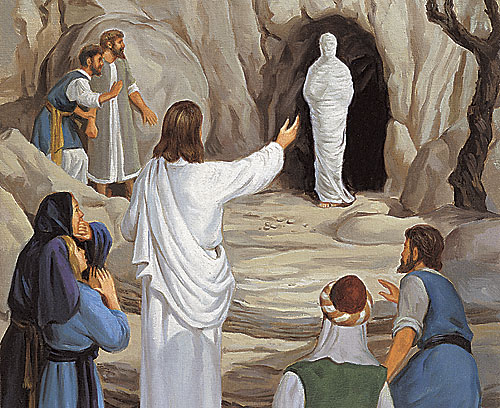
WHEN DEATH IS NOT DEATH!

Lazarus

That’s a strange title for today’s word of encouragement, isn’t it? “When death is not death!” How is that even possible? Well, with God all things are possible!


Whoever desires to save his life will lose it, but whoever loses his life for My sake will find it.

(Matthew 16:25 NKJV)


Death is not death when we are dying for Jesus. What an incredible promise from our Lord! The call of Christ to die is really a call to life . . . the only life worth living. You see, when we are living for anything smaller than Jesus, no matter how much “life” we may think that brings us, it is really nothing more than death. Jesus knows that if we are left to ourselves, we will always pursue the “stuff” of this life rather than our Savior. We pursue . . .

Our goals

Our dreams

Our agendas

Our plans

Our desires

Our wants

When we pursue what we want apart from what Jesus wants for us, we are attempting to save our life. We think we are going after true life, but it is nothing more than death wearing a mask of life. The apostle John clearly warns us:


Do not love the world or anything in the world. If anyone loves the world, the love of the Father is not in him. For everything in the world — the cravings of sinful man, the lust of his eyes and the boasting of what he has and does — comes not from the Father but from the world. The world and its desires pass away, but the man who does the will of God lives forever.

(1 John 2:15-17)


Make no mistake, the call of Christ is indeed costly; it will cost us everything! Jesus demands nothing less . . . and to be sure, He deserves nothing less. Our sinful hearts are actually suicidal as they drive us to seek to satisfy self rather than the Savior. Jesus has called us to lay down our lives—our goals, dreams, agenda, plans, desires, wants—and pursue Him as our first priority in life.

Remember, the Bible never tells us to seek Jesus. It tells us to seek Him first (Matthew 6:33). When we lose our lives in our Lord, we begin to find the life we were created to live. By nature, we pursue stuff that will never satisfy us; in the end, we discover we have cut ourselves off from the only source of life: Jesus Christ. We pursue what this world offers to us as “life,” but even if we get it all, we will inevitably come to the devastating realization that we have missed out on the only thing we truly need. I cannot think of anything worse than that! Can you?

So . . . what have you been living for lately? What have you been dying for lately? What changes would you need to make to lose your life for the sake of your Savior . . . only to find the life you were truly made to live?


Seek first his kingdom and his righteousness, and all these things will be given to you as well.

(Matthew 6:33-34)


This is the Gospel. This is grace for your race. NEVER FORGET THAT . . . AMEN!

Leave a comment

Filed under General

SO WHAT ARE YOU GOING TO DO WITH THE EXTRA DAY?

leap

Did you know this was a leap year? Leap year has 366 days in it instead of the usual 365, which is accomplished by extending the month of February to 29 days rather than the usual 28.

What are you going to do with the extra day?

We probably won’t do anything different than we would normally do on a Monday. The student will probably still go to school; the office worker will probably still go to the office; the stay-at-home mom will probably still stay at home. I want to suggest to you that you pause for a moment today and reflect on the gift of time God has given to you; are you are investing it wisely?


Teach us to number our days that we may gain a heart of wisdom.

(Psalm 90:12)


So whether you eat or drink or whatever you do, do it all for the glory of God.

(1 Corinthians 10:31)


Walk in wisdom redeeming the time.

(Colossians 4:5)


God’s gift to each one of us is life. Our gift back to God is how we live it. The psalmist asks God to teach us to number our days simply because they go by so quickly! I think you would agree that life is flying by. Days turn into weeks; weeks turn into months; months turn into years; years turn into decades. Before we know it, seasons have come and gone, and we find ourselves staring into a mirror wondering, “Where did my life go?”

Paul’s letter to the Corinthians tells us that every moment matters. He reduces time down to the mundane activities of eating and drinking, and instructs us to do even those things for the glory of God. Whatever we are doing, we are to be doing it for God’s glory.

Paul told the Colossians that the only way to make time count (to redeem it) is to walk in wisdom—that is, to walk with Jesus. It is only when we are walking with Jesus that we are making the time count. When we walk in the wisdom of the Word, every moment matters!

So . . . with those thoughts in mind, will today be any different from any other day in February? Remember, when you spend an hour in life, you have one less hour to spend. It’s up to you; spend it wisely!

This is the Gospel. This is grace for your race. NEVER FORGET THAT . . . AMEN!

Leave a comment

Filed under General

LOVE THAT DELAYS DOES NOT EQUAL LOVE THAT DENIES!

Waiting

There is a very strange passage in the gospel of John that teaches one of the most important biblical truths we need to digest in order to navigate the confusing, turbulent waters of life. This truth is contained in the story of the raising of Lazarus, and the response Jesus gave when Mary and Martha sent word to Him that their brother Lazarus was sick.


Now a man named Lazarus was sick. He was from Bethany, the village of Mary and her sister Martha. . . . So the sisters sent word to Jesus, “Lord, the one you love is sick.” . . . Jesus loved Martha and her sister and Lazarus. So when he heard that Lazarus was sick, he stayed where he was two more days.

(John 11:1, 3, 5-6)


It is easy to miss the incredible impact of what John is saying if we are not careful. Scripture relates that Lazarus, Mary, and Martha were all friends whom Jesus loved. So what Jesus says seems to be saying in this passage might appear insensitive at best and indifferent at worst . . .


BECAUSE I LOVE YOU . . . I WILL STAY AWAY TWO MORE DAYS!


Mary and Martha reached out to their friend Jesus in their time of crisis; no doubt they expected Him to respond in some other way than He actually did! After all, Jesus didn’t need to physically come to Bethany; He could have simply said a word and Lazarus would be fully healed. If healing would not come by our Lord uttering a word, then certainly He would promptly come to the rescue of their sick brother. And if He did not “come a-runnin,” at least Jesus would begin to make His way toward Bethany and minister to Lazarus.

But Jesus did none of these things! The passage says, Jesus loved [them]. So when he heard that Lazarus was sick, he stayed where he was. He stayed away two more days! Jesus did not respond in the way they wanted or expected. And that is often the truth for every child of God.

Mary and Martha were entirely right to reach out to Jesus when they found themselves in need . . . but they were entirely wrong to think they knew best how Jesus should respond to their need. Jesus always knows what is best for His people. He knows when it is best to respond immediately and when it is best to delay. What you and I need to remember is this: LOVE THAT DELAYS DOES NOT EQUAL LOVE THAT DENIES!

Clearly it was more loving for Jesus to wait in this circumstance. He had a very special miracle planned for all of them that would be another “sign” pointing to His deity. He would raise Lazarus from the dead after he had been buried for four days. He would show them that nothing is impossible with God.

John’s account demonstrates the truth that Jesus is who He says He is. And with that truth firmly etched upon the hearts of the children of God, we can be sure that God’s timing is always perfect and His response is always what is best for us. This passage teaches us that we can fully trust Jesus . . . even when we cannot trace Him.

So . . . how well have you been doing in this area lately? Remember, God loves you so much that He will not answer every prayer in the way you want it answered. And anyone who has been walking with Jesus for some time can look into the past and thank Him for that truth.

This is the Gospel. This is grace for your race. NEVER FORGET THAT . . . AMEN!

Leave a comment

Filed under General

THE PURSUIT OF PLEASURE

Pleasure.jpg

We live in a culture marked by the passionate pursuit of pleasure, regardless of the circumstances or the cost. It doesn’t take long to discover that even when we get the pleasure we have been pursuing, it never ultimately delivers on its promises. This truth goes back to the beginning of time; the serpent in the Garden promised Eve “more” of the good things in this life if she would just ignore God and decide for herself what was best for her life, but it ended in “less” . . . so much less! Men and women and boys and girls have been rediscovering this timeless truth for millennia.

The Wise Preacher made this principle perfectly clear.


I said in my heart, “Come now, I will test you with mirth; therefore enjoy pleasure”; but surely, this also was vanity. . . . I searched in my heart how to gratify my flesh with wine . . . Whatever my eyes desired I did not keep from them. I did not withhold my heart from any pleasure. . . . Then I looked on all the works that my hands had done and on the labor in which I had toiled; and indeed all was vanity and grasping for the wind.

(Ecclesiastes 2:1, 3, 10a, 11 NKJV)


When Solomon referred to “pleasure” here, he was speaking of sinful self-indulgence. He made it clear that meaninglessness comes, not from disappointment or tragedy, but from our passionate pursuit of pleasure. Solomon said all self-indulgence is vanity (that is, meaninglessness, emptiness, futility) and grasping for the wind.

Who among us can grasp a handful of wind? In other words, what we are seeking in the pursuit of our pleasure—meaning, significance, purpose, satisfaction, fulfillment—will never be found in the stuff of life, even the good stuff of life. The good things in this life are simply gifts from God, and He never intended for us to find our meaning, purpose, satisfaction, and fulfillment in the gifts He has given . . . even the very best of gifts, such as marriage and child-rearing.

God Himself is the true gift we have been given; only in Him will we find what matters most in this life. Apart from God, no matter how much we accumulate, we will always be left with less than we had hoped for. And so, at the end of his book of wisdom, Solomon gave us the most important instruction for finding meaning in life:


Let us hear the conclusion of the whole matter: Fear God and keep His commandments, for this is man’s all.

(Ecclesiastes 12:13 NKJV)


True, lasting pleasure is found only in God. The fear of God is a feeling of reverence and awe that keeps Him seated on the throne of our lives. Placing God anywhere else, and we will live in a perpetual state of meaninglessness. He is the way and the truth and the life!

This is the Gospel. This is grace for your race. NEVER FORGET THAT . . . AMEN!
Leave a comment

Filed under General

FIXED FOCUS

Focus

What have you been fixing your eyes on lately? What captures your focus throughout each day, week, month, and year? I’d like to offer a word of encouragement to help you fix your focus in the right direction.


Therefore, since we are surrounded by such a great cloud of witnesses, let us throw off everything that hinders and the sin that so easily entangles, and let us run with perseverance the race marked out for us. Let us fix our eyes on Jesus, the author and perfecter of our faith, who for the joy set before him endured the cross, scorning its shame, and sat down at the right hand of the throne of God.

(Hebrews 12:1-2)


The writer of Hebrews tells us just how important our focus is. When our eyes are fixed in the wrong direction and on the wrong thing, it becomes something that “hinders” us and “easily entangles” us, inhibiting our forward and faithful progress in the race of life.

So . . . what have you been fixing your eyes on lately? Jesus? Or have you locked on to something smaller that will certainly cause you to stumble? In his wonderful Morning and Evening devotional, Charles Spurgeon provided these profound words:

It is ever the Holy Spirit’s work to turn our eyes away from self to Jesus, but Satan’s work is just the opposite of this, for he is constantly trying to make us regard ourselves instead of Christ. He insinuates, “Your sins are too great for pardon; you have no faith; you do not repent enough; you will never be able to continue to the end; you have not the joy of His children; you have such a wavering hold of Jesus.”

The goal of the accuser of the saints is always to get believers to shift their focus away from the Savior and onto the self. When self is on the throne of life, the Savior is not. And when the Savior is not, there is no telling what faithless ditch we will swerve into. Only when we fix our eyes on Jesus are we living a life that truly matters! Notice what the passage from Hebrews does not say. It does not say . . .

  • Fix your eyes on your faith
  • Fix your eyes on your prayers
  • Fix your eyes on your good works
  • Fix your eyes on your service
  • Fix your eyes on your repentance
  • Fix your eyes on your pastor

It is only when we have fixed our eyes on Jesus that we will begin to know what it means to live the abundant life. Abundance in this life is never about our “stuff.” It is always and only about our Savior. We must keep our focus on Jesus . . . His life . . . His death . . . His resurrection . . . His continual intercession for us! From the moment we rise in the morning until the moment we close our eyes at night, we are to fix our eyes of faith—however wavering that faith may be at present—on Jesus, trusting that He is the one who has authored our faith and will, one day, perfect it. Until that glorious Day, live with a fixed focus on the Faithful One!

This is the Gospel. This is grace for your race. NEVER FORGET THAT . . . AMEN!
Leave a comment

Filed under General

THE GOOD SHEPHERD – Part 3

jesus_children

Why He Did It!

This is the third and final installment in this series on the good Shepherd who is revealed to us in Scripture. We’ve been focused on Jesus’ words in the gospel of John:


I am the good shepherd. The good shepherd lays down his life for the sheep. The hired hand is not the shepherd who owns the sheep. So when he sees the wolf coming, he abandons the sheep and runs away. Then the wolf attacks the flock and scatters it. The man runs away because he is a hired hand and cares nothing for the sheep. I am the good shepherd; I know my sheep and my sheep know me—just as the Father knows me and I know the Father—and I lay down my life for the sheep.

(John 10:11-15)


On Wednesday, we took a look at who this good Shepherd is in both the Old and New Testaments. On Thursday, we saw what the good Shepherd does. Today we will briefly look at why He did it.

Our good Shepherd did what He did so that we would once again be reconciled to God and restored to an intimate, personal, loving . . .

RELATIONSHIP!

The relationship Adam and Eve had with God in the Garden of Eden—intimate, personal, loving, walking with God in the cool of the day—was lost when they turned away from Him and disobeyed His command. They willfully chose to remove God from the throne of their lives and put themselves on it. As a result of this awful act of cosmic treason, our first parents were banished from the Garden, and forced to live “East of Eden.”

But, as we’ve seen so many times here, God made a promise in Genesis 3:15 to make atonement for their sin. And it is only through trusting in the good Shepherd of the Bible that our lost relationship with God will be restored. Paradise lost is Paradise regained when we place our trust in Christ alone for our redemption and reconciliation with God.

In our relationship with our redeeming good Shepherd, we have two marks placed upon us:


My sheep listen to my voice; I know them, and they follow me.

(John 10:27)


Mark #1 is placed on our ear – “My sheep listen to my voice.”

Mark #2 is placed on our foot – “They [my sheep] follow me.”


So . . . how good is your hearing? How well do you follow? Remember, we are always listening to some voice, and there are many strident voices in the world trying to get our attention. But the sheep of the good Shepherd listen to His voice. And then, after listening to His voice, the sheep of God follow Him . . . wherever He leads, regardless of the cost or circumstance.

David Limbaugh, brother of talk radio icon Rush Limbaugh, is a former skeptic who is now a believer. David told an interviewer . . .


One thing that blew me away and got me over the tipping point from skeptic to believer was the amazing Messianic prophecies that were fulfilled in such specificity. The prophet Micah in the Old Testament predicted the actual city of Jesus’ birth—Bethlehem—700 years before it happened!


My spiritual father, Dr. D. James Kennedy, often pointed out that there are 333 Old Testament prophecies that deal with the birth, life, death, and resurrection of the good Shepherd. When one takes even a cursory glance at these prophecies, it is plain to see that Jesus is our good Shepherd. He came to die for His sheep and He rose from the grave in order to have a personal relationship which each one of His sheep.

I pray that this will be the confession of your life: that you are a friend of God through Jesus Christ.

This is the Gospel. This is grace for your race. NEVER FORGET THAT . . . AMEN!
Leave a comment

Filed under General

THE GOOD SHEPHERD – Part 2

WhatHeDoes

What He Does!

This is the second installment in a three-part series on the Good Shepherd who is revealed to us in Scripture. We are focusing on Jesus’ words in the gospel of John:


I am the good shepherd. The good shepherd lays down his life for the sheep. The hired hand is not the shepherd who owns the sheep. So when he sees the wolf coming, he abandons the sheep and runs away. Then the wolf attacks the flock and scatters it. The man runs away because he is a hired hand and cares nothing for the sheep. I am the good shepherd; I know my sheep and my sheep know me—just as the Father knows me and I know the Father—and I lay down my life for the sheep.

(John 10:11-15)


On Wednesday, we took a look at who this good Shepherd is in both the Old and the New Testaments. Today, in part 2, we will see exactly what the good Shepherd does: He lays down His life for His sheep. Our Lord said this plainly in verse 11 and then again in verse 15. When our Lord repeats something twice in Scripture, it is not because He forgot he said it the first time or because He is just “rambling.” He repeats Himself for emphasis; He is calling our attention to what He saying. “Do you see this, sheep? Do you grasp this? I lay down my life . . . for you!

There is no greater demonstration of true love than for one person to willingly lay down his life for another. Indeed, Jesus said, “Greater love has no one than this, that he lay down his life for his friends” (John 15:13). Jesus Christ, that great Shepherd of the sheep, stood in our place of condemnation and paid the penalty of our sin. He took . . .

  • Our beating
  • Our scourging
  • Our crown of thorns
  • Our nine-inch nails
  • Our cross
  • Our death

Jesus freely, willingly laid down His life to set us free from the penalty and the power of sin. For those who, by grace through faith, trust in Christ alone for eternal life, the penalty of sin has been washed clean by the blood of the Lamb who takes away all our sins. It is finished, as Jesus said in John 19:30. Our sin debt has been paid in full.

As glorious as that truth is, there is something that just flat-out amazes me every time I stop to think about it. Jesus did not lay down His life for his friends! Others have done that . . . a soldier leaps on a live hand grenade to shield his brothers from the blast. We read of such heroic acts and hope that we possess that same kind of courage and love. But here’s the thing: Colossians 1:21 tells us bluntly that we were alienated from God and enemies in our minds because of our evil behavior. That was our condition when Jesus died from us. Jesus died for us when we were still sinners (Romans 5:8) . . . when we were His enemies! It is that supernatural, utterly indescribable love that prompted Charles Wesley to write in 1738, “Amazing love! How can it be that Thou, my God, shouldst die for me?”

And that’s not all! Not only has our Lord removed the penalty of sin forever, but the power of sin has also been taken away. After we have been raised from death to life by the power and the grace of God, we must remember that the same grace that saved us is the same grace that sanctifies us. The power that raised Jesus from death to life is the same power that is inside of every Christian (Ephesians 1:19), giving us the power to say NO to the things we ought to say NO to and the power of YES to the things we must say YES too!

So . . . knowing what the good Shepherd does, the question that each one of us must ask and answer is: “Has He done this for me?”

On Friday I will present the final installment of the great work of our good Shepherd.

This is the Gospel. This is grace for your race. NEVER FORGET THAT . . . AMEN!
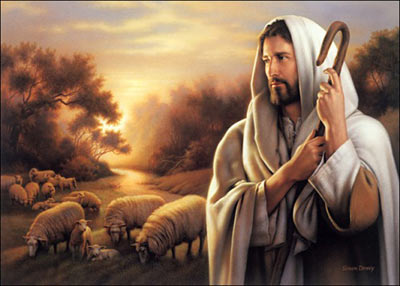
Leave a comment

Filed under General

THE GOOD SHEPHERD – Part 1

GoodShepherd4_sm

Who He Is!

As we’ve been opening up the gospel of John at Cross Community Church, we took some time to drink in our Lord’s words in Chapter 10: “I am the good shepherd.” This week I’d like to take a closer look at three aspects of this most wonderful and comforting passage of Scripture.


I am the good shepherd. The good shepherd lays down his life for the sheep. The hired hand is not the shepherd who owns the sheep. So when he sees the wolf coming, he abandons the sheep and runs away. Then the wolf attacks the flock and scatters it. The man runs away because he is a hired hand and cares nothing for the sheep. I am the good shepherd; I know my sheep and my sheep know me—just as the Father knows me and I know the Father—and I lay down my life for the sheep.

(John 10:11-15)


When you think of shepherds in the Bible, who comes to mind? Many of us would immediately think of David, the youngest son of Jesse, the shepherd boy whom God called to be king. Surely we would recall Moses tending the flock of his father-in-law, Jethro, the priest of Midian. Abraham, Isaac, and Jacob all were shepherds. But who would you say is the greatest shepherd in all of the Old Testament?


The Lord is my shepherd, I shall not be in want. He makes me lie down in green pastures, he leads me beside quiet waters, he restores my soul. He guides me in paths of righteousness for his name’s sake. Even though I walk through the valley of the shadow of death, I will fear no evil, for you are with me; your rod and your staff, they comfort me. You prepare a table before me in the presence of my enemies. You anoint my head with oil; my cup overflows. Surely goodness and love will follow me all the days of my life, and I will dwell in the house of the Lord forever.  

(Psalm 23)


The Lord God Omnipotent is the greatest Shepherd in all the Old Testament! He is also the greatest Shepherd in the New Testament, just as Micah prophesized.


You, Bethlehem Ephrathah, though you are small among the clans of Judah, out of you will come for me one who will be ruler over Israel, whose origins are from of old, from ancient times.”…He will stand and shepherd his flock in the strength of the Lord, in the majesty of the name of the Lord His God.

(Micah 5:2, 4)


The same Lord God Omnipotent who shepherds His people in the Old Testament is revealed to us again as the greatest Shepherd in the New Testament; we see Him in the second person of the Trinity: Jesus Christ. Jesus is described in Hebrews 13:20 as “that great Shepherd of the sheep . . . brought back from the dead.”

God is the one and only good shepherd who knows His sheep . . . and they know Him!

So here is the question to consider today: how well do you know Jesus? How much time do you spend getting to know who He really is?

This is the Gospel. This is grace for your race. NEVER FORGET THAT . . . AMEN!

Leave a comment

Filed under General