
Category Archives: General

Rejection Rejected!

Have you ever felt the sting of rejection? Perhaps you are carrying some deep wounds from past rejections that are negatively impacting your life today. We have all felt the sting of rejection at one time or another, and it is for this reason that today’s message should be a source of great comfort and healing.

At the ninth hour Jesus cried with a loud voice, “Eloi, Eloi, lema sabachthani?” which means, “My God, my God, why have you forsaken me?” (Mark 15:34)

When we plumb the depths of the price Jesus paid for our sins on the cross, we are numbed at what happened from the sixth to the ninth hour. As awful as it was for Jesus to endure the beating, the scourging, the crown of thorns, and the metal spikes driven through His wrists and feet, the excruciating physical pain was nothing compared to what happened during the darkest time in the history of the world: those terrible moments when the Father rejected His beloved Son. And because of the rejection Jesus endured on the cross—the rejection we deserved—we will never have to face God’s rejection. Rejection has been rejected, and that Gospel truth is both the power and comfort we need to deal with all of life’s many rejections.

The life of our Lord was a life marked with rejection:

  • The inn where He was born rejected Him
  • Friends rejected Him
  • Disciples rejected Him
  • Religious leaders rejected Him
  • His home-town synagogue rejected Him
  • Roman authorities rejected Him
  • Roman law rejected Him
  • Crowds rejected Him
  • Roman soldiers rejected Him
  • One thief on the cross rejected Him

Some of those He healed seemingly rejected Him when they did not return to thank Him. Even some in His own family rejected Him, believing Him to be “out of His mind” (Mark 3:21). The prophet Isaiah perhaps put it best when he said of Jesus, “He was despised and rejected by men, a Man of sorrows and acquainted with grief” (Isaiah 53:3). And Jesus took the ultimate rejection of His Father in heaven so that we would never have to experience that.

So . . . what rejection have you been facing lately? Personally? Professionally? Relationally?

The devil loves to use rejection in the lives of believers because it wounds so deeply. The ultimate goal for the devil is to see the pain of rejection grow abundantly in the lives of believers, bearing malignant fruit through emotional baggage, negative feelings, and the desire to get a little “pay-back,” regardless of the cost.

But this is not for you! Keeping the rejection Jesus endured in both life and death in view will help us to rise above the rejections we encounter in our daily lives, resting in the inconceivable love and acceptance we have because of our union with Jesus. God loves us so much that He sent His Son to endure every imaginable rejection and one that is unimaginable—God’s rejection of His very own Son—all for us!

May the Gospel truth of “rejection rejected” reach deep into our hearts to heal old wounds, jettison emotional baggage, and strengthen our resolve to live with freedom, joy, and faithfulness to our Savior . . . even in the face of rejection.

This is the Gospel. This is grace for your race. NEVER FORGET THAT . . . AMEN!

Leave a comment

Filed under General

Not Just What…But WHY?

There is a great deal of confusion today regarding the Christian life.  Some say it is all about abstaining from sin.  Don’t do this and don’t do that.  Others say it is about advancing into righteousness.  Do this and do that.  To be sure, we are to be putting off the old and putting on the newScripture commands us “to put off your old self, which belongs to your former manner of life and is corrupt through deceitful desires, and to be renewed in the spirit of your minds, and to put on the new self, created after the likeness of God in true righteousness and holiness”  (Ephesians 4:22-24).

However, even more than what we are to do and not do, the Christian life is rooted in the why behind the what.  Gospel-rich reminders of why we are to abstain from sin and advance into holiness can be found throughout Scripture; they form a common theme of encouragement.  Today we will plumb the depths of one of these messages from the pen of the Apostle Paul.

Having put away falsehood, let each one of you speak the truth with his neighbor, for we are members one of another. Be angry and do not sin; do not let the sun go down on your anger, and give no opportunity to the devil. Let the thief no longer steal, but rather let him labor, doing honest work with his own hands, so that he may have something to share with anyone in need. Let no corrupting talk come out of your mouths, but only such as is good for building up, as fits the occasion, that it may give grace to those who hear. And do not grieve the Holy Spirit of God, by whom you were sealed for the day of redemption. Let all bitterness and wrath and anger and clamor and slander be put away from you, along with all malice. Be kind to one another, tenderhearted, forgiving one another, as God in Christ forgave you.  (Ephesians 4:25-32)

Paul begins his why by reminding us to turn away from falsehood and advance in speaking the truth because of our status as members one of another in the kingdom of God (v. 25).  Next Paul instructs us to steer clear of man-centered, sinful anger, so as not to give the devil a foothold (vv. 26-27).  Former thieves are reminded not to steal and instead advance into becoming faithful givers to those in need (v. 28).  Next Paul reminds us that our words will give life to others when we remember we are sealed for the day of redemption (vv. 29-30).  He closes out his Gospel-reminders by telling us to be kind, tenderhearted, and forgiving.  Why?  Because this is how God in Christ has treated . . . is treating . . . and will continue to treat us.

When we begin to be seized by the truth of the Gospel about the importance of the why behind what we do, we truly begin to sense the freedom and joy our union with Christ has given us.  It is never enough to do what is right and refrain from doing what is wrong; the Pharisees were experts at that!  We must understand the motivation behind our behavior.  If what we do or don’t do is motivated by what we will receive (blessing) or avoid (cursing), then we are not living in the strength and liberty of the Gospel.

When our motivation for doing what we do flows from a heart that is overflowing with thanksgiving for what Christ has already done for us, then we are living the kind of Christian life that is pleasing to God and beneficial to others.

“For freedom Christ has set us free” (Galatians 5:1). We have been set free to live a life of holiness—not because of what we will get by living it, but because of what we have already been given.  In the words of John Owen, “Holiness is nothing but the implanting, writing, and realizing of the gospel in our souls.”  The more we rest in the reality of our redemption and the finished work of Christ, the more we are transformed by the renewing power of the Gospel. At this level of living we both abstain and advance practically, simply because of our ever-increasing understanding of what we are positionally: a child of the Most High God.

This is the Gospel.  This is grace for your race.  NEVER FORGET THAT . . . AMEN!

Leave a comment

Filed under General

Against All Odds

When was the last time you had the odds stacked so high against you that the possibility of coming out on top seemed to be, well, impossible?  Today we will take a lesson from a man whose name means “Mighty Warrior.”  His story is recorded in the Book of Judges and he is also mentioned in the Hebrews 11 “Faith Hall of Fame.”  You may remember his name: Gideon, one of the twelve Judges selected by God to act as a temporary leader for the Israelites.

Then Jerubbaal (that is, Gideon) and all the people who were with him rose early and encamped beside the spring of Harod. And the camp of Midian was north of them, by the hill of Moreh, in the valley.

The Lord said to Gideon, “The people with you are too many for me to give the Midianites into their hand, lest Israel boast over me, saying, ‘My own hand has saved me.’ Now therefore proclaim in the ears of the people, saying, ‘Whoever is fearful and trembling, let him return home and hurry away from Mount Gilead.’” Then 22,000 of the people returned, and 10,000 remained.

And the Lord said to Gideon, “The people are still too many. Take them down to the water, and I will test them for you there, and anyone of whom I say to you, ‘This one shall go with you,’ shall go with you, and anyone of whom I say to you, ‘This one shall not go with you,’ shall not go.” So he brought the people down to the water. And the Lord said to Gideon, “Every one who laps the water with his tongue, as a dog laps, you shall set by himself. Likewise, every one who kneels down to drink.” And the number of those who lapped, putting their hands to their mouths, was 300 men, but all the rest of the people knelt down to drink water. And the Lord said to Gideon, “With the 300 men who lapped I will save you and give the Midianites into your hand, and let all the others go every man to his home.” So the people took provisions in their hands, and their trumpets. And he sent all the rest of Israel every man to his tent, but retained the 300 men. And the camp of Midian was below him in the valley.  (Judges 7:1-8)

The Almighty is in the business of snatching victory out of the jaws of certain defeat—more accurately, you could say creating victory.  The Bible is replete with stories where God’s people faced odds that were stacked so highly against them that when victory was achieved, the only possible explanation was that God was responsible for it.  He did it when the Israelites were trapped between Pharaoh’s approaching army and the Red Sea.  He did it when the shepherd boy David agreed to do something the entire Israelite army refused to do: fight the giant Goliath.  And God did it again here.  Gideon started with 32,000 men to battle against the Midianite army of 135,000 men (Judges 8:10), but God told him he had too many soldiers!

I’d say the odds were already stacked steeply against Gideon (135,000 to 32,000—roughly 4-to-1), but God didn’t see it that way.  God instructed Gideon to find out who was “fearful and trembling” and send them home.  As soon as he did, 22,000 men scurried away, leaving Gideon with 10,000 troops.  Now the odds were much worse, roughly 13-to-1, but God still wasn’t finished stacking the odds against Gideon.  The Lord informed Gideon that He would test the men at the water.  When the test was over, only 300 men were left in Gideon’s “army.”  God had whittled Gideon’s force down from 32,000 to 300 and was preparing to send them into battle against a Midianite army that was 135,000 strong—unimaginable odds of roughly 450-to-1.  When the dust settled, God settled any question as to the cause of victory for Gideon: it was all of God! As the Lord of hosts said to Zerubbabel, “Not by might, nor by power, but by my Spirit” (Zechariah 4:6).

So . . . where in your life do the odds seem to be stacked high against you?  College acceptance?  Job promotion?  Too much month at the end of the money?  A prodigal child who has been a long time off in a far country?  A marriage on the rocks because you spent more time planning for the wedding than you did working on the marriage?  Your doctor wants to see you for consultation after receiving the test results?  There are many more examples, but the point is the same: God is in the business of bringing victory out of defeat—not because we deserve it or have earned it in any way, but simply because we are His.

Bought by the blood of the Lamb, you are precious in the sight of God.  Whatever you are facing today, you are not facing it alone.  Jesus said He would never leave you nor forsake you, regardless of the odds that are stacked against you.  Remember, God may simply be stacking those odds to make it clear to you and to the watching world that it is only God who could have achieved the victory.

As the Lord would say to Jehoshaphat: “Do not be afraid and do not be dismayed at this great horde, for the battle is not yours but God’s” (2 Chronicles 20:15-16). He has already won your eternal victory; Christ announced it with a victory cry that split the rocks open!

This is the Gospel.  This is grace for your race.  NEVER FORGET THAT . . . AMEN!

1 Comment

Filed under General

Divine Decision-Maker

When faced with important decisions in life, what is the formula you use or template you put over your decisions to help you make them?  Now, if that question sounds strange, it’s likely you’re making some strange decisions and getting some very strange results!  Let’s take a look at the formula Jesus used, not only in His wilderness experience, but as a way of life.

Then Jesus was led up by the Spirit into the wilderness to be tempted by the devil.  And after fasting forty days and forty nights, he was hungry.  And the tempter came and said to him, “If you are the Son of God, command these stones to become loaves of bread.”  But he answered, “It is written, ‘Man shall not live by bread alone, but by every word that comes from the mouth of God.’”  Then the devil took him to the holy city and set him on the pinnacle of the temple and said to him, “If you are the Son of God, throw yourself down, for it is written, ‘He will command his angels concerning,’ and ‘On their hands they will bear you up, lest you strike your foot against a stone.’”  Jesus said to him, “Again it is written, ‘You shall not put the Lord your God to the test.’”  Again, the devil took him to a very high mountain and showed him all the kingdoms of the world and their glory.  And he said to him, “All these I will give you, if you will fall down and worship me.”  Then Jesus said to him, “Be gone, Satan!  For it is written, ‘You shall worship the Lord your God and him only shall you serve.’”  Then the devil left him, and behold, angels came and were ministering to him.  (Matthew 4:1-11)

Regardless of the decision that needed to be made, Jesus always weighed it against the Word of God.  Decisions to teach, minister, heal, judge, justify, rebuke, restore, speak up, or remain silent . . . He based every decision on the truth of sacred Scripture.  And when facing the temptations proffered by the devil—temptations which are common to us all—Jesus went to the fountain of Truth, the Holy Bible, in deciding how to respond.

The first temptation brought Jesus to a point of decision regarding meeting the physical need of hunger.  Clearly, Jesus was hungry after a forty-day fast.  There was nothing wrong with satisfying His hunger, except for the fact that the devil was suggesting the wrong way to satisfy it.  Our Lord refused to use His divine power to turn stones into bread to satisfy His hunger; instead, He surrendered fully to the will of His Father and responded with, “IT IS WRITTEN!”

The second temptation brought Jesus to a point of decision regarding the human emotions of pride, presumption, and protection.  The devil sought to cause Jesus to question whether God would protect Him if He threw Himself down from the pinnacle of the temple.  Would Jesus put God to the test?  Or would He simply trust Him?  Once again, Jesus surrendered fully to the will of His Father and responded with, “IT IS WRITTEN!” 

The third and final temptation brought Jesus to a point of decision regarding the psychological needs for significance and personal importance.  The devil offered the whole world to Jesus and all the trappings of significance and personal importance if He would simply bow down to him.  The divine decision-making formula of our Master would not allow idolatry to interfere with His passion and purpose in life.  For the third time, Jesus surrendered fully to the will of His Father and responded with, “IT IS WRITTEN!” 

Jesus used the Word of God as the template He would place over every decision.  When faced with the question of whether or not God would meet His needs, Jesus trusted in the faithfulness of God by resting in the promises of God.  He relied on the “sword of the Spirit” (Ephesians 6:17) to make every decision; and He was victorious every single time.

One final point must be made.  It is not enough to simply know the Word of God and be reading our Bibles.  Satan knew Scripture and even quoted it back to Jesus.  The devil was in the Word of God, but the Word of God was not in him!  The Word of God must be in us if we are going to profit by it.  We must be seized by the Word and surrendered to it; when we are, we will be able to say what Jesus said when we are facing any decision in life: “IT IS WRITTEN!”  

This is the Gospel.  This is grace for your race.  NEVER FORGET THAT . . . AMEN!

Leave a comment

Filed under General

It Was True Then…It Is True Now

There is a wonderful verse in the book of Joshua that offers God’s people profound comfort, security, assurance, and encouragement: “All of the good promises that the Lord had given Israel came true” (21:45).  What a powerful witness to the faithfulness of our God!  When He makes a promise, He keeps it—past, present, and to come.  As one wise writer observed, “God will keep all his promises whether you believe them or not!”

So . . . what do you need to believe God for today? The list of His promises is long enough to fill a thick book!

Feeling Anxious?

Do not be anxious about anything, but in everything by prayer and supplication with thanksgiving let your requests be made known to God.  And the peace of God, which surpasses all understanding, will guard your hearts and your minds in Christ Jesus.  (Philippians 4:6-7)

Feeling Guilty?

There is therefore now no condemnation for those who are in Christ Jesus.  (Romans 8:1)

Feeling Fearful?

Peace I leave with you; my peace I give to you.  Not as the world gives do I give to you.  Let not your hearts be troubled, neither let them be afraid.  (John 14:27)

Feeling Financial Strain?

Seek first the kingdom of God and his righteousness, and all these things will be added to you.  (Matthew 6:33)

Feeling Stingy?

Each one must give as he has decided in his heart, not reluctantly or under compulsion, for God loves a cheerful giver.  (2 Corinthians 9:7)

Feeling Hopeless?

Blessed by the God and Father of our Lord Jesus Christ!  According to his great mercy, he has caused us to be born again to a living hope through the resurrection of Jesus Christ from the dead.  (1 Peter 1:3)

Feeling Sick?

Jesus turned, and seeing her he said, “Take heart, daughter, your faith has made you well.”  And instantly the woman was made well.  (Matthew 9:22)


Feeling Alone?

Behold, I am with you always, to the end of the age.  (Matthew 28:20)

God has promised to meet all of your needs.  However, it’s important to understand He has not promised to provide all of your wants and desires.  You may want a new car . . . but you may not need a new car.  You may want a bigger house . . . but you may not need a bigger house.  You may want a higher paying job . . . but you may not need a higher paying job.

It serves the Christian well to meditate on the promises of God daily and rest in the truth that every promise made by God is both ‘Yes’ and ‘Amen’ in Jesus (2 Corinthians 1:20).  John Piper writes, “The question that God asks us is this: Are you living in the fullest enjoyment of God’s YES to you in Christ Jesus?  Or to put it another way: Have you said yes to all of God’s YES to you?  Is there any of God’s YES to you to which you are saying NO or MAYBE or NOT NOW?”

Remember, if you are not standing on the promises of God, you are simply not standing on solid ground!  You are standing on shifting sand and will continually be at the mercy of the strongest wind that is blowing at the time.  Let the truth that God has never broken a promise—and never will—cause you to build your life on the solid rock of Jesus Christ.  Nothing in the universe can shake this foundation.  You have His Word on it . . . His Word that was true then and now!

This is the Gospel.  This is grace for your race.  NEVER FORGET THAT . . . AMEN!
2 Comments

Filed under General

A Risen Life!

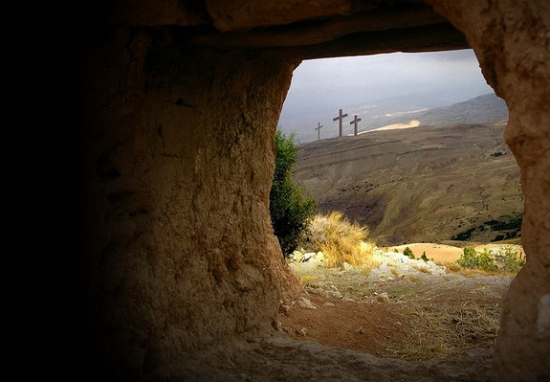
Yesterday we celebrated the glorious resurrection of our Lord and Savior Jesus Christ, to the honor and majesty of His Father in heaven.  On the first Easter Sunday, death and the grave could not hold our Lord.  The Roman soldiers and the religious leaders could not scheme to keep Him in the tomb.  No power in the universe was powerful enough to render Omnipotence impotent. Paul prayed for all believers:

[T]hat you may know . . . what is the immeasurable greatness of [the Father’s] power toward us who believe, according to the working of his great might that he worked in Christ when he raised him from the dead and seated him at his right hand in the heavenly places.  (Ephesians 1:18-20)

When Jesus was raised from the dead, death was driven into the ashes of defeat once for all.  Death, which for a little while held Him in the grave, is now rendered powerless forevermore.  And the power that raised Jesus from death to life is the very same power that raised you from death to life.  Charles Spurgeon wrote:

The resurrection is the cornerstone of the entire building of Christianity.  It is the key-stone of the arch of our salvation.  It would take a volume to set forth all the streams of living water which flow from this one sacred source, the resurrection of our dear Lord and Savior Jesus Christ; but to know that He has risen, and to have fellowship with Him as such—communing with the risen Savior by possessing a risen life—seeing Him leave the tomb by leaving the tomb of worldliness ourselves, this is even still more precious.

Because we have been raised with Christ, we have been given the power to live a risen life.  Peter assured us that “His divine power has given us everything we need for life and godliness through our knowledge of him who called us by his own glory and goodness” (2 Peter 1:3 NIV).  Having been buried with Christ in the grave we have been raised to walk in newness of life (Romans 6:4).

To be sure, there is much that can be said about this risen life, but one fact reigns supreme: this life you have been given was a gift of grace and not due to any of your good works—regardless of how “good” you think they may be!  Mercy sought you; mercy caught you and bought you.  It had nothing to do with your merit.  Every time we seek to find our acceptance—not in the Beloved, but in our behavior—we wander back into the dead works of religion . . . we wear the grave clothes of self-righteousness.  A risen life is a life that rises above seeking God’s favor and blessing based on how we relate to Him.

Who reading this right now would feel any confidence in approaching the Great White Throne on the basis of your own performance?  On your “good” days, perhaps you don’t feel too badly about it.  But what about on your “bad” days, which (if you are anything like me) far outweigh your good ones?  God’s favor and blessing do not flow to us based not on how we relate to Him, but rather on how Jesus related and continually relates to us.  It was His perfect, obedient life and sacrificial death that causes God to look upon us with pity, compassion, and love.  It was the precious blood of Jesus that cleansed us and connected us to the Father.  The just (Jesus) died for the unjust (you and me), giving to the unjust what only the just could give.

  • His death is our death, which frees us from sin and death.
  • His resurrection is our resurrection, which frees us to walk in the newness of life.

A risen life is not a life that is busily engaged in doing more and trying harder to please God.  It is a life that dives more deeply into the truth of the Gospel, applying it to every area of life, knowing that we are already pleasing to God because of Jesus.  As my good friend Steve Brown likes to say, “God is not angry with you.  In fact, He is quite fond of you!”  Only the truths of the Gospel can free us to live a risen life, where we live out practically (obedience and holiness) what we already are positionally (a child of the Most High God).

So you also must consider yourselves dead to sin and alive to God in Christ Jesus.  (Romans 6:11)

Augustine profoundly pronounced this truth more than 1,500 years ago when he wrote in his Confessions, “Give me the grace to do as you command, and command me to do what you will! . . . [W]hen your commands are obeyed, it is from you that we receive the power to obey them.”

Our salvation and our sanctification are all the work of God’s grace and power.  “For from him and through him and to him are all things. To him be glory forever. Amen” (Romans 11:36).

This is the Gospel.  This is grace for your race.  NEVER FORGET THAT . . . AMEN!

Leave a comment

Filed under General

Midday…Mid-Night!

When the sixth hour had come, there was darkness over the whole land until the ninth hour.  And at the ninth hour Jesus cried with a loud voice, “Eloi, Eloi, lema sabachthani?” which means, “My God, my God, why have you forsaken me?”  And some of the bystanders hearing it said, “Behold, he is calling Elijah.”  And someone ran and filled a sponge with sour wine, put it on a reed and gave it to him to drink, saying, “Wait, let us see whether Elijah will come to take him down.”  And Jesus uttered a loud cry and breathed his last.  And the curtain of the temple was torn in two, from top to bottom.  And when the centurion, who stood facing him, saw that in this way he breathed his last, he said, “Truly this man was the Son of God!” (Mark 15:33-39)

In Jesus’ day, they counted the hours of the day from the time of sunrise.  The sixth hour would be noon or midday, and the ninth hour would be 3 p.m.  The Scriptures tell us that at midday it became as midnight, as darkness covered the whole land.  Having endured the beatings, the crown of thorns, and the nine-inch nails driven through His feet and hands, hanging spread-eagle on the cross, Jesus now enters into the most horrific aspect of His crucifixion, which can easily be missed.  In a word, it is unfathomable.

The darkness mentioned here in the Scriptures reflects the separation of the Father’s fellowship from His precious Son.  From all eternity, the Father, Son, and Holy Spirit existed in a perfect relationship of fellowship, love, and glory . . . until now!

It was one thing to suffer at the hands of men who were used of God to punish the sinless Savior for the salvation of sinners like you and me; but now the Holy Father unleashed His unimaginable wrath and judgment on His beloved Son, who was hanging on the cross, bleeding and dying, to pay the penalty for our sins—all our sins.  Because God’s eyes are too pure to look upon evil (Habakkuk 1:13), He turned his back on Jesus, who had become sin on our behalf so that in Him we might become the righteousness of God (2 Corinthians 5:21).  The physical pain Jesus endured during His crucifixion—we get our English word excruciating from the French word for crucify—is truly difficult to imagine.  That shuddering, gasping agony is reduced to the level of a mosquito bite, however, compared to the shattering supernatural anguish He experienced when He suffered something no Christian will ever have to experience: being forsaken of the Father.

This terrifying darkness at the sixth hour was not the result of some natural phenomena, such as an eclipse or dust storm, primarily because it was intended to be a supernatural sign from God to the watching world.  At the time when the sun would normally be at its brightest, midday became as midnight, and God judged the One who had never known sin in the place of those who had known only sin since Adam and Eve’s catastrophic fall in the Garden of Eden.

Luke’s Gospel describes the darkness thus: “The sun was darkened” (Luke 23:45).  In the original Greek text, we would read this statement as “the sun failing.”  The One who called the world into existence and hung it on nothing, who spoke light into existence, sent this supernatural darkness so that we might understand the blackness of our sin and the damage it had caused.

Darkness in the Scriptures is often associated with judgment against sin and wickedness.  The prophets spoke often of God’s judgment against sin that would be demonstrated in the form of darkness.  Who can forget the darkness God sent to cover the land of Egypt as judgment against Pharaoh when he refused to let the Israelites go (Exodus 10:22-23)?  Darkness is also used as a description of hell: “Cast the worthless servant into the outer darkness. In that place there will be weeping and gnashing of teeth” (Matthew 25:30).

For three solid hours, from the sixth to the ninth hour, God poured out His cup of wrath and judgment on His precious Son, who was paying a debt of sin He did not owe for those who owed it but could not pay.  Jesus hung on that cruel cross, forsaken by His Father, and endured the unthinkable darkness of sin and hell.  The light of eternal love between the Father and the Son had been utterly extinguished.  On that day, Jesus experienced the “outer darkness” that we will never have to experience when He willingly took our place as our Substitute . . . our Savior.  J. C. Ryle profoundly wrote:

It was meet and right that the attention of all around Jerusalem should be arrested in a marked way, when the great sacrifice for sin was being offered and the Son of God was dying.  There were signs and wonders wrought in the sight of all Israel, when the law was given on Sinai.  There were signs and wonders in like manner when the atoning blood of Christ was shed on Calvary.  There was a sign for an unbelieving world.  The darkness at mid-day was a miracle which would compel men to think.

Today is Good Friday, and it is “meet and right” that you and I take some time to reflect on the sacrifice Jesus made on the cross for our sins.  As we reflect on the unimaginable price Jesus paid, let us not merely remember the physical pain our Lord endured, but the searing supernatural pain of separation from His Father that He experienced so that we would never have to.  Jesus experienced midday at midnight so that all our midnights would be as midday!

Truly, Jesus is the Light of the world.  Is He your light?  By God’s grace may it be so.

This is the Gospel.  This is grace for your race.  NEVER FORGET THAT . . . AMEN!

Leave a comment

Filed under General

Take Two Tablets

Here is a phrase frequently attributed to members of the medical profession: “Take two tablets and call me in the morning!”  Well, the Great Physician has something similar to say to all of us, “Take two tablets and call me anytime!”  Coming from a doctor, this would be called your daily medication; from the Great Physician, this can be called your daily meditation.

With countless voices vying for our attention throughout the day—radio voices, television voices, advertising voices, friend voices, co-worker voices, family voices, our own internal voice—it is critical that we spend time each day meditating on the only voice that really matters: the voice of Truth (John 14:6).

In the beginning was the Word, and the Word was with God, and the Word was God.  He was in the beginning with God.  All things were made through him, and without him was not any thing made that was made . . . And the Word became flesh and dwelt among us, and we have seen his glory, glory as of the only Son from the Father, full of grace and truth.  (John 1:1-3, 14)

Initially, when we think of the Law, we recall the two tablets of the Law that God gave to Moses on Mount Sinai.  This is good and right, because the Author of Life knows the best way for His people to live life and gave us His Ten Commandments as our guide.  As my friend Steve Brown likes to say, “The Ten Commandments tell us where the land mines are located.”  In other words, God’s Ten Commandments guide us safely through this life as pilgrims passing through on the way to the Celestial City.  But we are never to camp out at the base of Mount Sinai, because all Scripture is to be read, studied, and meditated on for our profit and our progress.

All Scripture is breathed out by God and profitable for teaching, for reproof, for correction, and for training in righteousness, that the man of God may be complete, equipped for every good work.  (2 Timothy 3:16-17)

So . . . how much time have you been spending in the Word of God?  I don’t ask this to frustrate you, or to cause you to feel like you are falling behind or even failing.  A question like this is simply designed to get us to examine ourselves and see if we are on track or off track—the track that God has called us to run our race on.  We must remember that God could easily have left it up to the Holy Spirit to encourage, inspire, motivate, teach, and train us . . . but He did not!  He gave us His holy, infallible, inspired, and inerrant Word, contained in a book called the Bible so we would read it.  Let me say something quite profound:

THE BOOK YOU DON’T READ . . . WON’T HELP!

Now, reading good books and magazines can be enjoyable, and even quite profitable.  God delivers truth in a variety of ways and through a variety of different means.  But these resources should never take the place of God’s Word.  If you miss the next best-selling novel that hits the book shelf or anniversary issue of some magazine, your life probably won’t suffer.  But if you miss the Word of God, life not only suffers, it begins to spiral out of control.

As a pastor, it’s not uncommon to hear people say that portions of the Bible are hard to read and even harder to understand, so they stay in the shallow waters of the familiar.  Sure, some portions of Scripture are not easy to understand, but Jesus calls us to venture out into the deep waters of His truth.  As we do, the Spirit of God will illuminate us to understand and apply that truth.  Jesus promised His disciples (and that includes you) that the Holy Spirit would come and “guide you into all the truth” (John 16:13).

And the most important truth is Jesus!  The entire Bible, from Genesis to Revelation, tells the story of Jesus—how God in Christ came into this world to save sinners.  This is the reason to read the revelation of our Redeemer.  This is the reason to be able to say of sacred Scripture, “I make it my guide by day and my pillow by night.”  By God’s grace, may this be our daily experience, regardless of the cost or circumstance.

This is the Gospel.  This is grace for your race.  NEVER FORGET THAT . . . AMEN!

Leave a comment

Filed under General

April Fools!

Wikipedia relates that April Fools’ Day is celebrated annually in different countries around the world on April 1.  Sometimes referred to as All Fools’ Day, April 1 is not a national holiday, but it is widely recognized and celebrated as a day marked by the commission of good-humored or otherwise funny jokes, hoaxes, and other practical jokes of varying sophistication on friends, family members, teachers, neighbors, work associates, etc. So, did anyone pull an April Fools’ Day prank on you yesterday?  Did you do it to anyone?

The Bible says nothing about an April Fools’ Day, but it plainly marks the contrast between the fool and the wise.  Throughout the book of Proverbs, the wise preacher Solomon draws a clear distinction between wisdom and foolishness.  The way of a fool always seems right in his own eyes.  He never asks for help, seeks counsel, or accepts advice.  The fool trusts in his faulty beliefs, false judgment, and faithless sense.  He has been bewitched by his corrupted, carnal reason to the point that he not only thinks he is the smartest man in the room, but he is convinced that he is the only smart man.  He thinks more highly of himself than he ought and believes he is a notch above the rest.  Scripture strongly warns us against this way of thinking:

The way of a fool is right in his own eyes, but a wise man listens to advice.  (Proverbs 12:15)

There is a way that seems right to a man, but in the end it leads to death.  (Proverbs 14:12)

Standing in direct opposition to the fool is the wise, and the Bible clearly describes the foundation upon which a wise life is to be built.

The fear of the Lord is the beginning of knowledge; fools despise wisdom and instruction.  (Proverbs 1:7)

Where fools have no fear or reverence for the Lord, the wise build their lives upon it.  This fear of the Lord is not a cowering fear—fear that is absent of love, trust, and faith, and which causes men to run and hide from God.  That kind of fear leads down the road of dread and despair, the kind James tells us the demons have who know that there is only on God and shudder in terror (James 2:19).

The fear of the Lord that the Scriptures exhort the wise to possess is a fear that bows low before the Creator of the universe, marveling at the knowledge of His unconditional and sacrificial love, and recognizing Him as the only wise, good, and holy source of all that is true, noble, right, pure, lovely, and admirable.  Jerry Bridges writes in The Joy of Fearing God regarding the proper attitude of a child to a parent: “Fearing one’s parents and knowing that they love you are not incompatible.”  He continues, “There was a time when committed Christians were known as God-fearing people.  This was a badge of honor.  But somewhere along the way we lost it.  Now the idea of fearing God, if thought of at all, seems like a relic from the past.”

As we embark on a new month, known at its onset for foolishness, we have a moment by moment choice to make: we can either be wise or be foolish . . . we can either bear the beautiful fruit of wisdom or the putrid fruit of foolishness.

So . . . when all is said and done at the end of April, what would you like said about all that you have done?  If we look to Jesus and not to ourselves, and if we lean into Jesus and not on our own understanding, our lives will be marked by wisdom.  The apostle Paul told us that Christ Jesus “has become for us wisdom from God — that is, our righteousness, holiness and redemption” (1 Corinthians 1:30 NIV).

This is the Gospel.  This is grace for your race.  NEVER FORGET THAT . . . AMEN!

1 Comment

Filed under General

From Believing to Belonging

If you are a disciple of Christ, do you know what happened when you said “I believe”?  You were engrafted into the body of believers and immediately went from believing to belonging.  To be sure, you were saved as an individual, but you were saved to community.

This truth is troubling for many in a society that prizes independence and individualism.  We live in a culture where the demands and desires of the individual trump the demands and desires of the community, group, organization, or family.  It is not uncommon to hear new believers admit that they fear losing their independence to the church; they’ll say things like, “I love Jesus but not the church” and “I am spiritual but in no way religious.”  When people say such things, they are actually asserting that they have no interest in giving up their own personal rights, desires, wants, and preferences to anyone, including their family members in the church.  It is the clear and present evidence of a self-centeredness that has a stranglehold on them.

I’m a pastor, and I have heard a great many horror stories of believers who have been hurt by the church.  It has been said—all too often with complete justification—that the church shoots its wounded.  Christians can be mean and hurtful.  I know; I’m part of the church, and the church is made up of broken, fearful, hurting people just like me and you.  Yet the church is the body of Christ, and we simply cannot have the Head without His body.

Jesus intended our salvation to be worked out in the context of community.  Remember, our story ends with a wedding (Revelation 19:6-9), and I have never seen or officiated at a wedding with only one person present.  A wedding is a celebration of hearts being united to beat as one, and this is the environment God has created for His people in His church: to live, love, work, grow, serve, and suffer, each for the other.

For just as the body is one and has many members, and all the members of the body, though many, are one body, so it is with Christ.  For in one Spirit we were all baptized into one body—Jews or Greeks, slaves or free—and all were made to drink of one Spirit.

For the body does not consist of one member but of many.  If the foot should say, “Because I am not a hand, I do not belong to the body,” that would not make it any less a part of the body.  And if the ear should say, “Because I am not an eye, I do not belong to the body,” that would not make it any less a part of the body.  If the whole body were an eye, where would be the sense of hearing? If the whole body were an ear, where would be the sense of smell?  But as it is, God arranged the members in the body, each one of them, as he chose.  If all were a single member, where would the body be?  As it is, there are many parts, yet one body.

The eye cannot say to the hand, “I have no need of you,” nor again the head to the feet, “I have no need of you.”  On the contrary, the parts of the body that seem to be weaker are indispensable,  and on those parts of the body that we think less honorable we bestow the greater honor, and our unpresentable parts are treated with greater modesty, which our more presentable parts do not require. But God has so composed the body, giving greater honor to the part that lacked it, that there may be no division in the body, but that the members may have the same care for one another.  If one member suffers, all suffer together; if one member is honored, all rejoice together.  (1 Corinthians 12:12-26)

This really is good news!  You belong to something that transcends your own life; you are part of the family of God.  Yes, your family is a little messed up and a bit dysfunctional, but Jesus loves them and died for them—all of them—and you are to love them . . . yes, even lay down your life for them, just as Christ loved you and laid down His life for you.  Keep in mind that the church is the only organization in the world where membership is limited to those who are unqualified for membership.  We get in only because of the One who sought us, bought us, and brought us in.

One last important point: it is only as a member of the body that you will ever get to truly know your Savior.  You see more of Jesus the more you see, interact, and relate to the ones He came to save.  You also see more of yourself the more you see, interact, and relate to the ones He died to save.  As my friend Steve Brown likes to say, “Everybody who belongs to Jesus belongs to everybody who belongs to Jesus.”  Believe and belong; it’s worth the effort!

This is the Gospel.  This is grace for your race.  NEVER FORGET THAT . . . AMEN!

Leave a comment

Filed under General