
Monthly Archives: December 2017

FINISHING WELL – Part II

cbd341db72a36c37ef6c2cb9536d655b6e43f9a0

With only three days left until the beginning of a new year, let’s close out 2017 with some more thoughts on finishing well, rooted in these words from Paul to Timothy:

I have fought the good fight, I have finished the race, I have kept the faith. Now there is in store for me the crown of righteousness, which the Lord, the righteous Judge, will award to me on that day—and not only to me, but also to all who have longed for his appearing. (2 Timothy 4:7-8)

On Wednesday we gave thought to fighting the good fight and finishing the race. Today let’s take a closer look at Paul’s final phrase …

I have kept the faith …

Here Paul is talking about the faith found in the truth of the wisdom of God. Paul had, by the power of the Holy Spirit indwelling him, pondered it, preached it, practiced it, protected it, and praised it whenever and wherever God gave him opportunity. He fearlessly contended with those who sought to distort the truth of God’s Word and those who would water it down.

For Paul, keeping the faith meant keeping the all-consuming call that God had placed on his life in view at all times. He refused to let anything take him off course. Paul lived a life of fidelity to His faithful Savior and poured himself out in unwavering service to his Lord. Yes, he did it imperfectly, but he did it with all of his heart. There was no half-hearted effort in the life of Paul. As he wrote to the Christians at Philippi:

I press on to take hold of that for which Christ Jesus took hold of me. Brothers, I do not consider myself yet to have taken hold of it. But one thing I do: Forgetting what is behind and straining toward what is ahead, I press on toward the goal to win the prize for which God has called me heavenward in Christ Jesus. (Philippians 3:12-14)

Think about it this way: everything he did as Saul prior to meeting the resurrected Christ on the road to Damascus, he did with all of his heart. Now, as Paul, everything he did was done with all of his heart for the glory of the One who had called him. In closing out this year, let me suggest three key words that marked the life of Paul:

  • Sold-out
  • Steadfast
  • Single-minded

Paul was able to fight the good fight because he was sold-out in fighting it. Paul was able to finish the race because he was steadfast in running it. And Paul was able to keep the faith because he was single-minded in focusing on it.

It is my prayer that you will look back on this past year and see all the good God has done, both in you and through you. Learn from the times you fell short of the intended mark and take that lesson into 2018 with the confident assurance that He who began the good work in you will complete it . . . just as He did in the apostle Paul’s life.

Thank you for spending time with me this past year. May God bless you and yours. Lord willing, we shall do it all again next year—lifting our eyes to heaven and receiving, by faith, the grace we all need to run our race well.

This is the Gospel. This is grace for your race. NEVER FORGET THAT . . . AMEN!

Leave a comment

Filed under General

FINISHING WELL – Part I

fae40e8870ce516d870c050d816c0169cf076187

I would like to close out 2017 with a two-part message on finishing well, rooted in these words from the apostle Paul to his protégé Timothy.

I have fought the good fight, I have finished the race, I have kept the faith. Now there is in store for me the crown of righteousness, which the Lord, the righteous Judge, will award to me on that day—and not only to me, but also to all who have longed for his appearing. (2 Timothy 4:7-8)

I’d like to examine the three phrases Paul used to sum up all that God had done in His life after his encounter with the resurrected Christ on the Damascus Road. We can use these God-breathed phrases to evaluate how well we have lived throughout the past year. We will look at the first two phrases today; on Friday we’ll examine the final one.

I have fought the good fight …

If Paul had said “I have fought A good fight,” he might have been speaking about any fight he had engaged in. But he didn’t phrase it that way; he said he had fought “THE good fight,” and the only truly good fight is the one God has called us to. God turned Paul’s life upside down when He changed Saul into Paul, transforming him from the persecutor of the church into the preacher and pastor to the church, and Paul endured innumerable hardships in order to pursue his calling. Indeed, Paul fought THE good fight God had called him to fight.

Next, Paul said . . .

I have finished the race …

Paul frequently compared his life to a race. And make no mistake, he did not compare it to a sprint, but rather a marathon. Paul lived a life that was reflective of the truth that He who begins a good work in us will certainly complete it. Yet Paul knew that he had to continue, by God’s grace, putting one foot in front of the other every day, every step of the way.

As we draw near to the end of 2017, let me encourage you to take some time to consider both these phrases from the inspired pen of the apostle Paul. Are you able to say the same as Paul? Was 2017 marked by fighting the good fight of faith and running with purpose and prayerful determination in the race God has set before you? Did you run in the strength of the Almighty?

Please understand that I am not suggesting that you should have fought the good fight and run this year’s race perfectly. Everything we do we do imperfectly, just as Paul freely admitted about his own life (Romans 7:14-24). But here is the question I believe we should all meditate on during these final days of 2017:

Did we make God’s plan for our lives our primary passion and pursuit throughout the year?

I hope you’ll come back on Friday for Part II—our final article for 2017.

This is the Gospel. This is grace for your race. NEVER FORGET THAT . . . AMEN!

Leave a comment

Filed under General

Merry Christmas!

merry

We all have our favorite Christmas holiday movies and television shows. Since I was a child, my favorite was A Charlie Brown Christmas, which first aired in 1965. Back then, Mom would have to check the TV Guide to make sure we knew when this “special” (and back then, it really was a special occasion) would air, or we would miss it and have to wait an entire year to see it again. Today, the Boland family has Charlie Brown Christmas on DVD and we watch it any time we want, as often as we want—no longer a slave to network programming.

My absolute favorite scene is where Charlie Brown has just picked out a less than desirable Christmas tree for the play he is directing, and his friends let him know it by calling him a “completely hopeless.” In abject frustration, Charlie cries out, “Isn’t there anyone who knows what Christmas is all about?” To which Linus responds, “Sure Charlie Brown, I can tell you what Christmas is all about,” and proceeds to declare the true Christmas story from sacred Scripture. If you’d like, you can click here and watch this lovely moment.

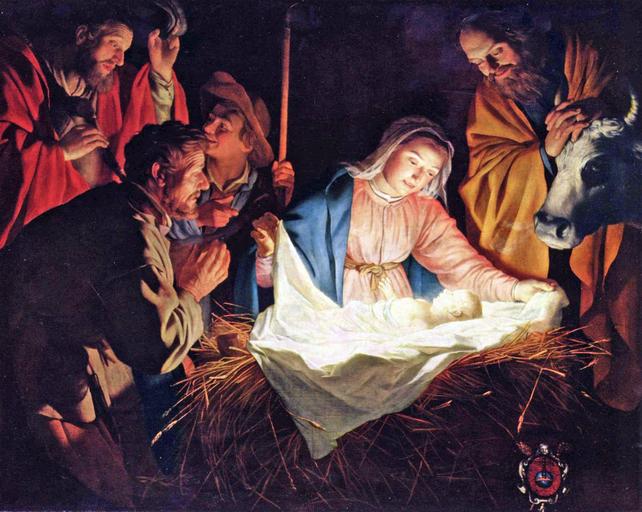
And there were in the same country shepherds abiding in the field, keeping watch over their flock by night. And, lo, the angel of the Lord came upon them, and the glory of the Lord shone round about them: and they were sore afraid. And the angel said unto them, “Fear not: for, behold, I bring you good tidings of great joy, which shall be to all people. For unto you is born this day in the city of David a Savior, which is Christ the Lord.” And this shall be a sign unto you; Ye shall find the babe wrapped in swaddling clothes, lying in a manger.”

And suddenly there was with the angel a multitude of the heavenly host praising God, and saying, “Glory to God in the highest, and on earth peace, good will toward men.” (Luke 2:8-14 KJV)

Linus concludes with these words, “That’s what Christmas is all about, Charlie Brown.” Truer words were never spoken!

My prayer is that we all will remember the Christ of Christmas—not only on Christmas Day, but every day throughout the New Year.

Merry Christmas!

This is the Gospel. This is grace for your race. NEVER FORGET THAT . . . AMEN!

Leave a comment

Filed under General

The ‘Who’ of Advent

0fb8f71702a0836660005d385634ff5189386429

I am the way, and the truth, and the life, no one comes to the Father but through me. (John 14:6)

This is the third and final installment in our Advent Devotional Series. We’ve looked at the “Why” and the “How” of Advent; our verse today moves us to behold the “Who” of Advent.

Who Does God The Father Say He Is?

After Adam and Eve sinned in the Garden of Eden, plunging all of humanity and creation into ruin, God did not abandon them. He did not leave them as ruinous rebels, guilty and ashamed in their sin. He pursued them; and in their presence, He made this promise to the serpent who had deceived the woman:

I will put enmity between you and the woman, and between your offspring and hers; he will crush your head, and you will strike his heel. (Genesis 3:15)

God promised Adam and Eve that He would send a Savior who would redeem them from the penalty of sin, the power of sin, and ultimately the very presence of sin. And at the end of the third chapter of Matthew’s Gospel, God the Father announced that this promise was fulfilled in His Son, Jesus, in whom He is well pleased.

As soon as Jesus was baptized, he went up out of the water. At that moment heaven opened, and he saw the Spirit of God descending like a dove and alighting on him. And a voice from heaven said, “This is my Son, whom I love; with him I am well pleased. (Matthew 3:16-17)

Who Does Jesus Say He Is?

The woman said to Him, “I know that Messiah is coming (He who is called Christ), when that One comes, He will declare all things to us.” Jesus said to her, “I who speak to you am He.” (John 4:25-26 NASB)

When the Samaritan woman at the well used the term “Messiah,” she was speaking of the expected King of the Jewish people, who had been promised by God and anticipated by the nation of Israel for hundreds of years. There are many Old Testament prophecies of a promised descendant of David who would come down from heaven and save His people. Those promises are fulfilled in Jesus Christ.

Here is how Jesus framed who He was to His disciples.

I am the way, and the truth, and the life, no one comes to the Father but through me. (John 14:6)

Who Do You Say He Is?

When Jesus came to the region of Caesarea Philippi, he asked his disciples, “Who do people say the Son of Man is?” They replied, “Some say John the Baptist; others say Elijah; and still others, Jeremiah or one of the prophets.” “But what about you?” he asked. “Who do you say I am?” Simon Peter answered, “You are the Christ, the Son of the living God.” Jesus replied, “Blessed are you, Simon son of Jonah, for this was not revealed to you by man, but by my Father in heaven.” (Matthew 16:13-17)

Jesus made it crystal clear that only God can open the eyes of our hearts to know Jesus. This knowledge does not come through human reason; it does not come through the witness of miracles; it will not come through a burning bush or a Damascus Road experience. It will only come through the revelation of God, which makes the blind see, the deaf hear, and the dead rise to new life in Christ.

So . . . as Christmas Day approaches . . . what will you do with this Jesus, who is called the Christ? Who do you say this Jesus is? This is the most important question you will ever answer.

It is my prayer that this brief Advent Devotional Series served to sharpen your focus on the Reason for this season . . . the One and Only King of kings and Lord of lords, the Savior of the world: Jesus Christ. He laid aside the glories of heaven to be born in a stable . . . and ultimately to die and rise again from the grave . . . so that by believing in Him you may have eternal life. 

This is the Gospel. This is grace for your race. NEVER FORGET THAT . . . AMEN!
 

Leave a comment

Filed under General

The ‘How’ of Advent

6b640226bbfb7f8d066239004e7a947cd5a7dd71

For unto us a child is born, unto us a son is given, and the government will be on his shoulders. And he will be called Wonderful Counselor, Mighty God, Everlasting Father, Prince of Peace.  (Isaiah 9:6)

This is the second installment in our Advent Devotional Series; on Monday we looked at the “Why” of Advent; today we will see the “How” of Advent revealed in today’s verse; on Friday we will behold the “Who” of Advent.

At first glance, this verse might seem to contain an unnecessary repetition of the same idea: “a child is born . . . a son is given.” But make no mistake, there is an incredible distinction to be made between “a child born” and “a son given.” Let’s take a look.

A Child Is Born

All the way back in the Garden of Eden, as Adam and Eve stood trembling with fear before God, clad in the flimsy fig leaves of their own self-righteousness, God told the serpent that a child would be born as a descendent of the woman Eve.

I will put enmity between you and the woman, and between your
offspring [seed] and hers [Seed]. (Genesis 3:15)

In spite of Adam and Eve’s dreadful act of cosmic treason in the Garden, God graciously, lovingly chased down those rebels on the run . . . not to punish them, but to promise the solution to their sin problem: a Savior, which is Christ the Lord.

When the time had fully come, God sent his Son,
born of a woman, born under law. (Galatians 4:4)

Just as any child was “born of a woman,” Jesus was born of a woman too. However, there is one critical difference: the “seed” of every child born of woman belongs to a man, but the “Seed” of Mary belonged to the second person of the Trinity—the Son of God—and did not originate from a human man. It was a virgin conception and birth, but a birth nonetheless; and in His humanity Jesus was a child born.

A Son Is Given

There were shepherds living out in the fields nearby, keeping watch over their flocks at night. An angel of the Lord appeared to them, and the glory of the Lord shone around them, and they were terrified. But the angel said to them, “Do not be afraid. I bring you good news of great joy that will be for all the people. Today in the town of David a Savior has been born to you; he is Christ the Lord. This will be a sign to you: You will find a baby wrapped in cloths and lying in a manger. (Luke 2:8-12)

In His humanity, Jesus Christ was indeed a child born. But as the second person of the Trinity, God’s only Son, He was not born, but given as the Savior of the world, begotten of His Father from eternity past.

A voice from heaven said, “This is my Son, whom I love;
with him I am well pleased.” (Matthew 3:17)

The “prince of preachers” from the 19th century, Charles Spurgeon, beautifully captured the essence of this truth:

The doctrine of the eternal affiliation of Christ is to be received as an undoubted truth of our holy religion. But as to any explanation of it, no man should venture thereon, for it remaineth among the deep things of God—one of those solemn mysteries indeed, into which the angels dare not look nor do they desire to pry into it—a mystery which we must not attempt to fathom, for it is utterly beyond the grasp of any finite being.

As well might a gnat seek to drink in the ocean, as a finite creature to comprehend the Eternal God. A God whom we could understand would be no God. If we could grasp him he could not be infinite, if we could understand him, then were he not divine. Jesus Christ then, I say, as a Son, is not born to us, but given. He was not born in this world as God’s Son, but he was sent, or given, so that you clearly perceive that the distinction is a suggestive one, and conveys much good truth to us.

Unto us a child is born . . . unto us a Son is given . . . and He was given that you and I might have life in Him for all eternity.

On Friday, we will lift the eyes of our hearts to the glorious “Who” of Advent.

This is the Gospel. This is grace for your race. NEVER FORGET THAT . . . AMEN!

Leave a comment

Filed under General

The ‘Why?’ of Advent

77ca50fbe763bff40c4b35ac76f0d216db8a6d1d

For God so loved the world that he gave his one and only Son, that whoever believes in him shall not perish but have eternal life.  (John 3:16)

This week I will present an Advent Devotional Series, in hopes that we might experience afresh the passion and the power of waiting on God during these last few days leading up to Christmas Day.

The word “Advent” comes from the Latin word adventus, which means “coming” or “visit.” Christians generally refer to the “Advent season” as extending through the four Sundays leading up to Christmas Day. It is the time when Christians prepare to observe the birth of the Lord Jesus Christ through prayer, fasting, and repentance. We remember the hope of the Jewish nation and their longing for the coming of the Messiah. Today we will take a brief look at the “Why” of Advent. Later this week, we’ll look at the “How” and the “Who” of Advent.

First, let’s be clear about what the “Why” was not; God did not clothe Himself in human flesh because of sin. As a pastor who labors to point people to Jesus each week, I make it a point to stress the fact that we are all sinners in need of a Savior. We recall Adam and Eve and their catastrophic fall in the Garden of Eden (Genesis 3), which plunged all the created order into cosmic chaos and made all of humanity sinners in desperate need of a Savior. But sin could not have been the primary “Why” of Advent, because sin was already in the world in the form of the serpent—Satan.

In Isaiah’s and Ezekiel’s references to the kings of Babylon and Tyre, we see Satan’s downfall symbolically described . . . and we also see references to Satan as the spiritual power behind those earthly kings.

How you have fallen from heaven, O morning star, son of the dawn! You have been cast down to the earth, you who once laid low the nations! You said in your heart, “I will ascend to heaven; I will raise my throne above the stars of God; I will sit enthroned on the mount of assembly, on the utmost heights of the sacred mountain. I will ascend above the tops of the clouds; I will make myself like the Most High.” (Isaiah 14:12-14)

You were blameless in your ways from the day you were created till wickedness was found in you. Through your widespread trade you were filled with violence, and you sinned. So I drove you in disgrace from the mount of God, and I expelled you, O guardian cherub, from among the fiery stones. Your heart became proud on account of your beauty, and you corrupted your wisdom because of your splendor. So I threw you to the earth; I made a spectacle of you before kings. (Ezekiel 28:15-17)

In these passages we are given a glimpse behind the veil of heaven, where we see the fall of Lucifer and the sin that was in this world before the first sin of man. Jesus spoke of this event to His disciples, saying, “I saw Satan fall like lightning from heaven” (Luke 10:18). Clearly, if sin was the “Why” of Advent, God would have sent Jesus to redeem the fallen angels. But that was not the purpose for His coming, as the writer of Hebrews clearly confirms.

Surely it is not angels he helps, but Abraham’s descendants. For this reason he had to be made like his brothers in every way, in order that he might become a merciful and faithful high priest in service to God, and that he might make atonement for the sins of the people. Because he himself suffered when he was tempted, he is able to help those who are being tempted. (Hebrews 2:16-18)

So, if sin was not the “Why” of Advent, what was? LOVE! I opened today’s message with John 3:16, because those words from our Lord make that abundantly, gloriously clear. God in Christ came to rescue fallen, sinful man, and the reason He did so is located in the heart of God and His gracious, amazing love for man—a special love; a redeeming love purchased by His beloved Son on a cross so that we could be the spouse of the Son—the bride of the Bridegroom.

God demonstrates his own love for us in this: While we were still sinners,
Christ died for us. (Romans 5:8)

Christian, that is why everything in your life works toward your salvation. God so loved you from eternity past that He is working every circumstance of your life (the good, the bad, and even the unbelievably painful) for your eternal good (Romans 8:28).

May this truth of God’s amazing love for you bring you glad tidings of great joy this Christmas season and throughout the new year.

I hope you’ll be back on Wednesday, when we will examine the “How” of Advent.

This is the Gospel. This is grace for your race. NEVER FORGET THAT . . . AMEN!

Leave a comment

Filed under General

THE SUPERNATURAL STRETCHER

2ac4b756ef5ab31752db05559f2bb0e331d95405

Is anything too hard for the Lord?  (Genesis 18:14)

How many loaves of bread and how many fish does it take to feed 5000 men, plus women and children? The answer, based on the narratives found in the Gospel accounts, is five loaves and two fish. How was that possible? Because our Savior is a supernatural Stretcher who is in the business of making much out of a little.

If the truth be known, the answer to the question cannot be found in the supply that was on hand for feeding 5000-plus people; the answer will always and only be found in the supernatural Stretcher. And what was true back then is still true today; our Savior is in the business of making much out of a little.

However, our problem is the very same problem the disciples faced on that miraculous day.

Simon Peter’s brother Andrew spoke up, “Here is a boy with five small barley loaves and two small fish, but how far will they go among so many?” (John 6:8-9)

You and I are just like Andrew. We see scarcity and our Savior sees surplus. We see a meager amount and our Savior sees another opportunity for the miraculous. You see, in God’s economy, one plus one is not always two. It is whatever God wants it to be in order for His purposes to be accomplished and His glory to be manifest.

Remember, five loaves and two fish were not needed for the miraculous feeding of the mass of people. It could have been a smaller amount or even no amount at all. The Israelites who wandered in the wilderness for forty years had absolutely no food supply in storage. Their bread came from heaven each day.

So regardless of where this finds you today, I want you to consider today’s verse and be greatly encouraged. God spoke those words to Abraham regarding the child of promise who would be born to Abraham and Sarah, well beyond the age of being able to conceive a child. But it applies to all the children of God in all ages. There really is no easier question to answer in all the world: “Is anything too hard for the Lord?” Answer: ABSOLUTELY NOT!

One more thought before we close: the most important thing in your life that Jesus is interested in stretching will not be found in your pantry or in your pocketbook. Jesus is primarily interested in stretching your belief. Our thinking is natural, and natural thinking requires no stretching. Without stretching, we shrink the size of our lives down to the size of our lives. Stretching only happens when we begin to think spiritually.

The disciples were thinking naturally when they saw only five loaves of bread and two fish. But Jesus was thinking spiritually—and supernaturally—and all things are possible to those who believe in Him. May that be the confession of our lives!

This is the Gospel. This is grace for your race. NEVER FORGET THAT . . . AMEN!

Leave a comment

Filed under General

HOW TO RENDER OMNIPOTENCE POWERLESS

7fb6b893a3ba4b9bded59c0e9af5255af231559d

Christ [sent me] to preach the gospel — not with words of human wisdom, lest the cross of Christ be emptied of its power.  (1 Corinthians 1:17)

That seems like a crazy title for a note of encouragement, doesn’t it? First of all, no child of God would ever want to render Omnipotence powerless. Second, how could that even be possible? To be omnipotent means to have absolute, unlimited authority and power. So could you or I possibly render the All-Powerful . . . powerless? Here’s how we do it: through self-effort—living our lives and serving our God in our own strength rather than in His strength.

In today’s passage we see that the apostle Paul refused to render Omnipotence powerless. If Paul decided to preach in his strength, using his natural gifts, talents, and abilities, the cross would be emptied of its power. Natural wisdom and eloquence and rhetorical devices were not the means for Paul to preach the message of Christ; if they were, his audience would still be in their sin. Paul knew that the only way to serve God was to serve in God’s strength. When the preacher thinks it is his own preaching that persuades, he robs the cross of its power. And this is true for all the saints of God in all that we do. When we do anything in our own strength, we render Omnipotence powerless.

Our God has no interest in working through self-sufficient vessels. When we close ourselves off to God’s leading and unwilling to live and serve in His strength, we doom ourselves to failure, leaving a wake of disappoint, disillusionment, and destruction behind us.

Peter tried to serve Jesus in his own strength on the night our Lord was betrayed. When Jesus told Peter he would deny Him three times before the cock crowed, Peter proudly protested, “Even if I have to die with you, I will never disown you” (Matthew 26:35). Peter’s spirit was willing, but his flesh was far too weak to fulfill his vow. In his own strength, Peter denied Jesus, just as Jesus had said. And the same thing will happen every time you and I choose to work in our own strength; we will find that our confidence in our own abilities is greatly misplaced!

What Peter should have said was, “Lord, apart from You I can do nothing. Apart from you, I am weak, helpless, and foolish. If you strengthen me and hold me up, I will never disown You.” This is the key to seeing Omnipotence displayed in our lives. We must look away from self and our self-effort and look to our Savior. When we do, no weapon formed can come up against us and defeat us.

Living and serving in the strength of our Savior allows the power of God to be put on display in and through the lives we live. At that level of living, we can echo Paul in saying, “May it never be that I should boast, expect in the cross of our Lord Jesus Christ” (Galatians 6:14).

This is the Gospel. This is grace for your race. NEVER FORGET THAT . . . AMEN!

Leave a comment

Filed under General

UNEXPLAINED BUT NOT UNLOVED!

676e33d9424f496d60d89df7b15a90844afcabe8

The Lord blessed the latter part of Job’s life more than the former part. (Job 42:12)

If I asked you, “Was Job loved by God?” . . . How would you respond? The opening of the book of Job tells us that he was both blessed and blameless; the Lord God Almighty referred to Job as “my servant” and said “There is no one on earth like him” (Job 1:8). If we stopped right there, no doubt we would unhesitatingly answer, “Yes! Of course Job was loved by God!”

Yet the biblical account tells us that God allowed Satan to take away Job’s health, his wealth, and all of his children. Job was left utterly destitute, to the point where his own wife suggested that he “Curse God and die” (Job 2:9). And in a book that spans 42 chapters, God did not begin to dialogue with Job until the 38th chapter, and even then God never explained why He put Job though one of the most unimaginable storms that any of us could imagine.

As children of God, we must learn to understand His silences, no matter how difficult or painful the circumstances we are facing in life. Our God is God; He owes us no explanation for anything.

Much of life is unexplained, but Christian, I make this emphatic statement to you: Never equate the unexplained with being unloved. Hold close these comforting words that our Lord spoke in the Upper Room when He began to wash His disciples’ feet: “You do not realize now what I am doing, but later you will understand” (John 13:7). Some events in this life come with a clear understanding of what God is doing in our lives . . . others do not. But we must never think that a life experience left unexplained means we are left unloved.

The natural man who walks by sight demands to know everything about everything that goes on in life. In his blindness and sinful pride, he thinks his reason can raise him to that level of understanding, but that is just not possible, for “The man without the Spirit does not accept the things that come from the Spirit of God, for they are foolishness to him, and he cannot understand them, because they are spiritually discerned” (1 Corinthians 2:14). Without knowledge of the things of God, the natural man is like a child stumbling around in a room without light.

The spiritual man who walks by faith knows that some things in this life go unexplained because God has the right to be silent, regardless of the circumstances we encounter. The landowner in the parable of the laborers in the vineyard (who clearly represents God the Father) gently rebukes the disgruntled workers by asking rhetorically, “Am I not allowed to do what I choose with what belongs to me?” (Matthew 20:15 ESV).

Think back over your life for just a moment. Do you not recall that many of your life experiences could not be understood until after you went through them . . . sometimes long after? And perhaps, like Job, you find some that some are still left unexplained.

Regardless of where this message finds you today and no matter what it is you have experienced or are currently enduring, please remember that unexplained does not equal unloved. Heaven may be silent and the storm winds may be howling, but look to Jesus and you will know beyond a shadow of any doubt that you are not unloved . . . it is just not possible that you are unloved!

As our Lord hung on Calvary’s cruel cross in unimaginable agony, enduring fresh stabs of pain as He struggled to take each tortured breath, the people passing by mocked Him, calling out, “You who are going to destroy the temple and build it in three days, save yourself! Come down from the cross, if you are the Son of God!” (Matthew 27:40).

And do you know what? He could have done just that! He could have come down from that cross in the blink of an eye and called on twelve legions of angels to come and slaughter everything that drew breath atop that rocky hill. But He didn’t do that; instead He stayed there and endured the full measure of God’s righteous fury against your sins and mine so that we might have eternal life and so that we need never experience the terror of God’s wrath because God’s Son experienced it in our place. And at the end, Jesus cried out, “It is finished,” a cry of victory so majestic that the earth shook and the rocks split apart (Matthew 27:51).

Christian, Jesus wasn’t held to that cross by nails, not for an instant! He was held there by His eternal love for you. And in the midst of your deepest trial and sorrow He says to you, “I have loved you with an everlasting love; I have drawn you with loving-kindness” (Jeremiah 31:3).

As we close, may these words from Job comfort you this day:

“He knows the way that I take; when he has tested me, I will come forth as gold.”
(Job 23:10)

This is the Gospel. This is grace for your race. NEVER FORGET THAT . . . AMEN!

1 Comment

Filed under General

SCARLET CORD CHRISTIAN

2d5ae32920bc3551113153ff6a422f424fc6b72b

She tied the scarlet cord in the window.  (Joshua 2:21)

Do you remember the story of the two spies Joshua sent to scout the land of Jericho? The prostitute Rahab took them in and protected them when the king of Jericho commanded her, “Bring out the men who came to you and entered your house, because they have come to spy out the whole land.” Rahab told those who were hunting for the spies that the men had already left the city, but actually she had hidden them on the roof of her home.

Why would this pagan woman, an immoral woman who did not belong to the covenant community of Israel, do such a thing? She had heard of the God of Israel and the amazing things He did in freeing His people from Egypt . . . and she believed!

Before the spies left, Rahab asked them to remember the kindness she had shown them and that she and her family would be protected from the Israelite army that was coming to conquer the city. They agreed, with one simple stipulation:

The men said to her, “This oath you made us swear will not be binding unless, when we enter the land, you have tied this scarlet cord in the window.” (Joshua 2:17-18)     

The spies promised preservation was rooted in a simple, yet firm, act of faith. The scarlet cord in the window would be the sign of her personal protection. A trivial act to be sure, but an act that was absolutely necessary if Rahab and her family were to survive the invasion of the Israelite army into her city. The angel of death was on his way to Jericho, but he passed over Rahab’s home when he saw the scarlet cord hanging in the window.  

There are many lessons in this story, but one we must not miss is this: the spies represented God to this pagan woman and Rahab trusted in their promise and was obedient to their plan. You may recall that Rahab—this lady of the night, whom some might consider a “lowlife,” is enshrined in the Hebrews 11 “Hall of Fame of Faith” —

By faith the prostitute Rahab, because she welcomed the spies, was not killed with those who were disobedient.” (Hebrews 11:31)

Do you and I have that same kind of unwavering faith as Rahab? Do we trust in the promises of God and remain obedient to His plan . . . even in the seemingly insignificant details of the Christian life? Do we render unto Caesar what is Caesar’s and unto God what is God’s? Do we forgive as we have been forgiven? Do we do unto others what we would have others do unto us? Do we walk by faith and not by sight? Do we trust in God even when we cannot trace Him?

Remember, Rahab’s house was on the wall in Jericho and the walls came tumbling down. But she and her family were preserved because she believed in the promise of God and demonstrated it by tying the scarlet cord in the window.

May that be the confession of our lives as well. May we live as “Scarlet Cord Christians,” with our faith showing forth as boldly and conspicuously as a bright red banner for the glory of the One who has promised to preserve us all the way into glory.

This is the Gospel. This is grace for your race. NEVER FORGET THAT . . . AMEN!

Leave a comment

Filed under General